ES
ES  EN
EN  DE
DE  RU
RU  PT
PT  JA
JA  IT
IT 

|
In high-speed automotive assembly and robotics integration, floor space is your most expensive asset. Relying on outdated 2×2 inch (50x50mm) mesh forces you to push your safety perimeters nearly 3 feet away from robotic pinch points to meet ISO compliance. This eats up critical square footage needed for CNC machining centers and AGV paths. It’s time to upgrade to a mesh geometry engineered for modern automation. |
The Layout Dilemma: Why Legacy Mesh Sizes Kill Automotive Plant Efficiency
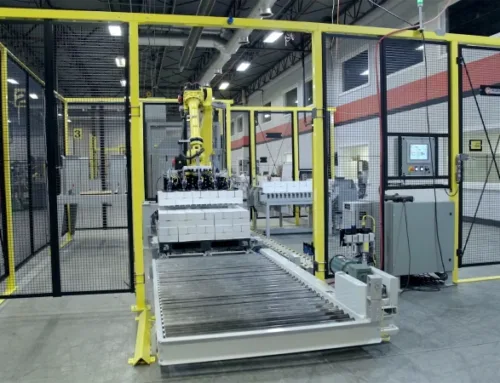
As a system integrator designing automated production lines or robotic welding stations, you are constantly battling for footprint. The traditional approach of using generic chain-link or standard 50x50mm (2×2 inch) wire mesh creates a massive compliance headache.
The Before Scenario: According to ISO 13857 standards for reach distances, a 50x50mm opening allows an operator’s hand and arm to pass through. To prevent personnel from reaching the hazardous movement of a 6-axis robot or a high-speed mechanical assembly machine, you are legally required to install that fence up to 850mm (33.5 inches) away from the hazard. In a multi-cell automotive layout, losing 3 feet of perimeter around every single machine chokes your warehouse AGV/AMR paths and limits your production capacity.
The Physics of 20x100mm Mesh: Engineering the Safe Distance
This is where specifying the correct Paneles de valla de protección para maquinaria becomes a strategic engineering decision rather than just a purchasing afterthought.
Why it works: By upgrading to a 20x100mm (0.78 x 3.93 inches) slotted mesh profile, the physical dynamics of hazard protection change completely. The narrow 20mm width acts as a “finger-safe” barrier. ISO 13857 dictates that with this specific aperture, only the tip of a finger can penetrate the guard. Consequently, the mandated safe reach distance drops dramatically to just 120mm (4.7 inches).

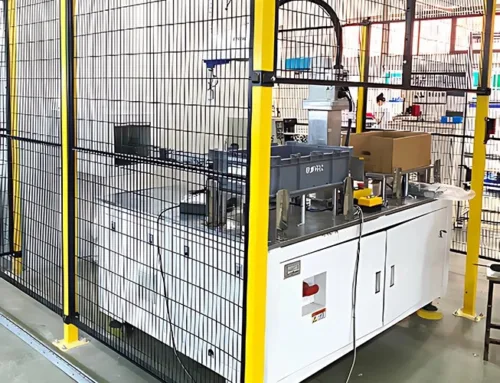
Furthermore, these panels aren’t just bent wire. They utilize a framed architecture featuring a 20x30x1.5mm Q235 carbon steel tubular frame with flat-welded contact points. This out-of-plane stiffness means that even if a 2,000 lb pallet of mechanical assemblies bumps the perimeter, the mesh won’t act like a hammock and sag into the robot’s work envelope. It maintains its structural integrity and its ISO-compliant safety distance.
The Aftermath: Reclaiming the Factory Floor
The Actual Yield: Shifting from a 50x50mm mesh to a 20x100mm Sistemas de Vallado de Seguridad para Robots allows you to shrink the perimeter of a standard robotic welding station by nearly 28 inches on all sides. For a 50-meter automated line, that reclaims over 35 square meters (approx. 376 sq ft) of premium real estate.
You can now widen the forklift aisles, add an additional quality inspection cell, or integrate necessary control equipment without violating safety codes. Plus, the black (RAL 9005) powder-coated mesh absorbs glare from the bright factory LEDs, providing machine vision systems and human operators with high-contrast, unobstructed visibility into the cell.
Seamless Integration with Active Safety Logic

In turnkey solutions, the physical barrier must talk to the PLC. Flimsy mesh causes sliding doors to misalign over time. When a double sliding door (crucial for loading heavy automotive fixtures) sags, the safety interlock switch (like an Omron D4NL or Pizzato) loses its alignment. This triggers false E-stops, halting the high-speed line and killing your OEE (Overall Equipment Effectiveness).
By utilizing heavy-duty Q235 steel framed panels and bearing rails, the Vigilancia Perimetral Industrial guarantees that doors remain perfectly parallel. The pre-engineered lock carriers ensure that mechanical separation instantly breaks the Safety Torque Off (STO) circuit without the nuisance of mechanical binding.
Technical Comparison: 50x50mm vs. 20x100mm Mesh
| Specification Metric | Legacy Mesh (50x50mm) | Mdfence Profile (20x100mm) |
| ISO 13857 Safe Reach Distance | Up to 850mm (33.5 inches) | As close as 120mm (4.7 inches) |
| Floor Space Efficiency | Poor (Requires wide buffer zones) | Excellent (Tight integration to machinery) |
| Structural Rigidity | Prone to elastic deformation (often frameless) | High out-of-plane stiffness (20x30mm tubular frame) |
| Vision System Interference | High (Thick wire grids distort optics) | Low (Slotted design with anti-glare black coating) |
Frequently Asked Questions (FAQs)
1. Why is the 20x100mm mesh size critical for robotics integration?
The 20mm slot restricts human finger ingress according to ISO 13857 standards. This allows system integrators to install the guard just 120mm away from dangerous robot pinch points, saving massive amounts of floor space compared to older 50x50mm designs.
2. Can this mesh withstand impacts from heavy automotive components?
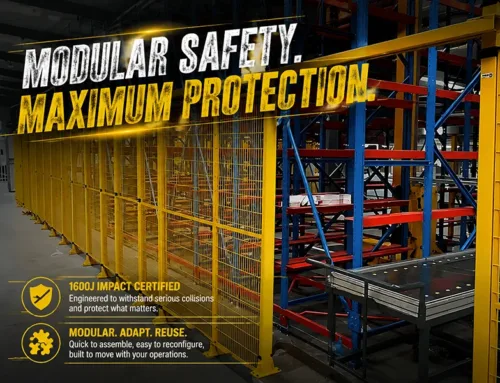
Yes. The panels feature a fully welded 20x30mm Q235 steel frame. When anchored with standard 60x60mm posts, the system is TUV certified to withstand up to 1600 Joules of impact energy, safely containing ejected parts or deflecting minor forklift bumps.
3. How does the fencing integrate with our PLC and safety light curtains?
Our systems provide pre-engineered mounting plates (lock carriers) that perfectly align with industry-standard interlock switches (like Omron or Pizzato). We also offer specific 80x80mm posts with internal cable routing designed specifically to house safety light curtains at material entry points.
4. Is the system modular enough for rapidly changing assembly lines?
Absolutely. The entire system uses a bolt-together clip mechanism requiring no on-site welding. If a dedicated manufacturing line needs reconfiguration, the panels can be unbolted and redeployed rapidly without damaging the powder-coated finish.
5. Do the sliding doors sag and cause interlock faults over time?
No. For wide access points used by AGVs or tooling cranes, our sliding doors utilize heavy-duty bearing rails and framed mesh panels. This rigid structure prevents the gravity sag that typically plagues cheap wire fences, ensuring your safety switches remain perfectly aligned.