ES
ES  EN
EN  DE
DE  RU
RU  PT
PT  JA
JA  IT
IT 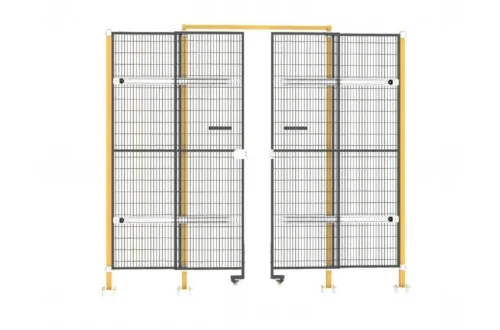

|
Your team just spent six months integrating a robotic cell for polishing high-gloss automotive trim. The system works perfectly, but the client rejects the project at final sign-off. The reason? Micro-scratches on the finished parts, traced back to the sharp, unfinished edges of the “cost-effective” welded machine guarding. Now, you’re facing rework costs, project delays, and a damaged reputation. |
Beyond Worker Safety: The Hidden Cost of “Good Enough” Machine Guarding
As a system integrator, your reputation is built on delivering flawless, turnkey automation solutions. You specify the best robots, PLCs, and vision systems. But what about the physical barrier separating that high-tech equipment from the rest of the plant? All too often, Protección de Máquinas is an afterthought—a commodity item sourced from a local fabricator or a low-cost supplier.
This approach creates a significant, often overlooked, quality control risk, especially when your automated line handles high-value, surface-sensitive products. For industries like automotive, aerospace, or high-end electronics, a single scratch isn’t a minor flaw; it’s a costly defect that leads to rework, scrap, and tense conversations with your client. The problem is that traditional guarding, with its rough welds and flimsy construction, is often the culprit.
The Integrator’s Nightmare: When Your Safety Fence Becomes a Quality Defect Source
Consider the typical “Anping mesh” or locally welded guarding. To cut costs, the steel wires are often tack-welded to the exterior of a post, or the mesh itself has sharp, cut-off wire ends. These small imperfections have big consequences in a precision manufacturing environment:
- Weld Burrs and Sharp Edges: During maintenance or a line stoppage, an operator might lean a part against the guarding. A sharp weld burr can easily gouge a freshly painted panel or a polished aluminum component.
- Flaking Paint and Debris: Poorly applied paint or powder coating on cheap guarding can chip and flake due to vibration or minor impacts, contaminating clean assembly areas and potentially embedding debris into the product itself.
- Panel Deflection: Flimsy, frameless mesh panels can easily bend or deform. If a part on a conveyor sways slightly or a robot’s path is marginally off, it can push the product *into* the sagging fence, causing abrasion and surface damage.
This isn’t just a hypothetical risk; it’s a recurring headache that erodes your project’s profitability and forces your engineering team into reactive problem-solving instead of focusing on the next project.
Engineered for Quality: How a Framed Panel Design Eliminates Product Damage
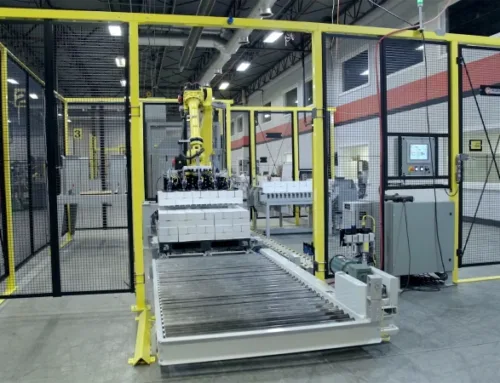
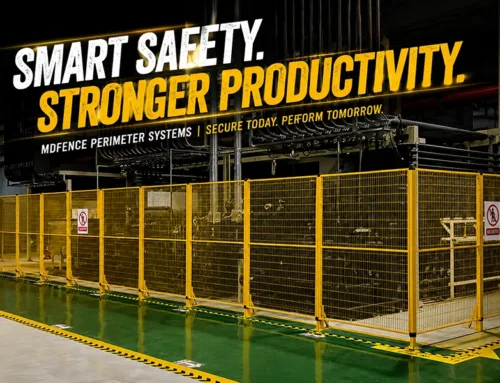
The difference between a commodity fence and a true robot safety fencing system lies in the engineering details that anticipate the realities of a high-value production environment. The Mdfence system is designed not just to protect people, but to protect your client’s product and your reputation.
The Core of Protection: The Framed Panel and Flat Weld
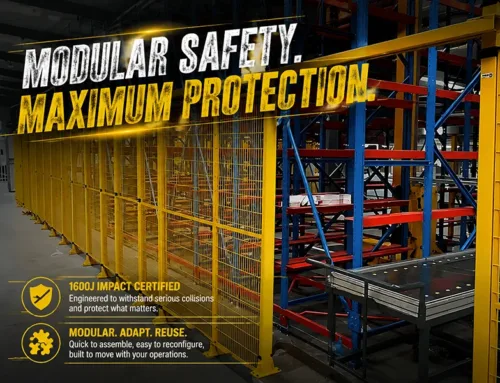
The foundational issue with cheap mesh is its lack of structural rigidity. Our solution begins with a robust 20 x 30mm (approx. 0.79″ x 1.18″) seamless steel tube frame for every panel.

This isn’t just for impact resistance; it’s for quality assurance.
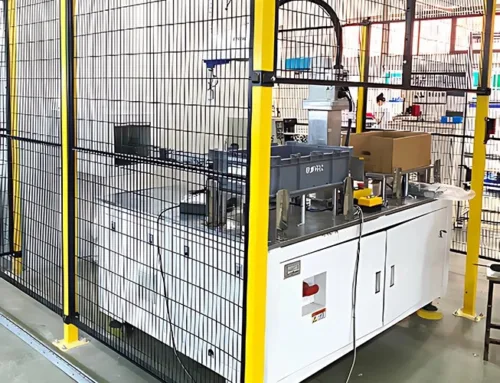
- No-Snag Surface: The steel mesh is welded *inside* the frame using a proprietary flat-welding technique. This creates a completely smooth, burr-free exterior surface. There are no exposed wire ends or sharp weld points to scratch products, tear an operator’s clothing, or create a snag hazard.
- Zero Deflection: The rigid frame ensures the mesh panel remains perfectly flat and taut. It won’t sag or deform under its own weight or minor accidental contact, maintaining a consistent and safe distance from your critical processes and high-value parts.
- Durable, Clean Coating: Every component is treated with an electrostatic powder coating that adheres flawlessly to the Q235 carbon steel. This finish resists chipping and flaking, making it suitable for even the most stringent cleanroom or paint line environments. It passes ISO 9227 salt spray tests, guaranteeing it won’t rust and create contaminants, even when exposed to industrial coolants and solvents.
Designed for the Real World of System Integration
Beyond protecting the product, the Mdfence system is engineered to make your life as an integrator easier. Your project timelines are tight, and your client’s layout can change at the last minute.

Our modular, bolt-together design means you never need to bring a welder or angle grinder onto the shop floor near your client’s sensitive equipment.
- Rapid, Spark-Free Assembly: A two-person team can assemble over 150 feet of guarding in a single day using only basic hand tools. No hot work permits, no fire watch, and critically, no metal dust or sparks near a clean production line.
- Effortless Reconfiguration: Did the client decide to widen a conveyor opening or move an access point? Instead of a costly and messy demolition and rebuild, you simply unbolt the relevant panels and posts and reconfigure them. The system is 95% reusable, protecting your project budget.
- Seamless Safety Integration: We provide pre-engineered mounting plates and kits for industry-standard safety interlocks from brands like Omron, Pizzato, and Schmersal. This “plug-and-play” approach saves your team hours of custom fabrication and ensures a clean, professional installation that will pass any EHS audit.

Stop letting machine guarding be the weak link in your otherwise perfect automation projects. By choosing a system designed with product quality in mind, you deliver a truly complete, risk-free solution that enhances your client’s operations and solidifies your status as a premium system integrator.
Frequently Asked Questions for System Integrators
1. How does the Mdfence system integrate with our safety PLC and third-party interlocks?
Our system is designed for seamless integration. We offer a range of pre-engineered mounting plates and “lock carriers” specifically designed for popular safety switches like the Omron D4NL or Pizzato FS series. This eliminates the need for on-site drilling or welding, ensuring a clean, reliable installation that connects directly to your safety circuit (e.g., via a safety PLC or safety relays) to achieve up to PLe/SIL3 ratings.
2. Our project requires complex layouts with conveyor cutouts and specific non-standard angles. Can you accommodate this?
Absolutely. Customization is a core strength. We can provide panels cut to specific sizes to create precise tunnel guards for conveyors, accommodating any width and height while maintaining ISO 13857 safety standards. Our post and panel system allows for any angle, and we work directly from your CAD files (e.g., .dwg or .stp) to create a guarding layout that perfectly matches your machine’s footprint.
3. Our end-client is in the automotive industry and has strict standards against paint flakes or contamination. Is your coating suitable?
Yes. Our electrostatic powder coating process provides a durable, smooth, and chip-resistant finish. Unlike liquid paint, it is cured to form a hard shell that is highly resistant to industrial oils, coolants, and abrasion. This minimizes the risk of flaking and contamination, making it ideal for sensitive environments like automotive paint shops or clean assembly areas.
4. What are your standard lead times? Our project schedules are extremely aggressive.
We maintain a significant inventory of standard components (posts, panels in common sizes, and door hardware) in our facility. For standard configurations, we can often ship within a few business days to meet urgent project deadlines. For highly customized projects, we provide a clear lead time estimate upon review of your design, and we work with your project managers to align our delivery with your installation schedule.
5. Can you provide 3D CAD models of your components for us to use in our master layout design?
Yes. We provide a complete library of our components as 3D STP files. This allows your design engineers to easily drop our guarding system into your master assembly, check for clearances, plan access points, and generate a precise Bill of Materials (BOM) directly from your design. This eliminates guesswork and ensures a perfect fit during on-site installation.