ES
ES  EN
EN  DE
DE  RU
RU  PT
PT  JA
JA  IT
IT 
Safety Fencing Machine Guarding Layouts

Your turnkey automation solution is flawless, but the machine guarding is an afterthought. Now you’re facing on-site welding, misaligned interlocks, and the risk of failing the client’s final EHS audit. Don’t let last-minute fencing issues derail your project delivery and profitability.
As a system integrator, your reputation is built on delivering turnkey solutions that work seamlessly from day one. But often, the physical Protección de máquinas con cercado de seguridad is treated as a final-stage commodity, leading to costly and frustrating problems during commissioning. A poorly planned layout doesn’t just look unprofessional—it can create safety gaps, cause nuisance trips in the control system, and ultimately, delay client acceptance and payment.
This guide moves beyond generic fencing and explores how to design intelligent guarding layouts that actively enhance your automation projects, ensuring they are as robust and efficient physically as they are logically.
Locally fabricated or basic “off-the-shelf” fencing creates severe EHS audit compliance risks, demands costly on-site welding and “hot work” permits, and droops over time—causing misaligned safety interlocks and costly nuisance trips that kill your Overall Equipment Effectiveness (OEE).
Why Traditional Guarding Fails in Modern Automation Cells
Before adopting a modular, engineered approach, many integrators face predictable headaches with locally fabricated or basic “off-the-shelf” fencing. These issues go far beyond aesthetics; they directly impact your project’s timeline and budget.
The “Hot Work” Nightmare and On-Site Modifications
Your team has just installed a multi-million dollar robotic cell on the client’s brand-new, polished concrete floor. The last step is the guarding. With traditional welded solutions, this means bringing in angle grinders and welding equipment.
- The Problem: This “hot work” requires special permits, fire watches, and creates a mess of sparks and fumes. Welding slag can permanently damage the client’s floor, and on-site painting never matches a factory finish. Even worse, if a measurement is off, the entire section must be cut and re-welded, wasting hours of skilled labor.
The Integration Scramble for Safety Components
Your design specifies a high-integrity Omron D4NL or Pizzato safety interlock switch to achieve PLe standards. However, the generic fence posts have no provisions for mounting it.
- The Problem: Your technicians are forced to drill and tap holes on-site, breaking the powder-coated seal and creating an immediate rust point. The makeshift bracket they fabricate may not be rigid enough, leading to switch misalignment after just a few weeks of operation, causing intermittent and hard-to-diagnose line stoppages.
The Rigidity Gap: When Flimsy Fencing Kills OEE
Low-cost, frameless mesh panels (often called “chain-link” style) lack the structural integrity required for an industrial environment.
- The Problem: These panels sag over time or deform if leaned on. Doors, lacking a rigid frame, quickly droop on their hinges. This slight misalignment is all it takes for the safety interlock plunger to miss its target, triggering a false E-stop. Your perfectly programmed robot sits idle, and you get an angry call from the client about nuisance trips killing their Overall Equipment Effectiveness (OEE).
Get A Quote For Your CAD Layout
Engineering Layouts for Seamless Integration: A Modular Approach
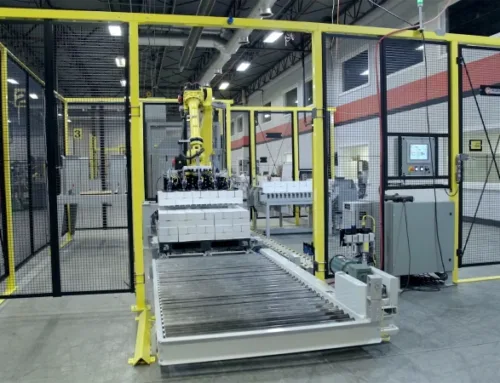
The solution is to treat machine guarding as an integral part of the automation system, engineered with the same precision as the robot and controls. A modular system built on robust components is the foundation.
SGF Engineering Insight: Treating machine guarding as a precision-engineered extension of the robotic system—rather than a final commodity—is critical. By integrating 3D CAD modeling with cold-assembled, rigid modular steel frames, you completely bypass the risk of on-site modifications, preserve factory-grade powder coatings, and guarantee long-term safety switch alignment.
From CAD Model to Physical Reality, Without Surprises
The process should start in the design phase. A professional Protección de Máquinas system provides downloadable 3D CAD models of every component—posts, panels, doors, and fasteners.
- The Logic: Your engineers can drop these models directly into your master layout (in SolidWorks, AutoCAD, etc.). This allows you to verify clearances, confirm access points, and generate a precise Bill of Materials (BOM) automatically. What you design in the virtual world is exactly what arrives on-site, eliminating guesswork and costly surprises.

Structural Integrity That Protects People and Assets
A truly industrial-grade system is built from the ground up for durability.
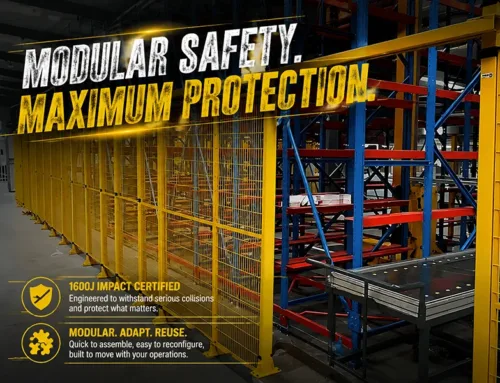
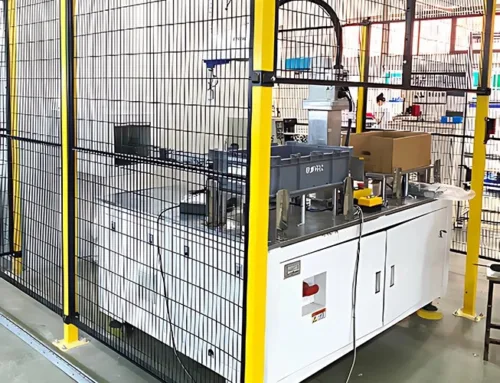
- The Logic: It starts with high-strength Q235 carbon steel for all posts and panel frames. Unlike flimsy, frameless mesh, our Framed Panel design features a fully-welded 20 x 30mm tubular steel frame. This provides immense rigidity, preventing sagging and ensuring it can withstand significant impacts, protecting not just your personnel but also the high-value robotics within the cell from accidental forklift collisions or ejected parts. The entire assembly is a “cold work” process, using high-strength bolts and custom-designed connectors, preserving the integrity of the factory powder coat.

Application-Specific Layouts That Solve Real-World Problems
A modular system provides the flexibility to solve common layout challenges faced by integrators.
- Wide Access Points: For areas requiring forklift or large fixture access, a standard hinged door isn’t enough. A Sliding Door system provides a wide, clear opening without demanding a large swing area. For even larger openings in tight spaces, a multi-panel Folding Door is the ideal solution.

Dual Sliding Door for forklift access.

Folding Door for space-constrained large openings.
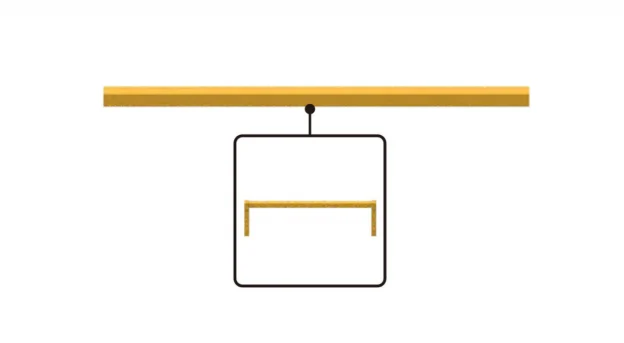
- Guaranteed Door Alignment: To prevent the door sag that causes nuisance trips, a robust layout incorporates a top Door Frame Beam. This rigid member connects the posts on either side of the door, ensuring they remain perfectly parallel and that the door and its interlock stay precisely aligned through years of use.
By planning your Valla de Seguridad para Robots layout with an engineered, modular system, you transform a potential project bottleneck into a strength. You deliver a safer, more reliable, and more professional-looking system that will pass the most stringent EHS audits, leading to faster project sign-offs and happier clients.
Performance Comparison: SGF Modular vs. Traditional Welded Fencing
| Performance Metric | Traditional Welded Fencing | SGF Modular Safety Fencing |
|---|---|---|
| On-site Installation Time | Days or weeks (demands cutting & welding) | Hours (100% pre-engineered cold assembly) |
| Hot Work Permits Required | Yes (high fire and toxic fume risk) | No (zero on-site welding or grinding) |
| Long-term Door & Lock Alignment | Poor (prone to sagging and nuisance sensor trips) | Perfect (enforced by rigid top door frame beams) |
| EHS Audit & Standard Compliance | Inconsistent (highly dependent on local welders) | 100% Guaranteed (compliant with ANSI/RIA & ISO 14120) |