ES
ES  EN
EN  DE
DE  RU
RU  PT
PT  JA
JA  IT
IT 
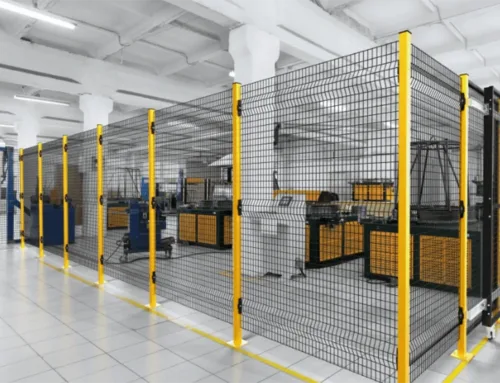
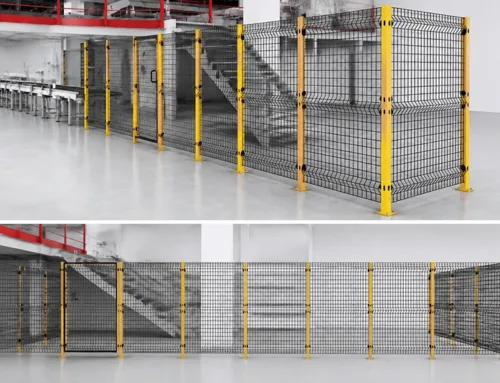
In modern industrial environments, Machine Safety Guards are a critical amenity for protecting workers from machine injuries. Often made of steel, the durability and longevity of these guards is a key factor in ensuring worker safety. So why do steel Machine Safety Guards last?
1. High Strength and Durability
Steel is favored for its high strength and durability. Steel is able to withstand high loads and pressures without deforming or breaking. This property allows Machine safety fences to be used for long periods of time in industrial environments, resisting mechanical collisions and other external impacts. In addition, the high hardness of steel also makes the fences resistant to vandalism, increasing overall safety.
2. Corrosion resistance
Industrial environments are often filled with moisture, chemicals and other corrosive elements. Steel can be galvanized, painted or coated to significantly improve its corrosion resistance. These surface treatments can form a protective layer on the steel surface to prevent oxidation and corrosion, extending the service life of the guardrail.
3. Stable Structural Design
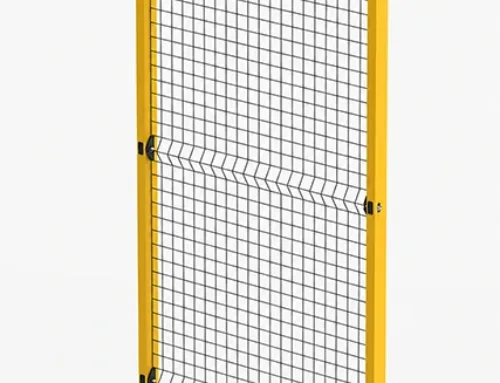
Machine Safety Guards usually adopt modular and solid structural design. This design not only facilitates installation and maintenance, but also ensures the stability of the guardrail in use. The sturdy structure enables the guardrail to withstand frequent operation and mechanical movement, and reduces safety hazards caused by loosening or deformation of the structure.
4. Low maintenance requirements
The low maintenance requirements of machine safety fences are one of the most important reasons for their longevity. Thanks to the durability and corrosion resistance of the steel, the fences are not easily damaged in daily use and require only regular inspections and simple maintenance to keep them in good condition. This not only reduces maintenance costs, but also minimizes downtime due to damage to the guardrail.
5. Adaptable to a wide range of environments
Machine safety fences are adaptable and can be used in a wide range of extreme environments. Whether it is hot, cold, wet or dry, the steel retains its physical properties and will not be affected by environmental changes. This versatility allows steel guardrails to play an important role in different industrial scenarios.
6. High-quality manufacturing processes
Advances in modern manufacturing processes have also improved the quality of steel guardrails. Precise laser cutting, automated welding and high standards of quality control result in a consistently high quality of every fence. High-quality manufacturing processes not only ensure the durability of the fence, but also enhance its overall aesthetics and functionality.
7. Compliance with safety standards
Safety fencing industrial typically meets stringent safety standards and certifications, such as OSHA certification. These standards ensure that fencing meets the highest safety requirements in design, material selection and manufacturing. Not only does a high standard fence provide superior safety, but its longevity is also guaranteed.
Safety fencing industrial is built to last because of its high strength and durability, excellent corrosion resistance, stable structural design, low maintenance requirements, adaptability to a wide range of environments, high-quality manufacturing processes, and compliance with stringent safety standards. Together, these factors ensure the long-term reliability and safety of Safety fencing industrial in industrial environments.
When choosing Safety fencing industrial, companies should prioritize high-quality steel guardrails to ensure worker safety and long-term protection of equipment. Quality fencing not only reduces maintenance costs, but also improves productivity and brings sustained economic benefits to the organization.
Reconfiguración de la línea de alimentos y bebidas: cómo la valla de seguridad sin marco Mefence convierte la zonificación de la planta en un activo reutilizable
Los ciclos de vida cortos de los SKU y los cambios frecuentes en las líneas de producción hacen que abandonar las particiones soldadas sea costoso. El vallado de seguridad industrial 3D sin marco Mefence utiliza módulos fijados con clips, corte en sitio y componentes reutilizables para la zonificación de almacenes, protección de maquinaria y separación peatón-vehículo.
Reconfiguración de líneas de alimentos y bebidas: cómo Mefence convierte el vallado de seguridad industrial en un activo reutilizable
Los ciclos de vida más cortos de los SKU obligan a las plantas de alimentos y bebidas a rediseñar las zonas de producción. El vallado de seguridad industrial 3D sin marco de Mefence se puede desmontar, cortar en el sitio, mover y reutilizar a medida que cambian los diseños.
Reconfiguración de líneas de alimentos y bebidas: convierta la valla de seguridad Mefence en un activo reutilizable de la planta
Cuando los SKU estacionales y las pruebas piloto cambian repetidamente la distribución de producción de alimentos y bebidas, la valla de seguridad Mefence reemplaza la zonificación soldada con una barrera modular sin marco que se puede desmontar, cortar en el sitio y reutilizar.