ES
ES  EN
EN  DE
DE  RU
RU  PT
PT  JA
JA  IT
IT 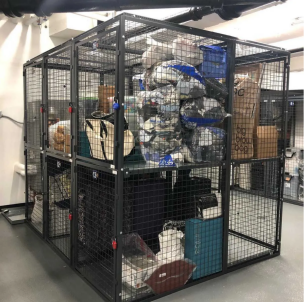
You’ve decided to add tenant storage. You’ve earmarked the space, secured the budget, and now you’re evaluating solutions. When it comes to security, the conversation often begins and ends with a single question: “Does it have a good lock?”
It’s a natural starting point, but focusing solely on the lock is like judging the safety of a bank vault by the brand of its keyhole. True security isn’t a single feature; it’s a philosophy. It’s a layered system where each component works together to deter, detect, and defend. As a property manager, understanding these layers is crucial—not just for protecting your tenants’ belongings, but for protecting your property from liability and enhancing its reputation.
Let’s move beyond the lock and dissect what “real security” truly means in the context of a shared storage area.
Layer 1: The Integrity of the Enclosure Itself
A security system is only as strong as its weakest link. An impenetrable lock on a flimsy door is pure security theater. The first layer of defense is the structural integrity of the unit’s walls and door.
Many managers initially consider building standard drywall rooms. They feel solid and private. However, from a security standpoint, a drywall wall is little more than a visual barrier. With a simple utility knife or a small hand saw, a determined intruder can cut through a sheet of drywall quietly and quickly, completely bypassing the locked door.
The same principle applies to the door and its frame. A common failure point is a heavy door hung with short screws into a soft wood frame. A well-placed kick or a simple pry bar can often defeat the entire door assembly in seconds. Real security demands that the door, hinge, and frame are an integrated system, often with steel components that can’t be easily splintered or pried apart.
Layer 2: The Material’s Resistance to Breach
Once you have a solid enclosure, the next question is about the material itself. Can it be easily defeated? When people hear “storage cage,” they often picture basic chain-link fencing. This is one of the most common security mistakes. A standard chain-link fence can be snipped open in under a minute with a $20 pair of bolt cutters from any hardware store. It offers minimal resistance.
A true security cage is built from a different class of material: heavy-gauge steel wire, welded at every intersection to form a rigid, unyielding grid. A quality wire shelf for locker system is critical. The welding means that even if a wire is cut, the grid’s integrity remains intact—it cannot be unraveled like chain-link. The heavy-gauge steel is specifically engineered to resist common cutting tools. An intruder is no longer facing a simple snipping job; they are facing a difficult and noisy ordeal that requires specialized equipment. Most will simply move on to an easier target.
Layer 3: The Unseen Foundation – Structural Anchoring
This is an expert-level detail that is frequently overlooked. I once consulted for a property in Austin where a bank of freestanding, high-end lockers had been installed. An intruder, unable to defeat the locks, simply worked with an accomplice to tip the entire multi-ton unit forward onto its face. The force and impact popped several doors right out of their frames.
The lesson is clear: a storage unit that isn’t physically attached to the building is just a heavy piece of furniture. The final layer of physical security is anchoring the system directly to the concrete foundation of the building. This is typically done with heavy-duty expansion anchor bolts drilled into the floor. This step transforms the storage units from separate objects in the room to an integral part of the room. They cannot be tipped, moved, or leveraged. This foundational security is non-negotiable for any serious installation.
Layer 4: The Ultimate Deterrent – Security Through Visibility
The first three layers are about resisting a physical attack. This fourth layer is about preventing the attack from ever being considered in the first place. The urban planner Jane Jacobs famously wrote about the concept of “eyes on the street”—the idea that transparent, observable spaces are inherently safer because people’s natural surveillance deters negative behavior. This principle applies perfectly to your basement.
A solid-walled storage room is a “black box.” It offers perfect privacy for an intruder to work undetected. You have no idea what’s happening inside. It’s a hidden pocket of liability. A wire shelf for locker system, however, turns this on its head. It leverages the power of visibility. A potential thief knows they can be seen from across the room, by a security camera, or by a tenant simply walking by. The risk of being observed becomes unacceptably high.
Furthermore, this transparency allows you, the manager, to conduct a full security walkthrough of dozens of units in seconds, without a key and without ever infringing on a tenant’s space. You can instantly spot irregularities or potential problems. This transparency doesn’t compromise security; it enhances it in the most intelligent way possible.
Redefining Your Security Standard
When you next evaluate a storage solution, look beyond the lock. Ask the deeper questions. How does the system resist being breached? How is it anchored to the building? And most importantly, how does its very design create an environment of deterrence? True security is not a single feature you can buy. It’s a thoughtful strategy you implement. By understanding these layers, you can provide a storage amenity that doesn’t just offer the perception of safety, but delivers it on every level.