ES
ES  EN
EN  DE
DE  RU
RU  PT
PT  JA
JA  IT
IT 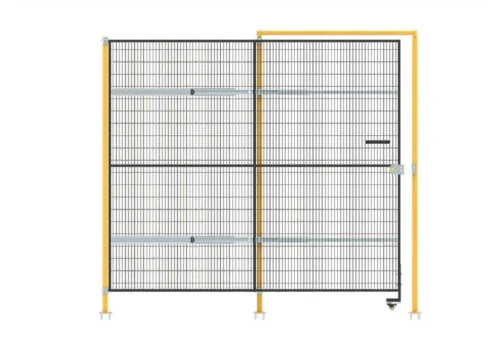

|
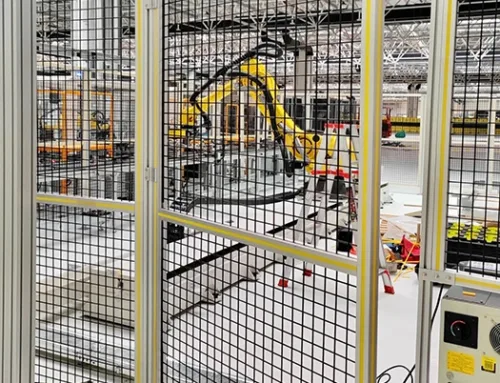
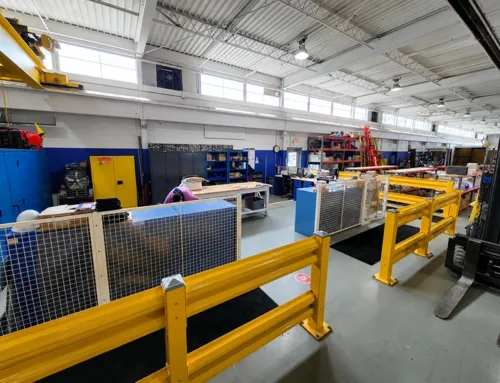
In high-speed automotive assembly and robotics integration, every square inch of your facility is premium real estate. Relying on generic wire mesh forces you to push your perimeter guards up to 33.5 inches (850mm) away from CNC spindles and 6-axis robotic arms just to pass safety audits. This miscalculation in Industrial Safety Fencing distance from moving parts bleeds your floor space, chokes AGV pathways, and complicates turnkey solutions. We engineer modular, ISO 13857-compliant physical barriers that let system integrators reclaim that space safely while eliminating hot work on the factory floor. |
The Science of Reach Distance: Reclaiming Your Robotics Layout
The Pain Point (Before): When designing an automated production line, system integrators often default to standard 2″x2″ (50x50mm) chain-link or cheap welded mesh. Because human fingers can easily pass through these large gaps, ISO 13857 standards mandate a massive safety clearance—often pushing the Valla de Seguridad para Robots up to 33.5 inches away from the hazard zone. In a dedicated manufacturing line featuring multiple KUKA or FANUC cells, this excessive clearance wastes hundreds of square feet, forcing you to compromise on material handling areas and conveyor routing.
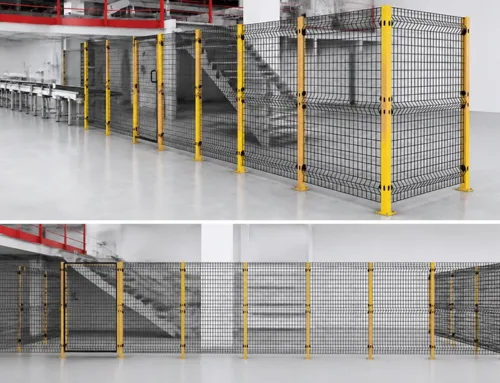
The Engineering Logic (Why it works): The Mdfence system utilizes a highly specific 0.78″ x 3.93″ (20x100mm) finger-safe mesh profile. The steel wires are flat-welded onto a rigid 20x30mm seamless steel tube frame. This narrow aperture physically restricts anything larger than a fingertip from penetrating the barrier.
The Operational Benefit (After): By restricting reach, our system allows you to legally and safely shrink the Industrial Safety Fencing distance from moving parts down to just 4.7 inches (120mm). For a typical automotive welding station, this footprint optimization reclaims roughly 10 square feet per cell, allowing you to deploy more robotic units within the same facility footprint or widen your AGV/AMR paths for smoother logistics.
Eliminating Ghost Stoppages in Automated Assembly Systems
The Pain Point (Before): In a high-traffic machining center, workers leaning on fences or material carts bumping into the perimeter are daily occurrences. Frameless, generic mesh flexes and sags under these minor impacts. This structural elasticity causes micro-misalignments in your sensitive safety interlocks (like Omron D4NL or Pizzato switches). The PLC registers a fault, triggering an uncommanded emergency stop. Your high-speed mechanical assembly machine halts, and your Overall Equipment Effectiveness (OEE) plummets as operators scramble to reset the safety circuit.

The Engineering Logic (Why it works): We build our Valla de Seguridad Industrial around Q235 cold-rolled carbon steel posts. With a robust 2.36″ x 2.36″ (60x60mm) profile and heavy-duty transverse base plates anchored by M10x70mm expansion bolts, the system acts as a rigid cantilever beam. The framed panels distribute point loads across the entire structure rather than flexing locally.
The Operational Benefit (After): Certified to withstand 1600 Joules of impact energy—equivalent to stopping a 220 lbs (100kg) mass traveling at 12 mph—the frame remains perfectly rigid. Door hinges do not sag, safety interlocks remain perfectly aligned, and your automated production line runs continuously without ghost fault interruptions.
Wide-Span Access for Heavy Material Handling
The Pain Point (Before): Feeding raw materials like engine blocks or chassis components into a dedicated manufacturing line requires wide entry points. Utilizing standard hinged doors for openings wider than 6 feet puts immense torque on the hinges. Over time, gravity causes the doors to drag on the concrete, requiring operators to physically lift the door to engage the safety latch, creating an ergonomic hazard and slowing down cycle times.

The Engineering Logic (Why it works): For high-capacity material handling areas, we deploy double sliding door systems equipped with top-hung bearing rails and a reinforcing door frame beam. This design completely eliminates cantilevered weight, transferring the load vertically down the Q235 steel posts.
The Operational Benefit (After): You achieve a massive, unobstructed opening of up to 14.1 feet (4300mm). Forklifts and AGVs can seamlessly load and unload heavy precision machining parts without risking collision with the Protección de Máquinas infrastructure. The doors glide open with minimal human effort, ensuring strict adherence to access control protocols.
Cold Assembly for System Integrators: Bypassing Hot Work Permits
The Pain Point (Before): When integrating PLe/SIL3 safety circuits, technicians often have to custom-fabricate mounting brackets for electronic interlocks on-site. Taking a welding torch to a painted fence post requires pulling a hot work permit, halts nearby production, creates weld spatter that can damage electro-optical elements, and burns off the protective powder coating—leaving the area vulnerable to industrial solvent corrosion.

The Engineering Logic (Why it works): Our systems are built around a 100% modular, “design for automation” methodology. We provide pre-engineered safety interlock carriers and standardized mechanical lock plates (such as Jimmy Proof locks or slide bolts) that align perfectly with the 20x30mm framed panels. Assembly relies entirely on high-tensile connection clips and M8 hex bolts.
The Operational Benefit (After): Installation is a purely “cold work” process. Two technicians with wrenches can deploy a 150-foot perimeter in a single shift. No sparks, no permits, and no compromised ISO 9227 salt-spray rated coatings. You deliver a pristine, fully integrated turnkey solution to your automotive clients up to 40% faster.
Standardized Case Matrix: Fencing Upgrades in Automotive Layouts
| Integration Metric | Legacy Frameless Mesh (Before) | Modular Mdfence System (After) |
|---|---|---|
| Safe Reach Distance (ISO 13857) | 33.5 inches (850mm) due to 50x50mm gaps | 4.7 inches (120mm) utilizing 20x100mm finger-safe mesh |
| Interlock Alignment | Frequent sagging; high rate of ghost PLC stoppages | Maintained via 1600J rigid Q235 steel framing |
| Installation Methodology | Hot work required; damages powder coating | Cold assembly; pre-engineered lock carriers bolt on |
| AGV Path Interference | Large swing radius of hinged doors blocks aisles | Zero interference with top-hung sliding doors |
Frequently Asked Questions (FAQs)
According to ISO 13857, the size of the opening determines how far an operator’s upper or lower limbs can reach through the barrier. Our 20x100mm slotted mesh prevents fingers from penetrating past the first joint, allowing the fence to be positioned as close as 4.7 inches (120mm) to the robotic hazard, saving critical floor space.
Yes. We provide pre-engineered installation carriers (such as the KKCK-LCK-B-D4NL-SET) specifically designed to mount third-party electronic safety switches seamlessly onto our posts and doors, ensuring immediate integration with your automation control equipment without field modifications.
Our system is TUV certified to withstand 1600 Joules of impact energy. The Q235 carbon steel components will undergo plastic deformation (bending) rather than brittle fracture, absorbing the kinetic energy without shattering or allowing the automated machinery inside to be compromised.
We design customized tunnel guards for conveyor integration. These openings are strictly calculated to allow the specific automotive parts (like engine blocks) to pass through while maintaining the required reach distances to prevent operators from crawling inside the automated production line.
Yes. Our electrostatic powder coating process complies with GB/T9286-1998 adhesion standards and passes rigorous ISO 9227 salt spray tests, making it highly resistant to the cutting fluids, oils, and solvents commonly found in advanced CNC centers and automotive assembly environments.