ES
ES  EN
EN  DE
DE  RU
RU  PT
PT  JA
JA  IT
IT Why interlock accuracy becomes a production issue long before it looks like a hardware issue
In many robot cells, the safety door itself is not the weak link. The weak link is the improvised installation method used at the site. When an integrator must drill a finished post by hand to fit an Omron or Pizzato interlock, two problems appear immediately. First, the powder-coated corrosion barrier is damaged, opening the door to rust in humid or washdown-adjacent environments. Second, even small hole-position deviation changes the relationship between the lock body, actuator, gate frame, and closing line.
That deviation may look minor during first assembly, but it grows into a recurring operating problem once the gate begins cycling under real plant conditions. A slightly misaligned door does not always fail completely; more often it causes intermittent contact, poor actuator entry, inconsistent reset behavior, or nuisance stop alarms that maintenance teams struggle to trace. For an automation builder, that means lost debugging time at FAT, longer SAT windows, and avoidable service calls after handover.
Mdfence is designed to reduce that chain of failure by treating the gate and switch interface as one engineered guarding system instead of two separate parts that happen to meet in the field.
Pre-engineered Omron and Pizzato mounting logic removes avoidable field variability
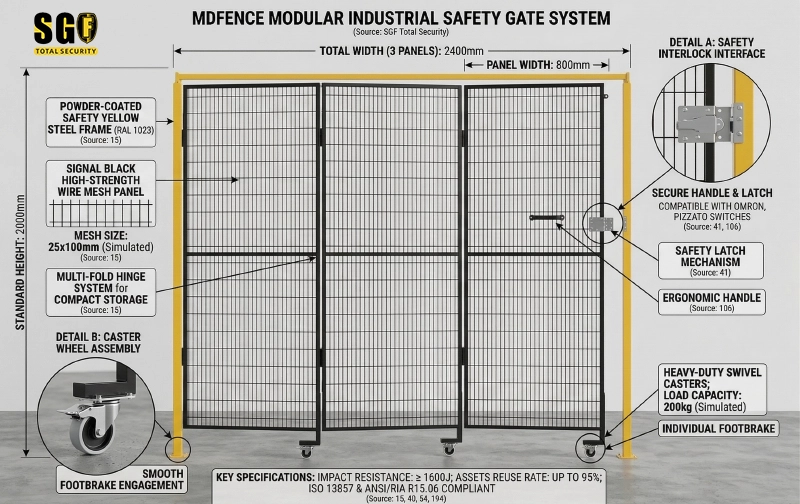
The value of a pre-configured mounting carrier is not convenience alone. It is repeatability. Mdfence supports universal installation logic for mainstream interlock brands such as Omron and Pizzato, allowing installers to fasten hardware to a defined interface instead of manually creating hole positions on painted steel posts during commissioning.
That matters because high-cycle robot cells do not tolerate casual geometry. If the switch position, latch relationship, and gate closing plane are all fixed from the start, the commissioning team spends less time shimming, slotting, redrilling, or compensating for operator-side drag. The gate closes where it should close. The actuator meets the switch where it should meet. The STO chain receives a more stable signal state under repeated daily use.
For OEM exporters and system integrators, this also helps standardize builds across regions. A defined mounting method is easier to document, easier to repeat, and easier to support remotely when equipment ships to another country or a contractor-led installation team.
Stable switch performance starts with a gate that resists sag, twist, and closing-line drift
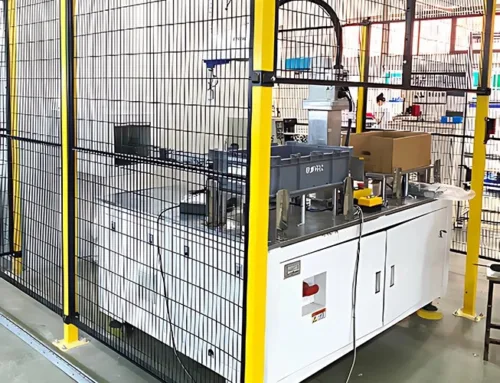
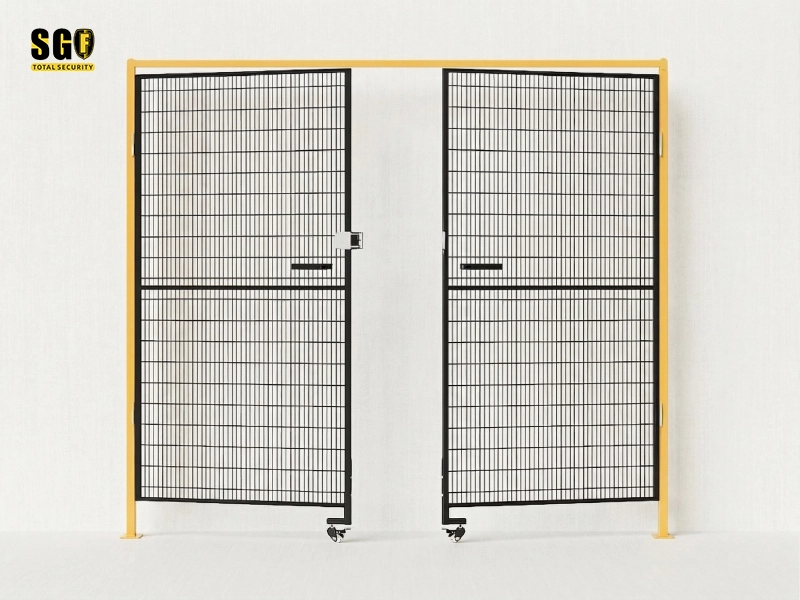
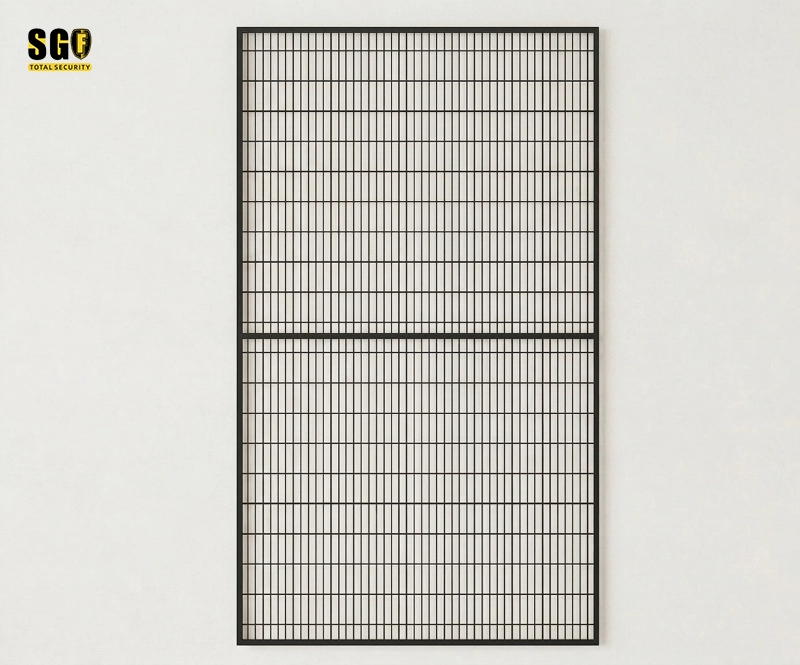
Interlock reliability is often discussed as an electrical topic, but in practice it is also a structural topic. A safety lock can only stay precise if the door carrying the actuator remains dimensionally stable over time. This is why framed construction matters. Mdfence uses Q235 steel framed mesh panels, with common panel frame logic built around 20 x 30 x 1.5 mm steel tube and finger-safe 20 x 100 mm mesh spacing for machine guarding layouts.
Compared with light frameless mesh or loosely supported doors, a framed panel gives the gate better resistance to bending and shape drift under repeated opening cycles. Where larger openings are required, the system documentation also highlights support casters and header members to control door sag. That means the gate is not relying on hinge optimism alone. It is supported as a working industrial access component.
Why this matters on a live line: if the gate edge drops, twists, or shifts even a few millimeters over time, the interlock actuator can begin entering at the wrong angle. The result is not only wear. It can be intermittent machine stops, reset failures, or an operator habit of forcing the door to close harder than intended.
Why this approach is especially valuable in robot cells, conveyor lines, and access points with frequent cycling
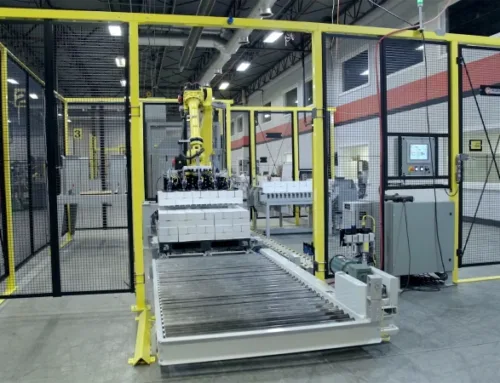
Not every safety gate sees the same duty level. In a low-interaction enclosure, small installation imperfections may remain hidden for a long time. In a robot palletizer, conveyor transfer zone, or maintenance access point, the gate may cycle constantly. Each cycle magnifies any weakness in alignment, door stiffness, wheel support, or switch mounting precision.
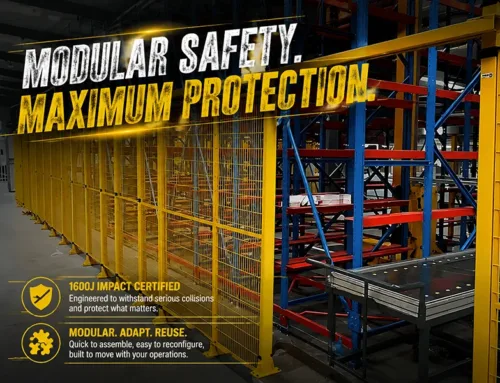
That is where Mdfence brings an operational advantage. Its modular machine guard fence design is not limited to static panels around a hazardous area. It is intended for real access control scenarios: hinged gates, sliding formats, folding gates, and wider service openings where integrators still need reliable lock integration. The result is a guarding package that better matches the rhythm of actual production rather than a bare perimeter that becomes a service burden.
Compact safety distance logic adds another benefit for automation builders
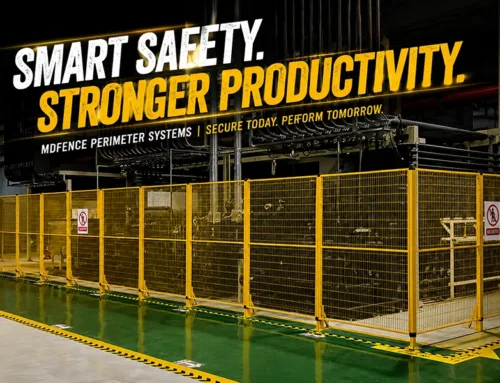
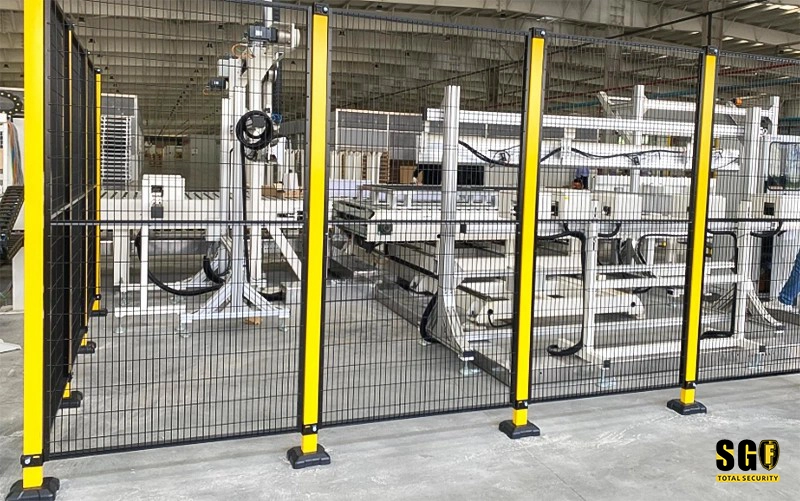
This topic is often approached only from the switch side, but the geometry of the fence itself also affects project outcomes. Mdfence is built around a 20 x 100 mm finger-safe mesh concept that supports much tighter legal guarding placement than ordinary 50 x 50 mm large-mesh alternatives commonly seen on generic fence systems. In applications where the risk assessment and layout permit, this can help integrators keep the fence boundary much closer to the hazard zone.
For the end customer, that can preserve forklift aisle width, service circulation, and valuable floor area. For the machine builder, it means the same interlocked access solution can be delivered in a tighter automation footprint without defaulting to excessive setbacks that consume expensive plant space. In other words, the gate is not only more stable; the entire cell can be more commercially competitive.
Engineering checkpoints for buyers comparing interlock-ready guarding systems
- Switch interface: Is the gate delivered with a defined carrier or mounting logic for Omron and Pizzato devices, or does the site team have to drill and adapt everything manually?
- Door structure: Is the leaf a framed industrial gate with sufficient stiffness, or a lighter panel likely to drift under repeated use?
- Sag control: Are header beams, support wheels, or other structural measures included for wider or high-cycle doors?
- Corrosion protection: Does the installation method preserve the finished coating, or does post-drilling create exposed steel at the most sensitive points?
- Signal stability outcome: Has the system been designed to keep mechanical closing accuracy stable enough to support consistent STO behavior over time?
- Layout efficiency: Can the mesh specification help reduce oversized safety offsets in space-constrained automation projects?
What Mdfence gives an automation integrator in practical terms
Conclusion: preventing nuisance stops starts before the machine is energized
When a safety gate is treated as a last-minute metal add-on, interlock problems usually show up later as service issues, unexplained alarms, or operator frustration. When the gate, frame, switch interface, and closing geometry are engineered together from the beginning, the result is very different: faster installation, cleaner commissioning, lower rework risk, and more dependable machine availability.
For robot cells and automated lines that depend on Omron or Pizzato interlocks, Mdfence offers a stronger path than improvised site drilling. It gives integrators a modular machine guarding solution built around stable access control, not just perimeter separation.
SGF can help configure an Mdfence layout with the right gate format, switch interface, and compact guarding strategy for your application.
Reference basis in current product materials includes Q235 steel framed construction, 20 x 100 mm mesh positioning, modular cold assembly, and compatibility logic for mainstream safety interlock brands.