ES
ES  EN
EN  DE
DE  RU
RU  PT
PT  JA
JA  IT
IT 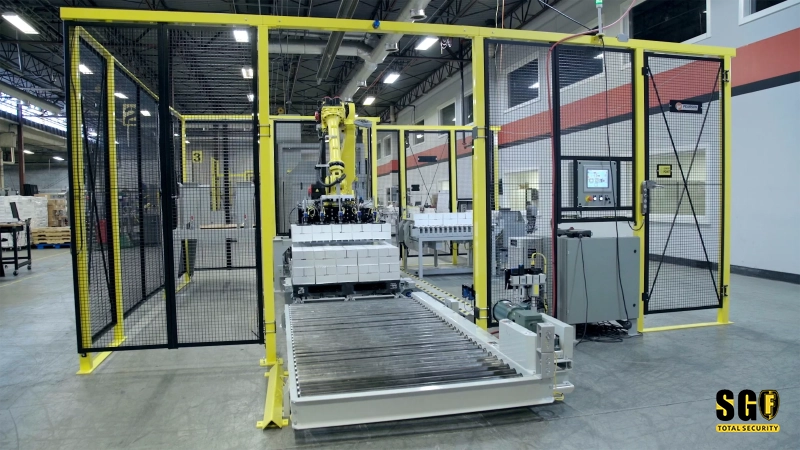
For medical cleanrooms and high-end manufacturing lines, the installation method of a guard system matters almost as much as the barrier itself. A conventional welded fence can release dust, sparks, odor, and permit-related delays inside controlled production areas. Mdfence protective fencing system uses a bolt-together cold-work structure, allowing two installers with standard wrenches to complete the job without hot work, while helping manufacturers cut installation time by about 40% and preserve more than 95% of the asset value for future relocation.
Why hot-work guarding becomes a hidden compliance and schedule problem
Many factories do not buy fencing for an empty greenfield shell. They buy it for live projects: a new automation island inside a medical assembly room, a conveyor extension in a photonics plant, or a retrofit around an existing packaging cell that cannot stay offline for long. In these conditions, traditional welded guarding creates friction before the first panel even stands up.
Medical manufacturers working toward ISO 13485 discipline are highly sensitive to airborne contamination, process interruptions, and traceability during facility modifications. High-end manufacturing environments such as photonics, precision electronics, and clean automated assembly lines may not always be full cleanroom spaces, but they still treat dust, spatter, and odor as unacceptable side effects. Once welding enters the plan, the project often triggers hot-work permits, isolation zones, fire-watch arrangements, cleanup requirements, and longer shutdown windows.
That is why the guarding conversation should begin with installation logic, not only mesh height or door width. If the barrier can only be built through heat, fumes, grinding, and field fabrication, it already conflicts with the operating rules of many controlled factories.
What makes the Mdfence protective fencing system different on the shop floor
Montaje modular en frío
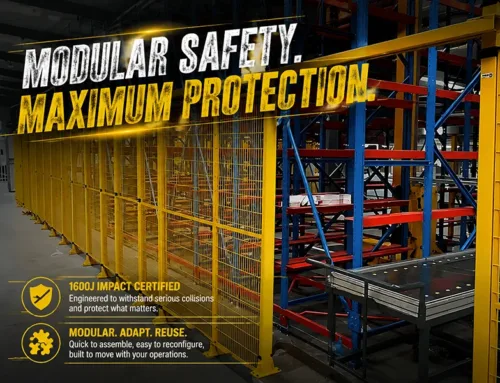
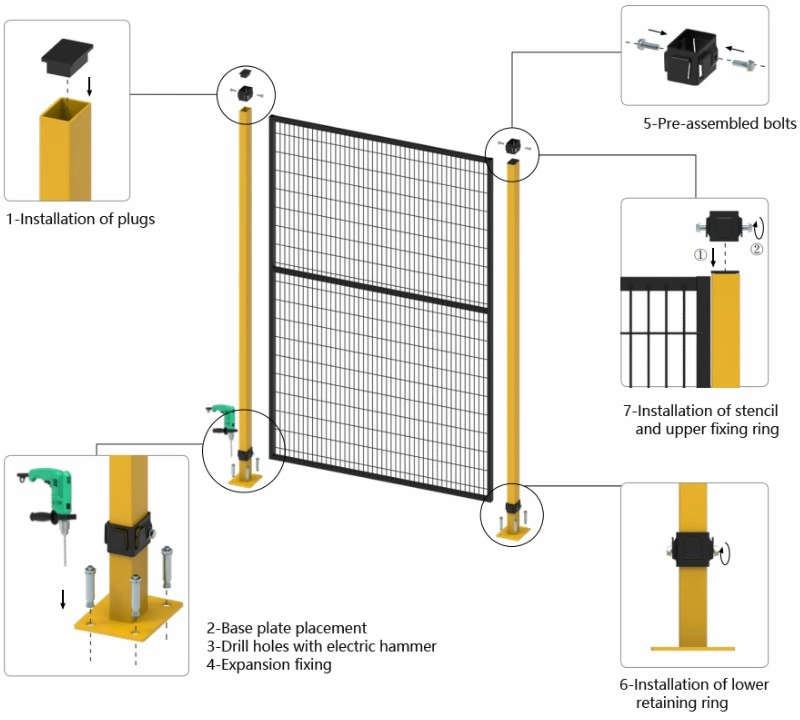
Mdfence is built around a fully bolted structure with high-strength clamp rings and standardized panel connections. Installers do not need to weld posts together or burn in custom joints on site. The modules arrive prepared for direct positioning, mechanical fastening, and rapid alignment.
Cleaner installation in controlled environments
Because the system is assembled with bolts, brackets, and clamps rather than open flame or field welding, it avoids the dust plume, sparks, burnt coating smell, and secondary cleanup burden associated with hot-work fence installation.
Predictable speed for retrofit projects
When the assembly logic is standardized, project teams can estimate labor hours more accurately. This is especially important when the installation window is limited to weekends, night shifts, or tightly scheduled maintenance stops.
High residual value after line moves
Instead of becoming scrap after a layout change, the barrier remains a reusable industrial asset. Panels, posts, and gate modules can be disassembled, reconfigured, and installed again with minimal loss, supporting reuse rates above 95% in practical relocation scenarios.
Where this matters most: medical, photonics, and live-factory deployment
In a medical-device environment, the main issue is not just safety separation. It is the total effect of the guarding project on the production environment. If a barrier retrofit releases particulates or forces a wider shutdown than expected, the fence turns into an indirect quality and scheduling risk. A cold-install system reduces those risks because the activity is closer to mechanical assembly than fabrication.
In photonics and other high-end manufacturing sectors, uptime and environmental stability are equally valuable. Equipment often sits inside dense process areas with expensive upstream and downstream dependencies. A slow welding-based install can delay commissioning of an entire line, while the residues of hot work create additional housekeeping and restart tasks. Mdfence helps integrators place a physical safety boundary without turning the installation itself into a contamination event.
For already running factories, the advantage becomes even more concrete. The line owner usually asks three questions: Can the work happen fast? Can it happen cleanly? Can the asset be moved later? A modular machine guarding solution that answers yes to all three often wins over fabricated barriers even before detailed pricing is compared.
Why cold installation improves more than cleanliness
| Project concern | Typical welded barrier challenge | Mdfence protective fencing system response |
|---|---|---|
| Contamination control | Dust, sparks, odor, and local residue during installation | Bolt-together assembly avoids hot-work side effects in controlled areas |
| Carga de permisos | Hot-work permits, extra supervision, and fire-watch procedures | Mechanical installation simplifies site coordination and shortens preparation time |
| Shutdown pressure | Longer field fabrication and cleanup windows | Standardized modules help reduce installation duration by about 40% |
| Future relocation | Welded structures often become one-time sunk cost | 95%+ reuse potential converts fencing into a recoverable asset |
There is also a procurement advantage hidden inside this comparison. When the same safety fence can be installed without hot work and reused after a line move, the buyer is no longer judging cost only by the first project. They can evaluate the barrier across multiple production phases. That changes the economics substantially for fast-growing plants, temporary cells, pilot lines, or facilities that frequently rebalance floor space.
Structural logic still matters after installation day
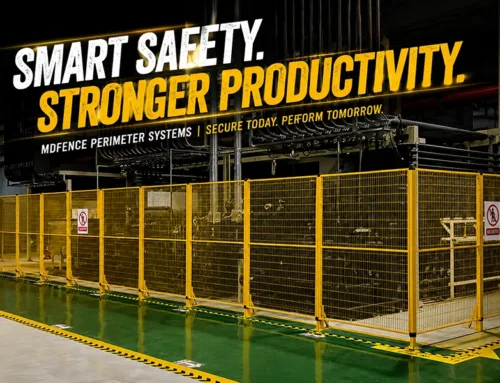
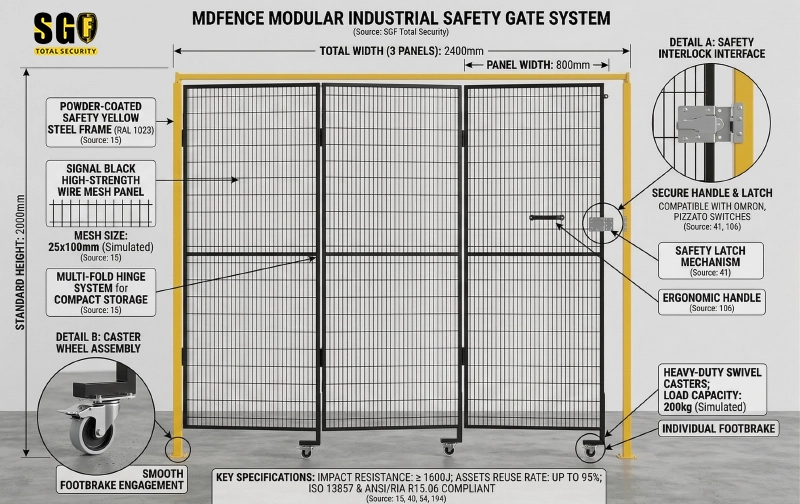
Clean installation does not help much if the fence becomes unstable after a few months. That is why Mdfence pairs its modular assembly logic with an industrial-grade framed mesh structure designed for long-term plant use. The system is intended to maintain panel alignment, gate function, and overall rigidity under repetitive daily access instead of behaving like a temporary partition.
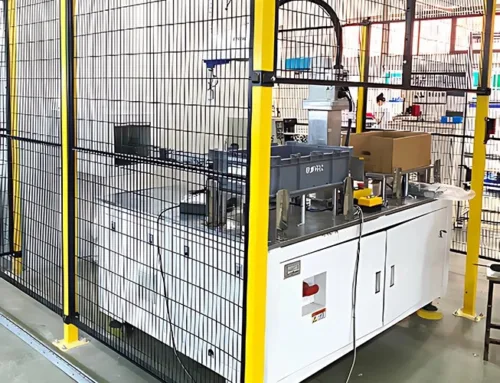
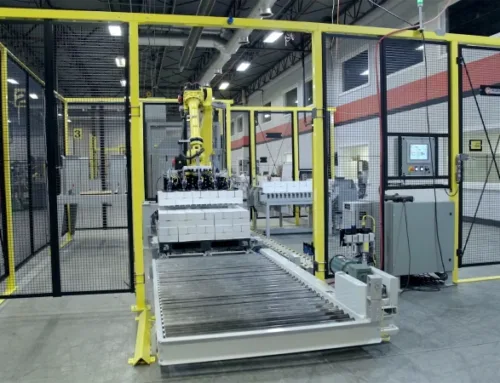
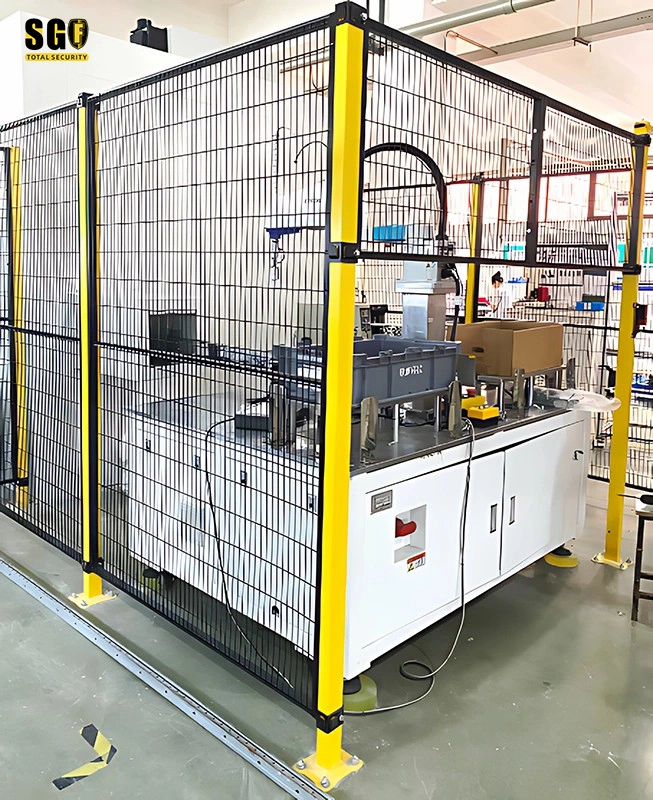
For automation projects, this matters because guarding is often integrated with conveyors, palletizers, access doors, and service paths. The fence needs to remain dimensionally reliable while the surrounding equipment vibrates, cycles, and occasionally gets reworked. A barrier that stays straight and serviceable reduces secondary maintenance workload and helps preserve the safe boundary that the cell design depends on.
How buyers should evaluate a guarding project in clean or high-value production areas
- Look beyond barrier price. Include permit handling, shutdown hours, cleanup effort, and post-install restart procedures in the comparison.
- Check whether the system fits live deployment. A product that installs well in an empty warehouse may be a poor choice inside a controlled operating line.
- Measure reuse value. If the plant layout changes every two to four years, reusable guarding may outperform welded options on total lifecycle cost.
- Match the door strategy to service frequency. Sliding, folding, or hinged configurations should reflect maintenance access, material flow, and footprint constraints.
- Think in project risk terms. For medical and photonics environments, reducing contamination and schedule uncertainty is often as important as meeting the guarding layout itself.
When these factors are considered together, the case for cold-install modular fencing becomes stronger than a simple speed claim. It is a way to reduce uncertainty across EHS, operations, quality, and capital planning at the same time.
Cold-install machine guarding for controlled production environments
If your project involves medical cleanrooms, photonics lines, or a live factory where welding dust, sparks, and permit delays are unacceptable, the Mdfence protective fencing system offers a cleaner path to machine guarding. Its bolt-together logic supports faster installation, safer execution, and high residual value when the line is relocated or expanded later.
Discuss your layout, access points, and relocation expectations early so the guarding system can be configured around both compliance and long-term asset recovery.