ES
ES  EN
EN  DE
DE  RU
RU  PT
PT  JA
JA  IT
IT Machine safety fence
Machine safety fence for WES-connected warehouse interlocks
When a warehouse safety door must connect to WES software and an electronic interlock, the old fence turns into a field fabrication job. Machine safety fence gives the site team a standard interface, a carrier module for the lock, and a screw-on installation path that keeps the door aligned instead of drifting after vibration.
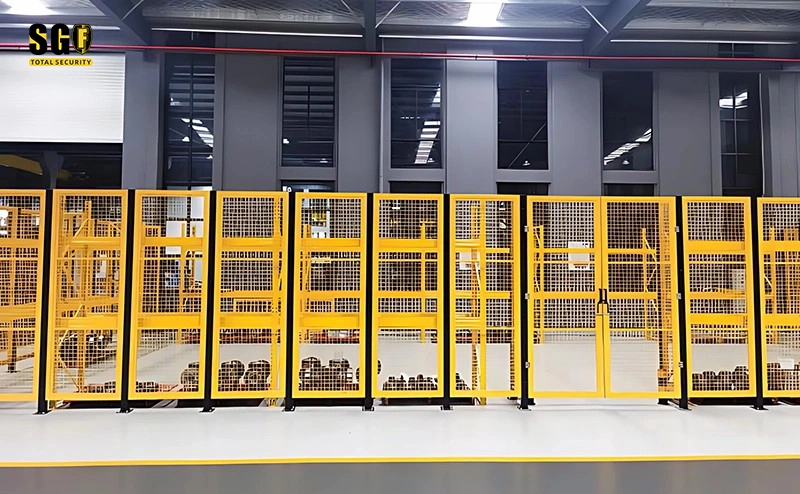
What changes when the fence must carry an electronic interlock
On automated warehouse projects, the safety gate is no longer just a barrier. It becomes the physical anchor for the lock, the sensor, the cabling route, and the handshake between the door and the WES side. Mdfence reduces that job to a defined mounting task by using standard lock carrier modules such as KKCK-LCK and a frame that already expects the interlock hardware.
| Integration pain | Respuesta de Mdfence |
|---|---|
| Field crews have to drill, cut, and weld on site | Predefined mounting positions and a screw-on carrier module remove the need for hot work |
| Interlock switches drift after vibration | Rigid gate hardware and fixed carrier positioning help keep the switch aligned |
| Different switch brands need different fittings | The interface is built to accept Omron and Pizzato style electronic interlocks without redesign |
| Automation aisles need clean access control | Base plates and modular posts keep the gate easy to place beside conveyors, racks, and transfer lines |
Why Mdfence fits machine-door integration
Standard lock carrier instead of custom fabrication
The key advantage is not just the fence panel. It is the prepared carrier for the lock body. With KKCK-LCK style mounting, the electrician can position the interlock hardware on a standard interface rather than making a one-off bracket at the jobsite.
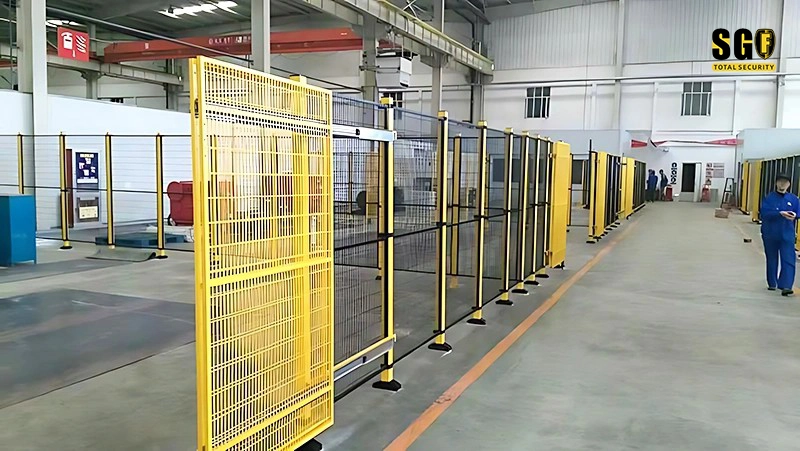
Structure evidence that supports the field story
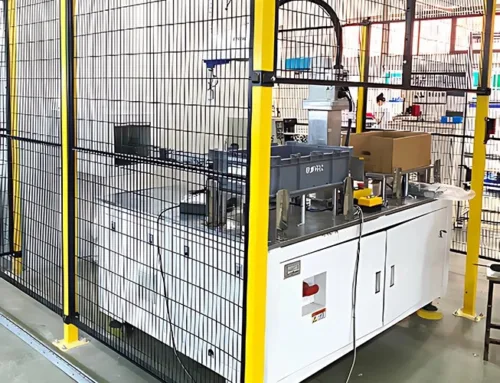
The detail image shows weld seam treatment, coating consistency, and the base plate structure. That matters because the door hardware sits on the same frame that absorbs daily opening force, cable pull, and repeated shutdown cycles. The point is not visual polish. The point is a stable mount for the safety switch.
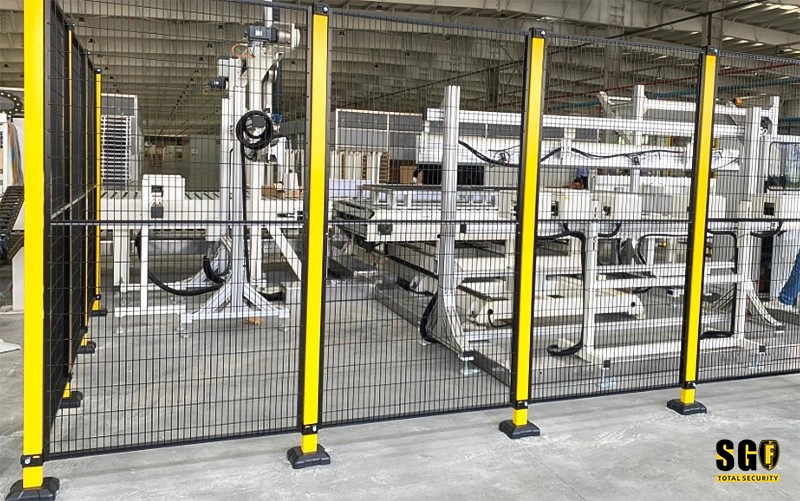
Works where the gate must protect moving equipment
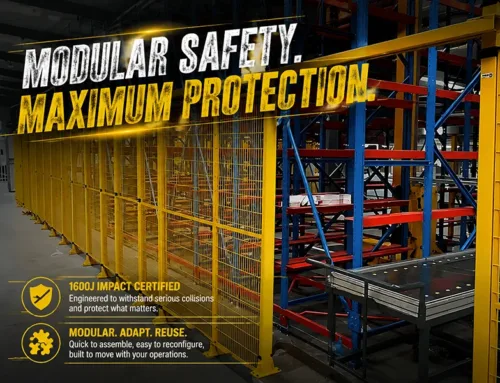
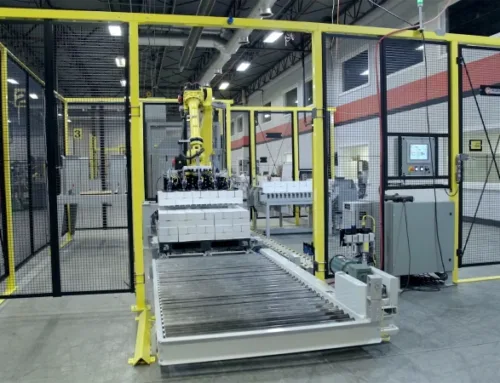
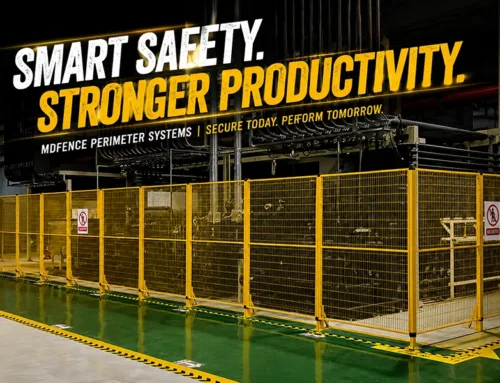
Warehouse safety interlocks are usually installed beside conveyors, transfer stations, and storage aisles. Mdfence gives the project a modular perimeter that can close off the hazard zone while leaving a clean access point for operators and maintenance staff.
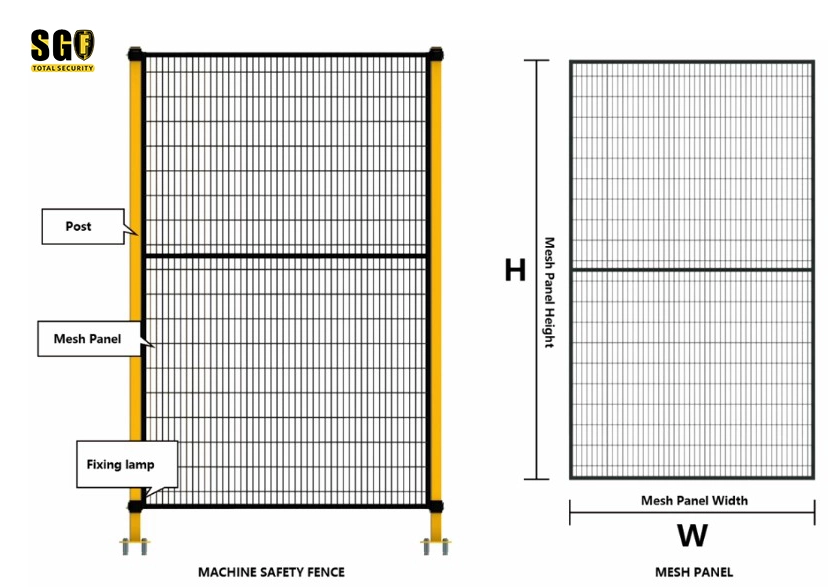
Where this setup is used
- WES-connected warehouse doors that need a reliable electronic interlock
- Automated storage aisles where the gate must stay aligned after repeated vibration
- Retrofit projects that must avoid hot work, cutting, and on-site welding
- Cells using Omron or Pizzato interlocks on a standardized fence frame
In these projects, the fence is not the hard part. The hard part is making the safety logic repeatable on site. Mdfence solves that by turning the interlock mount into a standard assembly task, so the installer spends time on positioning and fastening instead of fabrication and rework.
What to confirm before you release the layout
Check the switch model, door swing, cable entry side, and the mounting height before the fence is ordered. Then match the gate opening to the carrier module and lock body you plan to use. That way the team can install the interlock cleanly, keep the switch face stable, and avoid the classic error of an added bracket that loosens after the first few shifts.
Machine safety fence for faster interlock integration
If your warehouse door must talk to WES and still stay simple for the field crew, Mdfence gives you the standard lock carrier, modular frame, and screw-on path that make the project predictable. The result is a safer gate, a cleaner install, and less time lost to site modification.