ES
ES  EN
EN  DE
DE  RU
RU  PT
PT  JA
JA  IT
IT Flexible Safety Barrier for Continuous Beverage Production
Industrial Safety Barrier for 24/7 Beverage Lines
In a plant that runs near nonstop and moves thousands of bottles per minute, a forklift strike is not a local event. It becomes a line stop, a rework problem, and a cost spike. FCBarrier is a flexible safety barrier built to absorb impact, rebound, and keep equipment, rack ends, and columns protected without turning every hit into a shutdown.
Why High-Throughput Beverage Plants Need a Flexible Industrial Safety Barrier
A conventional steel barrier can survive a hit and still leave the process line exposed. In continuous beverage production, that is the wrong trade-off: the post may stay upright, but the conveyor, rack end, or machine frame behind it can still be damaged. FCBarrier is designed for a better result. It absorbs the impact, rebounds after the hit, and helps prevent one collision from becoming an entire line outage.
| Barrier factor | What FCBarrier does for the plant |
|---|---|
| Collision behavior | Self-rebounding polymer barrier that absorbs impact energy and returns to shape after the hit |
| Calificación de impacto | 28,950J rated barrier for heavy-duty forklift protection |
| Maintenance profile | Low maintenance, corrosion free, and recyclable compared with repainting and re-anchoring steel systems |
| lógica de instalación | Mortise & tenon quick-install, quick-release modules, and a floor-anchored base |
| Typical layouts | Single rail, double rail, traffic rail, and column protector configurations |
| Best-fit outcome | Protect racking from forklift damage, protect building structure, and reduce accident downtime |
Where FCBarrier Fits Better Than a Conventional Steel Barrier
Stop the strike at the machine boundary, not inside the line
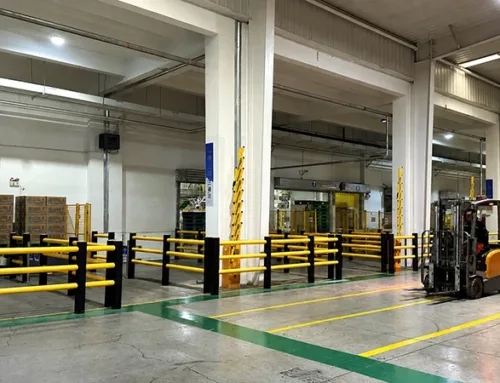
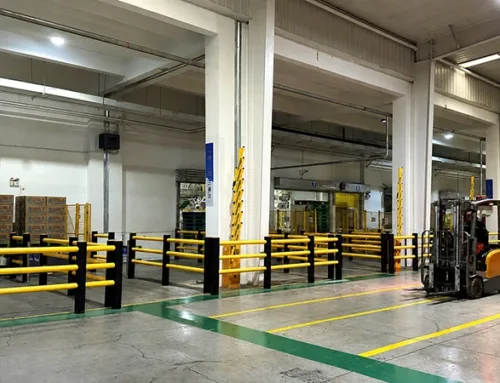
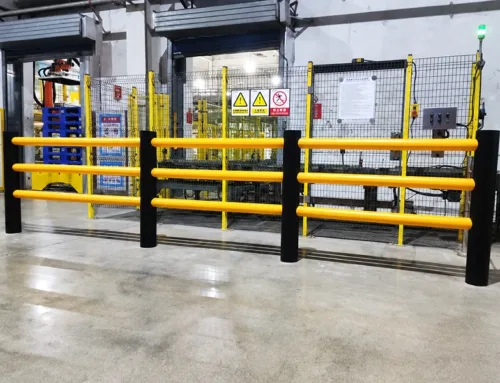
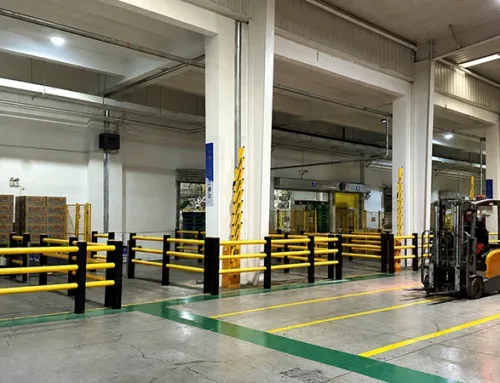
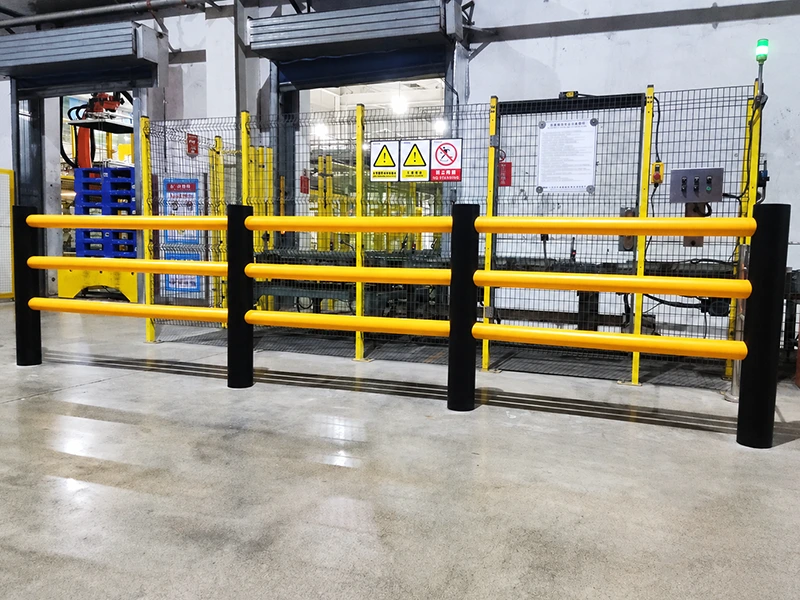
Fast beverage lines fail in a chain reaction. One forklift contact at a machine entrance can knock a guard, bend a post, or damage a conveyor edge, and the result is no longer just a repair item. The real cost is the stop that follows. This factory-installed barrier image shows the right place to intervene: the access zone around machinery, where Industrial Safety Barrier protection should intercept traffic before it reaches the asset.
Protect rack ends and loading bays without creating a steel-repair cycle
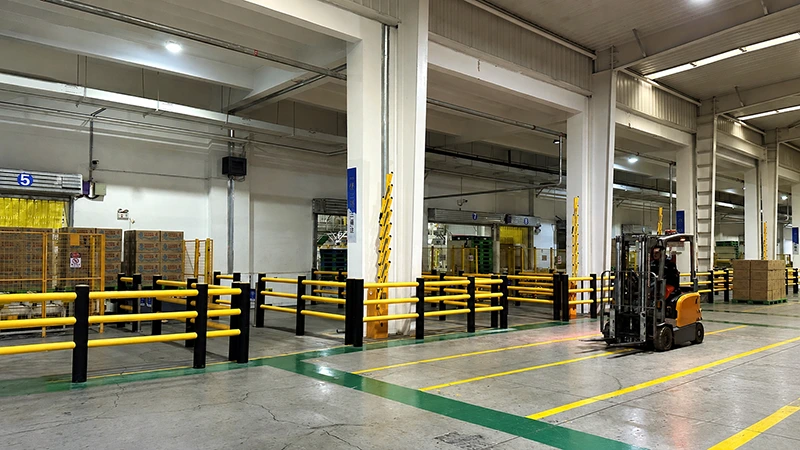
Rack-end hits and dock-edge scrapes are common in high-throughput plants because traffic never really stops. A rigid steel barrier often adds a second job to the maintenance team: repaint, re-anchor, patch the floor, and check for hidden deformation. FCBarrier is different. Its modular barrier structure, floor-anchored base, and quick-install approach are built for retrofit barrier projects where downtime has to stay short and the protection must stay in service.
Use rebound behavior to lower lifecycle cost, not just impact cost
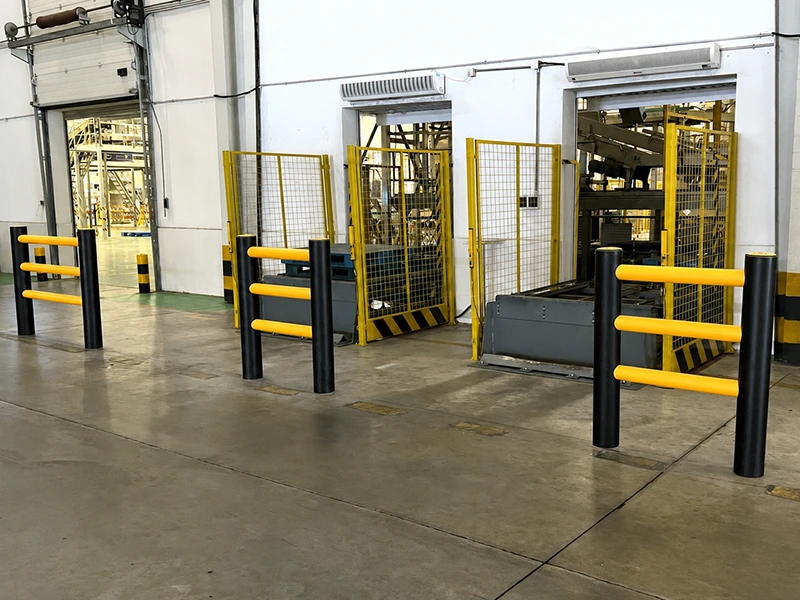
The hidden problem with steel is not only visible damage. It is the follow-up work: repainting, re-anchoring, floor repair, and the long wait before the area can be opened again. FCBarrier is built as an energy absorbing, self-rebounding system, so the barrier can take repeated strikes without becoming a permanent maintenance event. That is why the same layout also works well for Food & Beverage Safety Barrier projects, Manufacturing Plant Safety zones, and Pedestrian Safety separation where people and forklifts share the same building.
Application Zones in a Beverage Plant
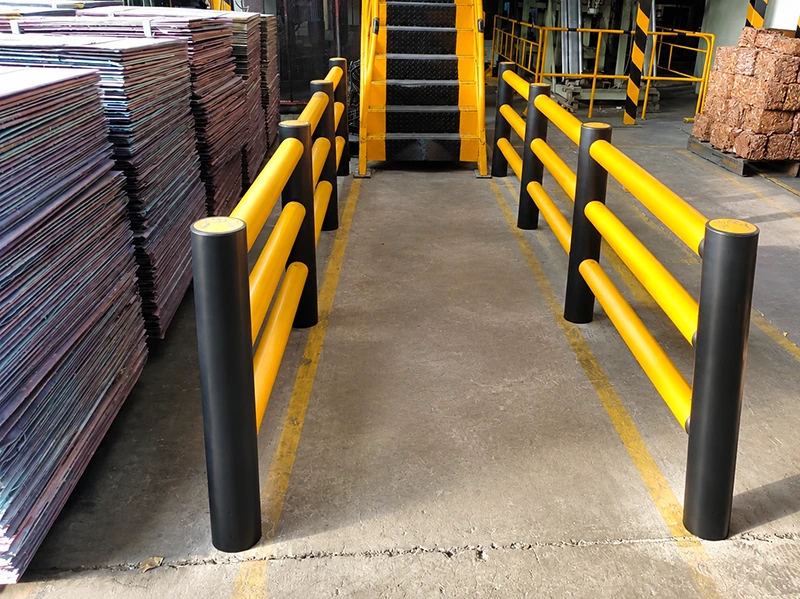
- Line-side equipment perimeters around fillers, palletizers, conveyors, and wrapping zones
- Rack ends and aisle crossings where Forklift Safety Barrier protection is needed most
- Loading Dock Protection and staging lanes where pallet traffic changes direction quickly
- Column protection at exposed corners and tight turns
- Pedestrian routes that cross vehicle lanes and need clear Workplace Safety separation
- Retrofit zones in existing plants where a modular installation is easier than a full shutdown
FCBarrier is not just for blocking access. It is for protecting assets, reducing repair cost, and keeping traffic events from becoming production events. In the right layout, a strike becomes a contained incident instead of a line-stop story.
What to Specify Before You Lock the Layout
For a continuous beverage plant, the first question is not whether a barrier can stop a forklift once. It is whether the plant can keep running after the hit. If you need hard impact protection, start with the 28,950J rated barrier layout. If you need separation rather than a rigid stop, use the single rail, double rail, or traffic rail configuration. If the exposed point is a column, choose the column protector option. If the pain is repeated maintenance, the self-rebounding polymer structure and floor-anchored base are the parts that matter most.
That is the practical value of FCBarrier: protect racking from forklift damage, protect building structure, and reduce accident downtime while avoiding the repaint-and-reanchor cycle that steel barriers create.
Keep the line running after the hit
When an Industrial Safety Barrier takes the impact and the production line stays live, the plant wins twice: fewer repairs and less downtime. FCBarrier is built for that outcome in warehouses, beverage plants, and any high-throughput site where a single collision can drag the whole operation off schedule.