ES
ES  EN
EN  DE
DE  RU
RU  PT
PT  JA
JA  IT
IT Modular Machine Guarding
When an aluminum safety fence makes more sense than steel mesh
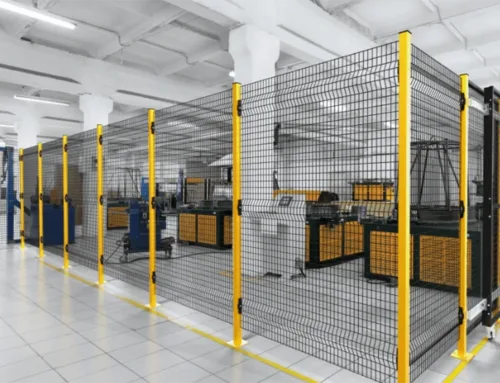
Steel mesh guarding works, until the day your team has to lift a 35 kg panel off the floor, swap a panel after a wash-down, or chase rust creeping out of a cut edge. An aluminum profile safety fence keeps the perimeter rigid, but it cuts panel weight, shrugs off corrosion, and uses a small set of repeatable fixings so sections come out and go back in without cutting the frame.
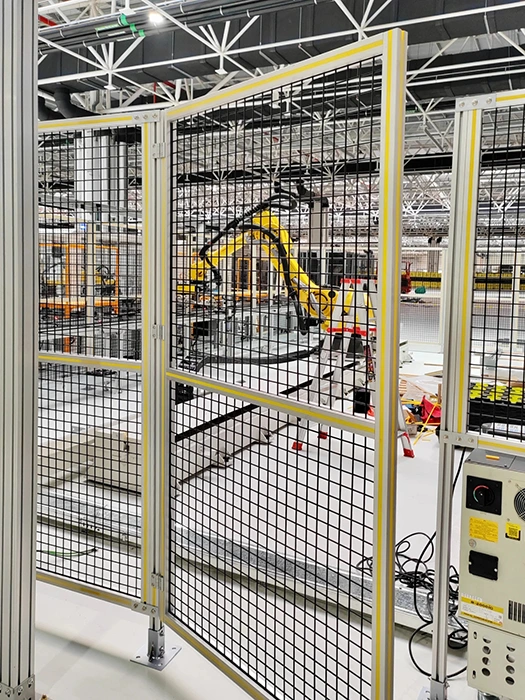
Practical comparison: aluminum profile vs steel mesh guarding
The numbers below come straight from the Alfence aluminum profile safety fence specification. Use them as a yardstick against any steel mesh panel system you are weighing for the same cell.
| Dimension or item | Alfence aluminum profile spec |
|---|---|
| Sección de poste | 40×40 mm or 45×45 mm aluminum extrusion (4040B ≈ 1.8 kg/m, 4040P ≈ 2.0 kg/m) |
| Post length range | 0–2200 mm, cut to project height |
| Abertura de malla | 20×100 mm grid, ~17×97 mm clear opening |
| Standard mesh frame | 20×20 mm outer frame, 3 mm wire |
| Reinforced mesh frame | 20×30 mm outer frame, 3.5 mm wire |
| Mesh panel widths | 200 / 500 / 700 / 1000 / 1200 mm (verify against project drawing) |
| Alternative infill | Polycarbonate, acrylic or sheet metal panels; plastic panels rated to ≈ 60 °C |
| Door envelope | Hinged single 1500 mm / double 3000 mm; folding single 2100 mm / double 4500 mm; sliding single up to 1500 mm / double up to 6000 mm |
| Door handle height | 1050 mm from floor, or 1100 mm from top of door |
| Example interlock | Schmersal AJM150, 1500 N holding force, M12 connector, 40×40 profile |
| Example light curtain | 150–1800 mm protective height, –10 to 60 °C operating range |
| Floor fixing | Foot connector with M8 expansion anchor; ≈ 10 mm drilled hole, friction-lock principle |
Why the comparison usually tips toward aluminum
Lighter panels, fewer lift injuries on reconfiguration
A 40×40 mm Alfence post runs roughly 1.8–2.0 kg per meter, and the mesh frame is sized to keep individual panels under the two-person lift threshold. Steel mesh panels of the same footprint come in closer to three times that weight. On a cell that gets reconfigured twice a year, that weight difference is the difference between a 20 minute panel swap with the line crew and scheduling a rigger for the afternoon.
Corrosion resistance that survives wash-down
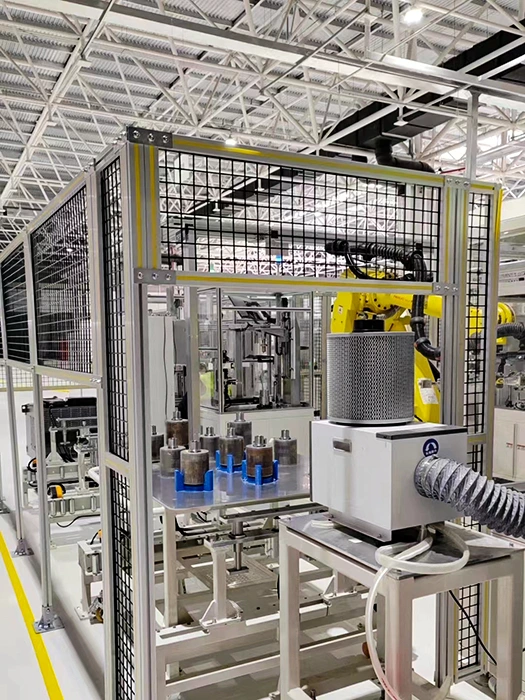
Aluminum forms a self-healing oxide layer, so cut edges, drilled holes and scratched posts do not start bleeding rust the first time a wash-down hose hits them. Alfence panels can be specified with polycarbonate or acrylic infills for visible sections where chemistry or weld spatter would attack a coated steel mesh. Plastic infill is rated to about 60 °C, which covers most food, beverage and light chemical cells. Where steel is the right answer for a high impact line, Alfence is not a substitute and the spec should be written accordingly.
A small number of repeatable fixings
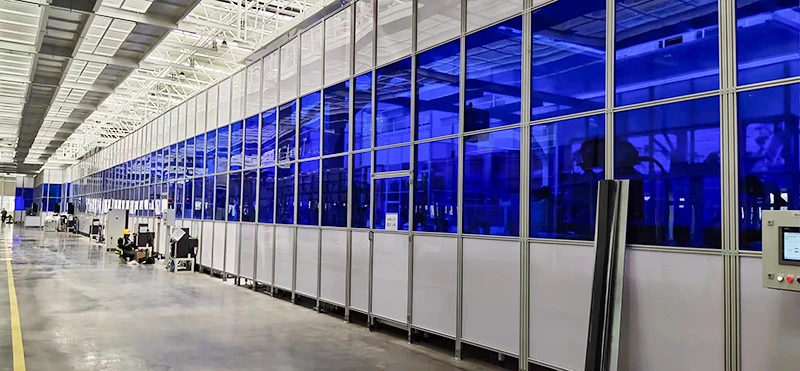
Connectors slot into the T-slot of the post and lock with a standard fastener, so the same toolkit that built the cell takes it apart. Foot connectors use a friction-lock expansion principle with an M8 bolt in an ≈ 10 mm hole, which means a swapped base plate does not require re-drilling the floor to a new pattern. Light curtains, interlocks, e-stop shrouds and cable trays all mount into the same slot without drilling the profile, so adding a safety device is a bracket change, not a fabrication order.
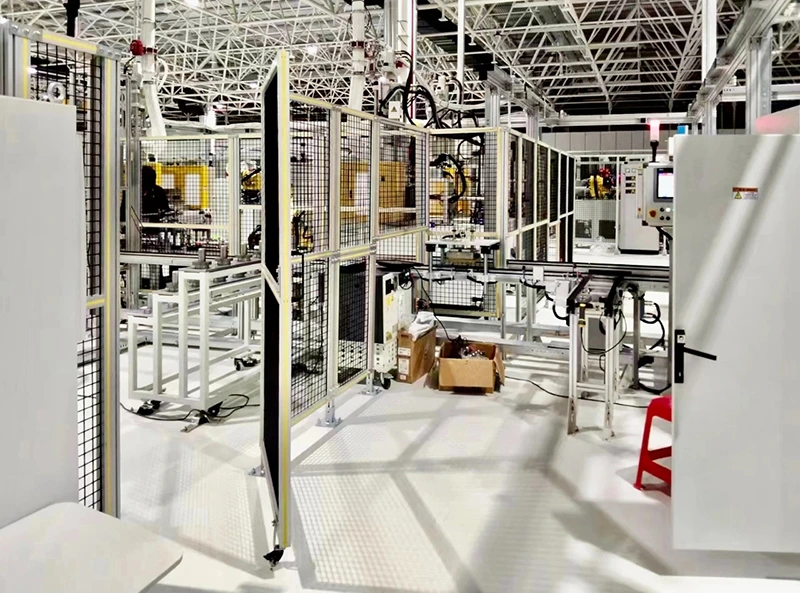
Where Alfence is the right call
- Robot cells and automated assembly lines that are reconfigured when products change
- CNC machining and metalworking cells where panels need to come off for tool changes and chip cleanup
- Welding cells using tinted polycarbonate infill to cut arc-flash exposure on the operator side
- Food, beverage and pharmaceutical lines that run daily wash-down or live in humid rooms
- AGV lanes and conveyor transfers where posts double as cable routing for safety devices and sensors
- Retrofit projects where the floor is finished and the floor pattern cannot be re-drilled to a new layout
Outside of these indoor, light-to-medium isolation scenarios, steel mesh guarding is usually the safer specification. Use the comparison to draw the line, not to argue aluminum into a high-impact or outdoor role it was not designed for.
Qué especificar antes de realizar un pedido
Before you send a drawing for quote, lock down four things: the post section and cut length for each fence run, the mesh height and width stack against the largest access door, the interlock and light curtain part numbers that have to mount into the T-slot, and the floor fixing detail (M8 expansion anchor into concrete, chemical anchor, or welded base for an existing steel plate). Alfence supplies those four data points as a single kit, which is why a retrofit quote usually comes back inside a week and a reconfiguration kit ships without a site visit.
Need an aluminum safety fence layout for a robot or CNC cell?
Send us a sketch of the cell, the door positions, and any safety devices you want to mount to the posts. We will return a marked-up layout, a panel schedule and a door schedule so you can price the project against your existing steel mesh alternative.