
 ES
 EN
 DE
 RU
 PT
 JA
 IT
SAGGING SAFETY GATE / SLIDING SAFETY GATE
One oversized leaf turns into a nuisance stop that a technician fixes for two days
A forklift has to pass, so the opening is made wide and the single leaf grows with it. Gravity then does the rest: the leaf sags, the actuator key misses the switch head, and the line reports an interlock fault that looks electrical. Maintenance re-aligns the switch, the fault returns after a few shifts, and EHS and operations end up arguing about whose scope it is. A sagging safety gate is usually a door selection error, not a switch failure. Framed mesh panels with heavy-duty hinges and ball-bearing rollers give the leaf a rigid body, and a door header beam ties the two posts together so they stay parallel. Where the opening exceeds the single-leaf limit, the sequence moves to a double hinged gate or a sliding safety gate with no floor track.
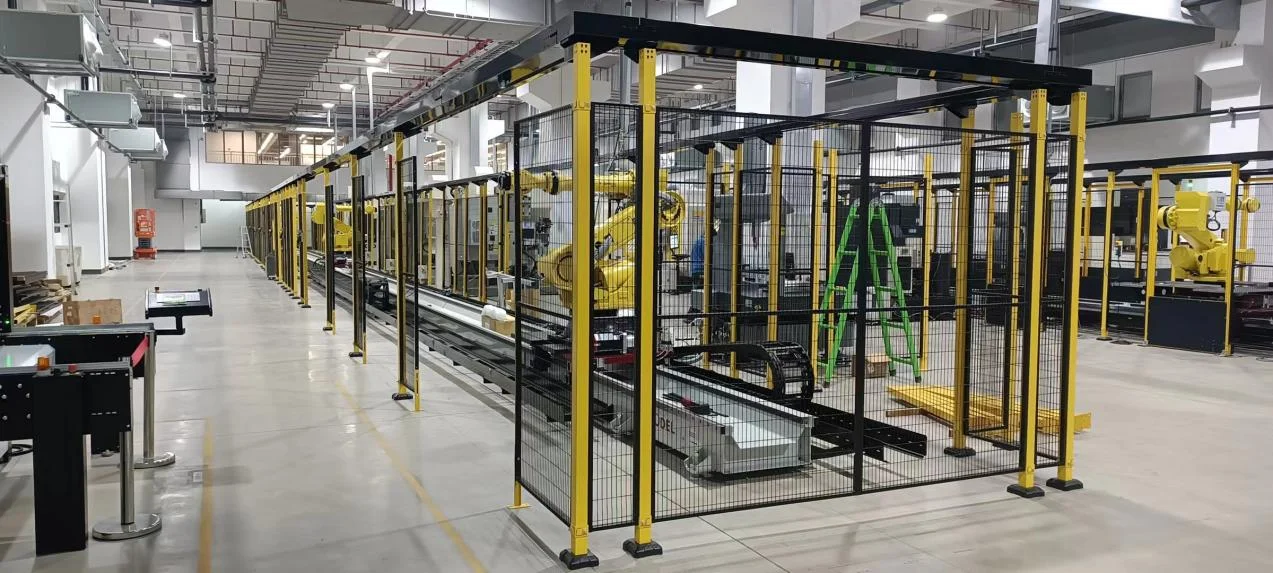
Send your clear opening width and gate type for a leaf selection check
Width limits, and the order in which to change the door
The limits below are configuration ranges for the framed guarding system, stated as single leaf and double leaf or paired values. They are checked against the required clear opening before the carrier and the header beam are drawn. Custom door widths are re-drawn per project rather than assumed from a catalogue number.
| Gate type | Listed single / double width and where it belongs |
|---|---|
| Con bisagras | 1500 mm single and 3000 mm double. A 2.5 m opening is beyond the single leaf limit, so it becomes a double leaf with a header beam holding both posts parallel. |
| Push-pull | 1200 mm single and 2400 mm double. Used where a swing arc would clash with the machine or the maintenance aisle. |
| Corrediza | 2150 mm single and 4300 mm double. A sliding safety gate with no floor track suits wide openings and keeps the forklift path free of a rail. |
| Plegable | 2400 mm single and 4800 mm double. Considered where side room for a sliding leaf is not available, with the hinge stack checked in the drawing. |
The replacement order is therefore: reduce the opening if the layout allows, move to a double leaf, then move to a sliding or folding arrangement. Extending a single hinged leaf past its stated range is not one of the options.
What holds the actuator on its line
A rigid leaf, heavy hinges and ball-bearing rollers
Framed mesh panels use a 20x30x1.5 mm rectangular tube border with 3.0 or 4.0 mm wire welded to it and flat full welds at the joints. The frame acts as a beam, so the leaf does not bow under its own weight. Heavy-duty hinges carry the vertical load at the post, and ball-bearing rollers support long or wide leaves where a caster would otherwise wear into a sag. Q235 60×60 mm posts on base plates with four M10 expansion anchors give the hinge a datum that does not move with the floor.
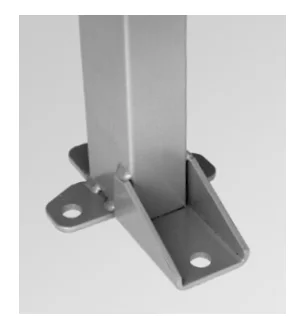
The header beam is an alignment member
Without a header, two free-standing gate posts can drift and the leaf starts to drop at the latch side. The safety lock mounting carrier then sits a few millimetres off the actuator, and the interlock reports a fault that maintenance traces through the wiring. The header ties the posts together, keeps them parallel and holds the leaf centred on its switch. Acceptance records three to five open-close cycles, post verticality, panel flatness and fastener counts; the gate should open to at least 90 degrees and dimensional tolerance is agreed in the contract, with +/-5 mm used in project documents.
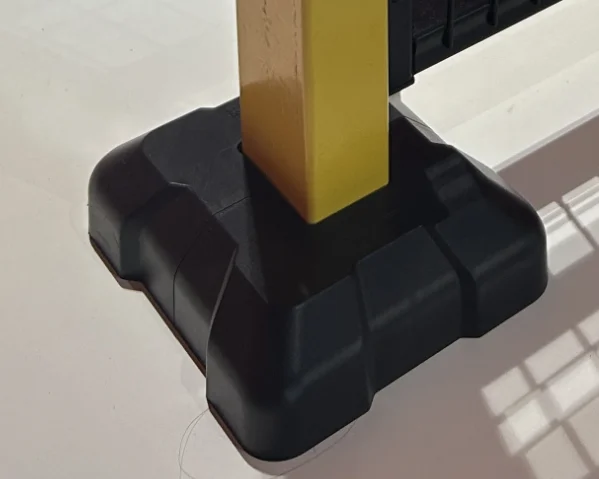
How to measure the misalignment on site
Close the gate and record the key-to-switch position at the top and bottom of the switch head. Open and close the leaf three to five times, then re-measure at the same two points. A growing difference points to hinge or post movement; a constant offset points to a carrier or mounting face problem. Check the latch engagement, post verticality and base plate anchors before any electrical fault-finding. The safety circuit, restart inhibit and safety rating remain with the integrator under ISO 14120, and the 1600 J impact figure belongs only to the tested standard configuration. This system is not intended for pure pedestrian guidance.
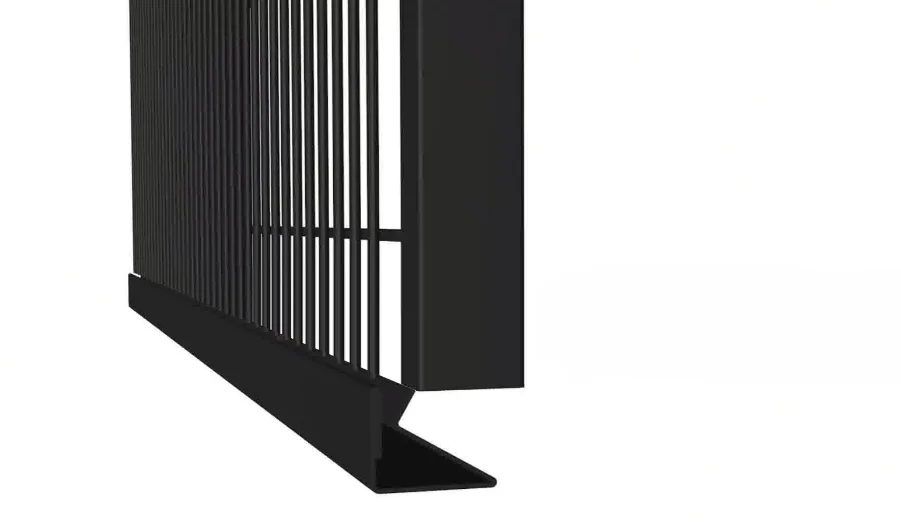
Openings where the door type should be re-checked
- Forklift access into a machine perimeter guarding cell: the wide opening is fixed, so the leaf count has to change instead.
- Protección de seguridad del paletizador y protección de seguridad de la línea de transportadores: frequent cycling makes hinge wear a scheduled maintenance item.
- Robot cell guarding with a maintenance door beside a transfer opening: the gate bay must stay standard even when the surrounding bays do not.
- Top-open and overhead crane cells: the header must not intrude into the vertical lift path.
Selecting the door by the opening width keeps the interlock on a datum it can hold for years, instead of a setting that is corrected every second day.
The inputs for a gate selection drawing
Send the clear opening width and height, forklift or pallet envelope, gate handing and swing, the switch and actuator key models, the number of daily cycles, floor and anchor conditions and the safety circuit owner. The returned pack carries the general arrangement with the header beam, the gate type and width schedule, the panel and post BOM, the lock carrier hole-position drawing and the alignment and gate-cycling checklist. Electrical schematics and validation stay with the controls integrator.
Size the leaf, then hold the posts
A rigid framed leaf, the right hinge hardware and a header that keeps two posts parallel cost less than a year of intermittent stops and repeated re-alignment visits.

