ES
ES  EN
EN  DE
DE  RU
RU  PT
PT  JA
JA  IT
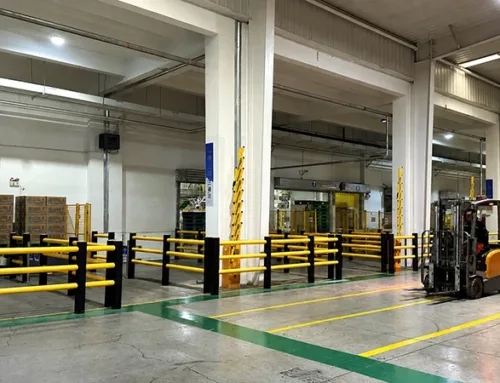
IT On a 7×24 airside ramp, the same concrete slab carries baggage tugs, fuel trucks, pushback tugs, catering trucks, de-icing rigs, marshallers, walk-out captains, ramp agents and inspection crews in overlapping shifts. Painted lines and a marshaller with wands can only hold that traffic pattern for so long before a fuel truck edge clips a baggage belt, a tug noses into a stair truck, or a service car drifts into a crew path. FCBarrier ARMORFLEX polymer flexible crash barrier turns those soft separations into a permanent physical boundary that absorbs up to 28,950 J of strike energy and rebounds, so a single lost mirror or a single missed radio call does not become a flight-canceling incident.
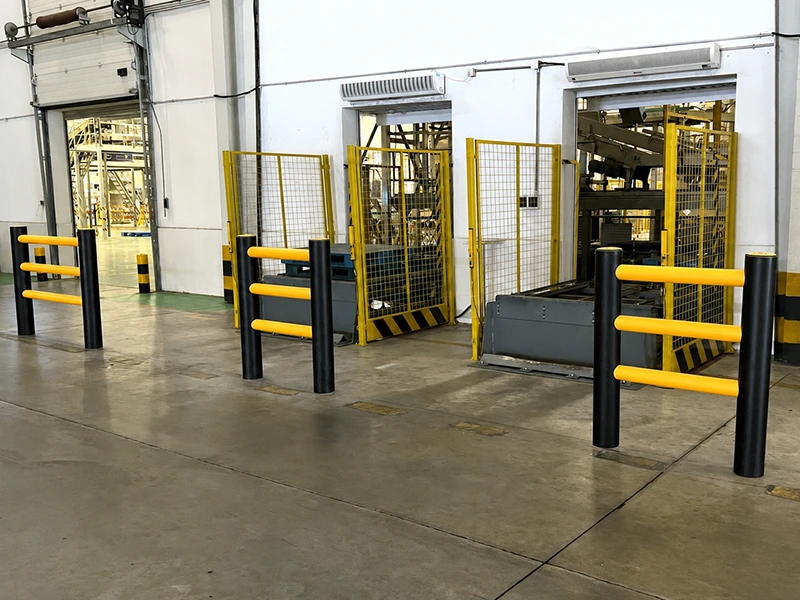
Why the Apron Cannot Run on Painted Lines and a Marshallers’ Wand Alone
An airport ramp is a high-density, mixed-traffic industrial site that never sleeps. ICAO Annex 14 and IATA AHM 630 guidance both treat the apron as a controlled movement area, but the practical day-to-day separation still leans on a marshaller with illuminated wands, painted guidance lines on the apron concrete, and a flight-by-flight radio handshake between ramp and tower. Each of those controls works when nothing unexpected happens, and fails the same way when it does:
- Painted lines wash out under jet blast, fuel and de-icing fluid within a single winter season, and re-painting cycles rarely align with the operation.
- A marshaller standing two meters from a moving tug or fuel truck is the softest target on the apron; one missed call and the human absorbs the impact.
- Baggage tugs, belt loaders and pushback tugs share the same concrete strips as walk-out crews, lavatory service trucks and catering trucks, so the chance of an edge contact grows with every extra turnaround squeezed into a peak bank.
- Steel barriers that are bolted to the apron concrete transfer the full impact into the slab, opening anchor pockets that take weeks of night-shift closure to repair and re-certify.
What an airside operations team needs is a fixed, visible, energy-absorbing boundary that does not depend on the marshaller’s attention span and does not turn every low-speed nudge into a concrete repair ticket. That is the slot a flexible crash barrier built from ARMORFLEX polymer is designed to fill.
How a Self-Rebounding Polymer Crash Barrier Fits an Airside Geometry
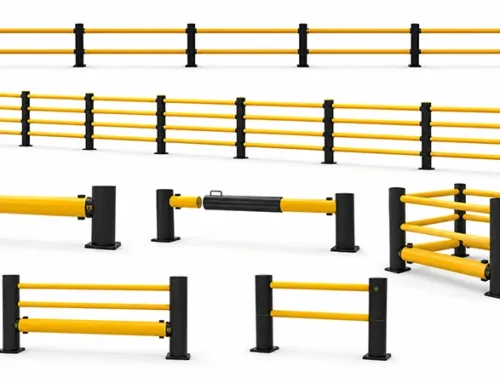
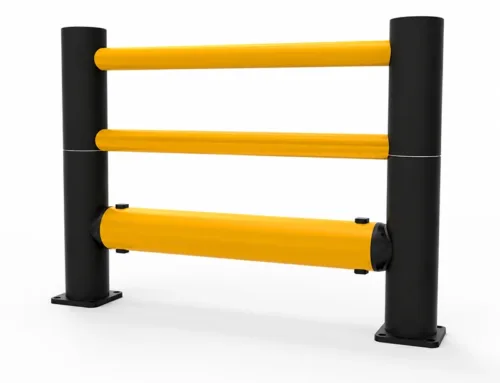
FCBarrier is a modular, energy-absorbing crash barrier system built around an ARMORFLEX polymer post-and-rail cell. The same material is used in the SR single-rail, DR double-rail, TR pedestrian-rail and CTR column-protector series, and the published Joule ladder runs from 3,850 J on the SR100 up to 28,950 J on the DR190, TR190+ and CTR190+ — the 8 t @ 9.6 km/h envelope that a fully loaded fuel truck or a heavy pushback tug can hit under a tight gate turn.
Three design choices make the system usable on a constrained apron footprint rather than just inside a logistics warehouse:
- Up to roughly 80% of strike energy is absorbed inside the polymer post before it reaches the anchor. A 1.5 t tug drifting into a barrier at walking pace does not transfer enough residual force to chip the concrete or shear an expansion bolt. The post deflects, the rails flex, and the assembly returns toward its original geometry.
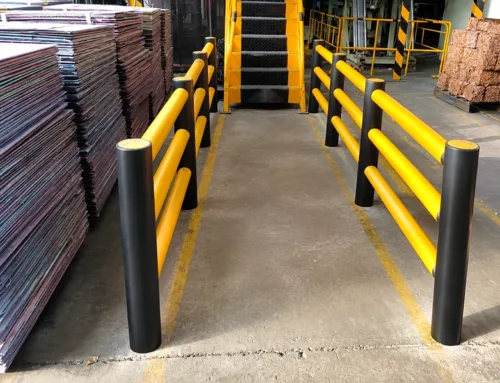
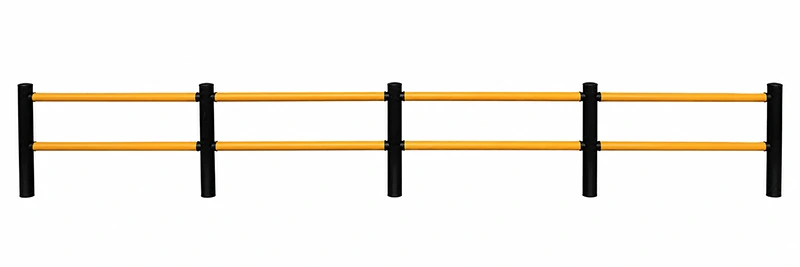
- The cross-section stays slim. The DR double-rail and TR190+ pedestrian rail use the same slim polymer upright as the warehouse-spec TR range, so the assembly does not eat into the already-narrow gap between a gate podium and the jet-blast clearance line, or block sightlines from the tower camera.
- Cells are joined with a mortise-and-tenon quick-release. One marshaller with a rubber mallet can swap a single damaged rail or post in minutes, between turnarounds, without re-anchoring the entire run or torch-cutting a steel stub out of the slab.
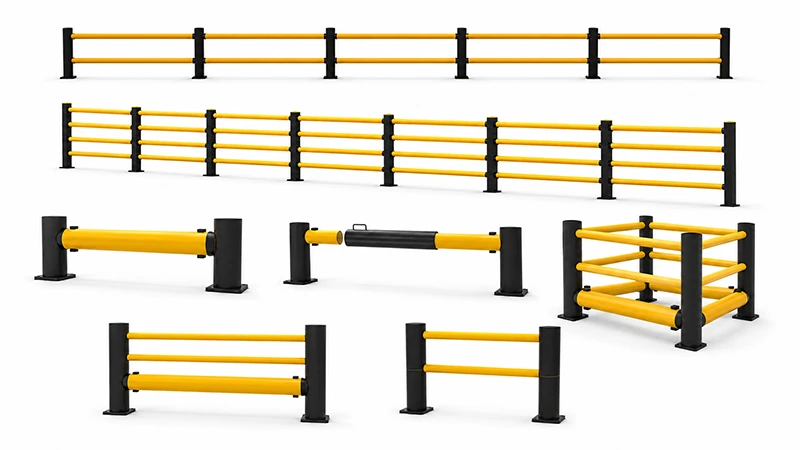
FCBarrier Energy Ladder: Match the Series to the GSE Mass and Speed
Airside procurement boards should not buy a single “barrier SKU” and roll it out across the apron. The Joule ladder published for the SR, DR, TR and CTR series lets a ramp safety engineer pick the right cell for each sub-zone — a baggage tug lane, a fuel-truck staging pad, a walk-out crew path — without overpaying for a 28,950 J post where a 6,500 J post is enough.
| Serie | Profile | Rated impact energy | GSE / forklift envelope | Typical airside use |
|---|---|---|---|---|
| SR100 | Single rail | 3,850 J | 1.5 t @ 8 km/h | Walk-out crew corridor, narrow service lane |
| SR148 | Single rail | 14,400 J | 4 t @ 9.6 km/h | Catering truck staging, lavatory service bays |
| SR190 | Single rail | 21,350 J | 6 t @ 9.6 km/h | Baggage tug lanes between stands |
| DR100 | Double rail | 6,500 J | 3 t @ 7.5 km/h | Equipment-zone perimeter, light GSE |
| DR148 | Double rail | 19,000 J | 6 t @ 9 km/h | Stand-perimeter segregation, pushback lanes |
| DR190 | Double rail | 28,950 J | 8 t @ 9.6 km/h | Fuel-truck staging, heavy GSE envelope |
| TR100 / CTR100 | Pedestrian rail / column protector | 8,200 J | 3 t @ 8.4 km/h | Crew paths, gate-podium column protection |
| TR148+ / CTR148+ | Pedestrian rail / column protector | 19,000 J | 6 t @ 9 km/h | Stand column protection, jet-blast columns |
| TR190+ / CTR190+ | Pedestrian rail / column protector | 28,950 J | 8 t @ 9.6 km/h | Refuelling hydrant columns, heavy stand columns |
The 28,950 J top of the ladder is the published FCBarrier rating under the 8 t forklift envelope — relevant to the heaviest fuel and pushback tugs that share the apron — while the SR and DR cells at 3,850–19,000 J cover the higher-frequency, lower-mass contacts that actually drive most ramp incidents.
What a 28,950 J Self-Rebounding Polymer Crash Barrier Buys the Ramp Team
ARMORFLEX energy absorption on the first strike
On a sustained low-speed impact, the polymer post deflects and the rails flex, dissipating roughly 80% of the strike energy inside the cell. The remaining force that reaches the anchor is the residual, not the full impact — which is why the post returns toward its original geometry instead of folding over the slab.
Self-rebounding recovery between turnarounds
After a typical tug or belt-loader contact, the same cell is back in service for the next flight. The ramp team does not lose a stand to a one-strike replacement cycle, and a damaged rail or upright can be swapped as a single component with the mortise-and-tenon quick-release instead of cutting the run out of the apron.
Slim cross-section for tight gate geometry
The DR double-rail and TR190+ pedestrian rail keep a narrow footprint so the barrier does not crowd the gap between the gate podium and the jet-blast clearance line, the service road behind a stand, or the lane a walk-out crew uses to reach the aircraft door.
Corrosion-free, repaint-free service life
ARMORFLEX polymer does not rust, does not need repaint cycles after a strike, and is resistant to jet fuel, de-icing fluid and salt-laden ramp wash water. That removes the recurring “re-paint after every contact” line item from the airside maintenance budget and keeps the yellow visibility finish through the winter.
Where FCBarrier Goes on the Apron and Inside the Terminal
The same modular cell can be reconfigured for each airside sub-zone, so a single spec can cover a terminal-wide rollout instead of three different barrier product lines from three different suppliers.
- Stand perimeter segregation: DR148 or DR190 between the aircraft parking line and the service road, keeping catering, lavatory and water trucks off the walking path of the walk-out crew.
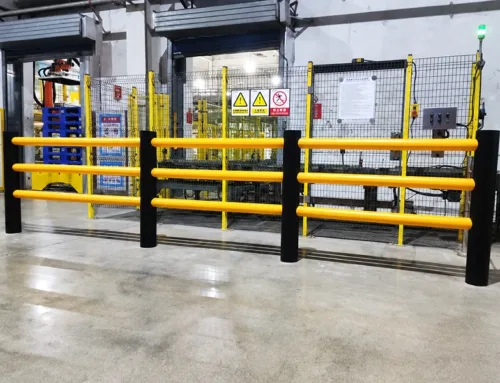
- Baggage tug and belt-loader lane: SR190 along the tug corridor, with mesh-gated cells at the conveyor openings so a single misjudged tug does not roll into the belt.
- Fuel-truck staging pad: DR190 and CTR190+ around the hydrant pit and refuelling columns, with the corrosion-free polymer surface surviving fuel and de-icing contact.
- Terminal service corridors: TR148+ pedestrian rail between back-of-house service doors, baggage sorting and crew access, where a slim rail keeps the corridor usable for carts and tugs without giving way to a drifting tug.
- Gate podium and jet-blast columns: CTR148+ and CTR190+ column protectors around the structural columns that line every gate, so an outrigger or a tug edge that strays off the painted line hits polymer, not concrete.
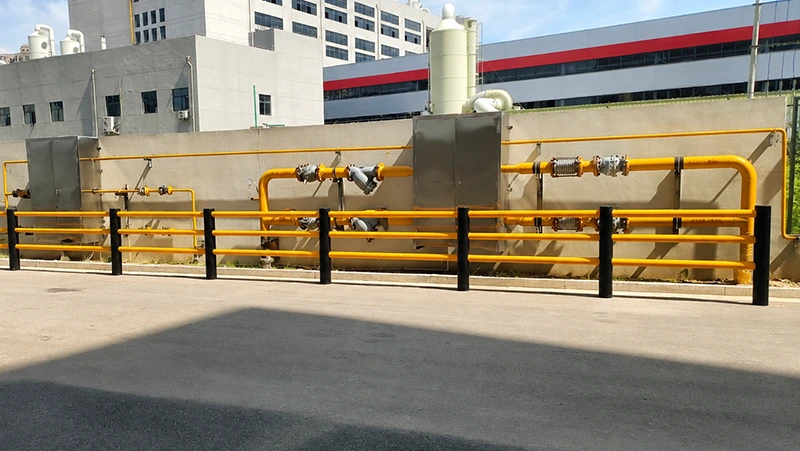
- Outdoor apron service road: polymer barrier run along above-ground fuel hydrant piping and process lines, separating the GSE staging area from the refuelling infrastructure.
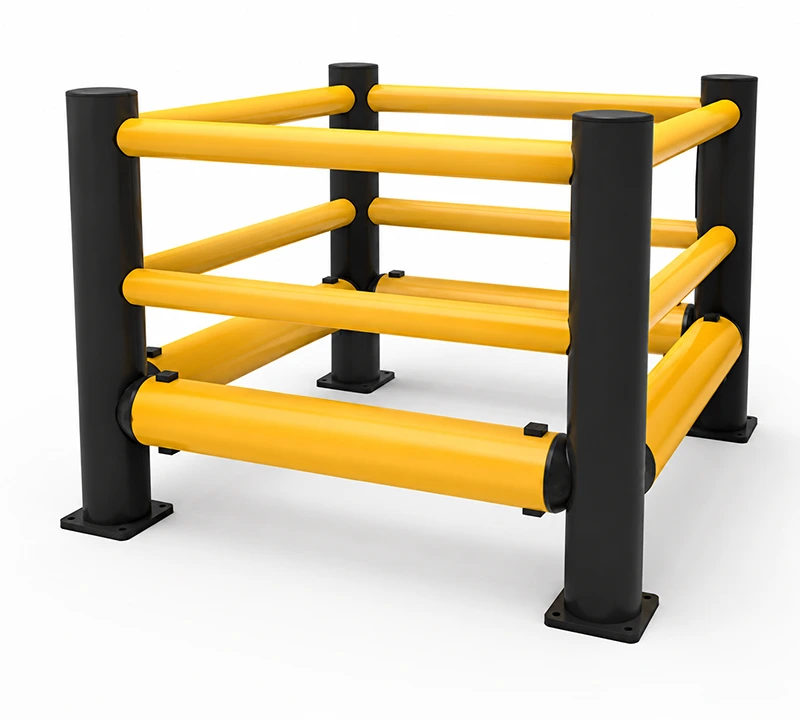
What an Airside Spec Pack Should Contain Before a Refurb
A ramp safety engineer walking a procurement board through an FCBarrier rollout should not have to defend the barrier on the day of the meeting. The pack that clears the airside committee in one pass usually includes the following:
- Sub-zone impact map — which parts of the apron face fuel-truck-class (28,950 J) loads, which face belt-loader-class (3,850–6,500 J) loads, and which face pedestrian-only loads. The Joule ladder is then matched one-to-one, instead of buying a single “heavy” SKU for the whole ramp.
- Anchor and concrete spec — minimum concrete compressive strength, slab thickness, expansion-bolt type and torque value, verified against the apron rather than assumed from a generic datasheet.
- Modular quick-release procedure — written swap procedure for a single rail or post, with the rubber-mallet / pin-extractor tool list, so the marshaller can do the swap between flights without taking the stand offline.
- Documentation for review by the local safety code — the published Joule ratings and the energy ladder are the FCBarrier contribution; any local PAS 13, ICAO Annex 14 or national aviation authority review remains the airport’s own responsibility, and is not claimed here as a third-party certification.
Specify FCBarrier for the Next Apron Refurb
For a 7×24 ramp, the question is not whether a self-rebounding ARMORFLEX polymer crash barrier is cheaper than the next steel repaint cycle — it is whether the apron can keep absorbing one-strike stand closures until someone finally proves the steel-replacement business case. FCBarrier publishes the 3,850–28,950 J Joule ladder, the slim cross-section, the mortise-and-tenon quick-release and a single modular cell that covers stand perimeter, baggage hall, fuel-truck staging and crew corridors.
Send the airside sub-zone layout and the GSE inventory, and the FCBarrier engineering team will return a barrier-class assignment per sub-zone and an installed-cost envelope against the existing steel-replacement plan.