ES
ES  EN
EN  DE
DE  RU
RU  PT
PT  JA
JA  IT
IT Machine guarding fence — safety device integration
Phantom Safe Torque Off Stops: Why a T-Slot Guarding Fence Post Mounts Interlocks Without Drilling
A robot cell that keeps tripping Safe Torque Off is rarely a software problem. On painted steel posts, fitting a safety interlock switch means drilling, which drops metal swarf inside the guarded zone and breaks the powder coating where rust starts. On heavily used hinge doors, the leaf can sag until the interlock tongue no longer sits square in the switch body, and the PLC reads an unsafe door and stops the line. Alfence industrial safety fence uses T-slot aluminum profile posts so sensors, e-stops and cable routing bolt straight into the slot – no drilling, no swarf, no coating damage – and a reinforced hinge door frame that holds the interlock geometry over years of opening cycles. The result is fewer spurious stoppages, protected OEE, and a machine guarding fence that can still be reconfigured when the cell changes.
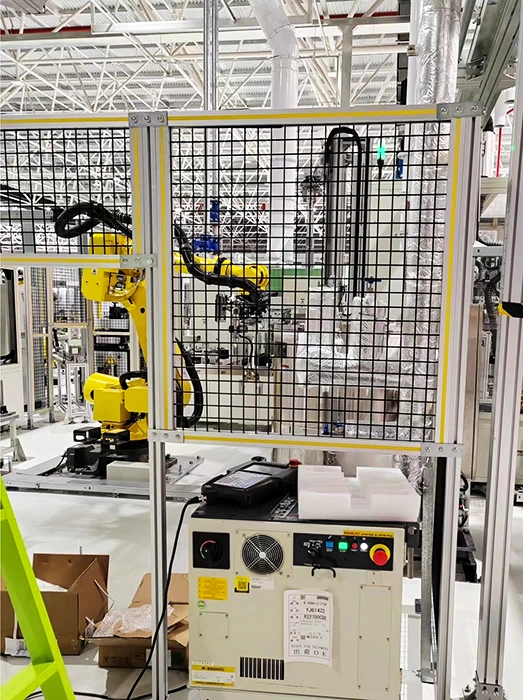
The scenario: sensors are an afterthought, and the fence pays for it
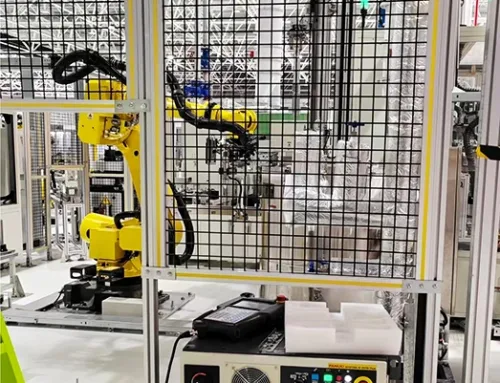
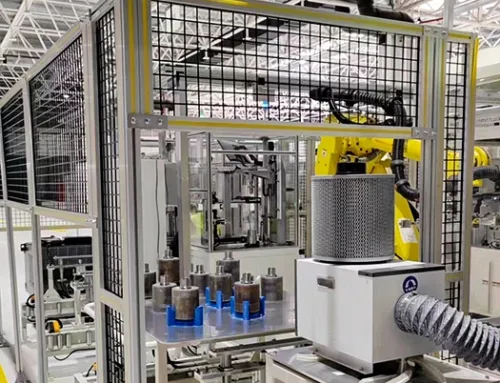
This is the classic automation retrofit. A new robot cell, welding cell or CNC machine goes in, the perimeter comes from a conventional welded steel fence, and the safety devices have to be fitted onto a post that was never designed to receive them. Maintenance ends up with a drill, a painted post and a 6 mm hole that has to align perfectly with a switch rated to keep a gate locked. This Alfence industrial safety fence is specified from the T-slot outward, so interlock switches, safety light curtains, e-stops and conduit runs are part of the modular safety fence design rather than a site modification.
| Artículo | Reference data from Alfence product documentation |
|---|---|
| Post profile | 40×40 mm or 45×45 mm T-slot aluminum extrusion, post length up to 2200 mm |
| Profile weight reference | 4040B approx. 1.8 kg/m; 4040P approx. 2.0 kg/m |
| Mesh grid | 20×100 mm welded wire mesh |
| Mesh panel frame | Standard 20×20 mm frame with 3 mm wire; reinforced 20×30 mm frame with 3.5 mm wire |
| Panel options | Welded wire mesh, polycarbonate (PC), acrylic or metal panel; plastic panels rated to approx. ≤60 °C |
| Hinged safety door | Single leaf up to 1500 mm; double leaf up to 3000 mm |
| Folding / sliding door | Folding single 2100 mm, double 4500 mm; linear or wheel-type sliding door up to 4000 mm single / 6000 mm double |
| Handle height | 1050 mm from floor, or 1100 mm from the top of the panel |
| Interlock example | Schmersal AJM150 safety switch, locking force 1500 N, matched to 40×40 mm profile |
| Floor fixing | Foot connector / anchor base with expansion or I-bolt; example M8 fixing with approx. 10 mm hole |
| Standards referenced | EN ISO 14120, EN ISO 13857, EN ISO 14119, EN ISO 12100, EN ISO 13849-1, EN ISO 10218-2, plus OSHA / ANSI-RIA R15.06 review. No certificate numbers are published, so each project still completes its own conformity check. |
Why the old fencing approach keeps stopping the line
Drilling a coated steel post: swarf in, coating out, rust in
The interlock switch has to reference the door, so someone drills the post on site. The chips land on the floor of a cell that has just been cleaned, and the bare metal under the powder coat starts to corrode within a season. Alfence removes the operation rather than managing it: the safety interlock switch, e-stop or cable clip mounts into the existing T-slot channel and is locked in place with the connector. Nothing is cut, nothing needs touch-up paint, and the corrosion-resistant aluminum profile stays intact. Because the slot runs the full length of the post, a switch can later move up or down for a taller door or a repositioned light curtain without a new post.
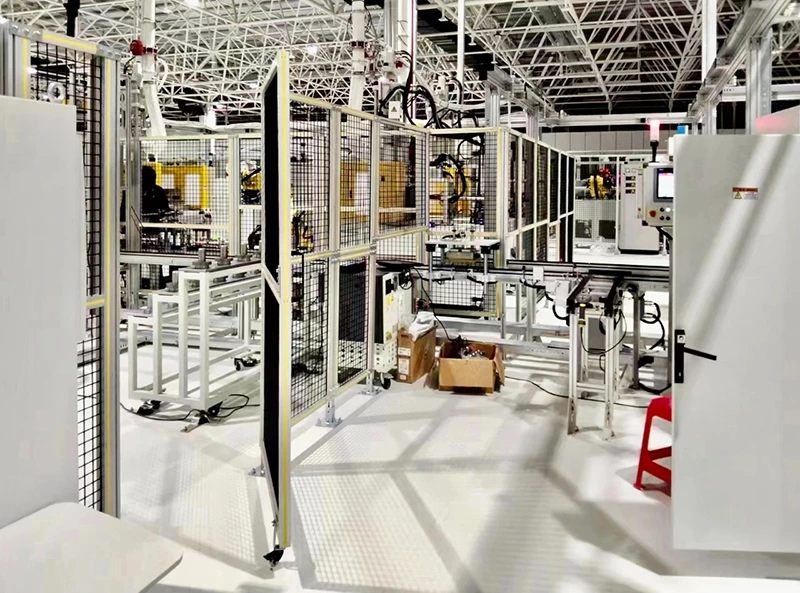
Sagging doors: the interlock tongue stops lining up
A phantom Safe Torque Off trip is often mechanical. On a tall or frequently used hinge door, the leaf drops at the hinge side, the actuator moves out of alignment with the switch head, and the safety circuit drops the drive while the door is physically closed. Alfence hinged doors are supported by the same modular frame family as the panels – standard single-leaf openings up to 1500 mm and double-leaf up to 3000 mm, with the door structure carrying its own frame instead of hanging from a single thin post. Where the guarding layout allows, folding, telescopic or wheel-type sliding doors up to 4000 mm single and 6000 mm double keep heavy traffic openings out of the hinge geometry altogether, and the handle sits at 1050 mm from floor so the operating motion stays repeatable.
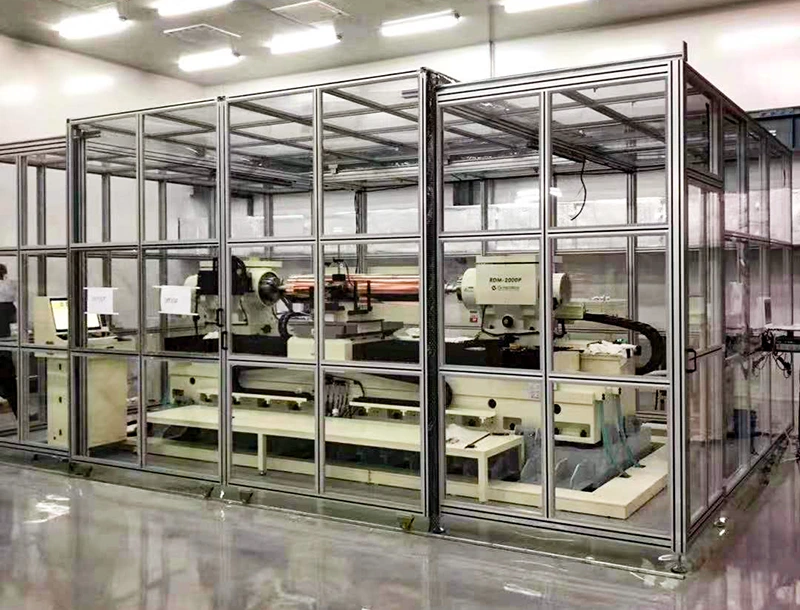
When the process changes, the fence has to change with it
Most plants that suffer phantom stops are also changing the cell – a second robot, a new conveyor hand-off, a relocated palletizer. Welded guarding turns that into a cutting and re-welding job, and every cut destroys the mounting point a switch was fitted to. Alfence is assembled from aluminum profile, connectors, panels and doors, so panels and door frames are unbolted and reused, and the T-slot is available for the new sensor positions. Electricians can run conduit and cable along the slot as part of the same assembly step. If your process generates arc flash or spatter, the same post-and-panel system accepts polycarbonate, acrylic or metal panels instead of mesh, with a plastic panel heat limit of approximately 60 °C to respect.
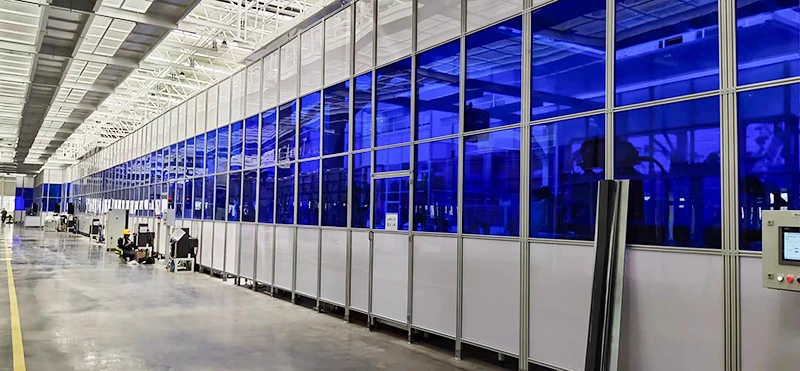
Where this integration approach pays off first
- Robot cell guarding where an interlock switch and light curtain share one post.
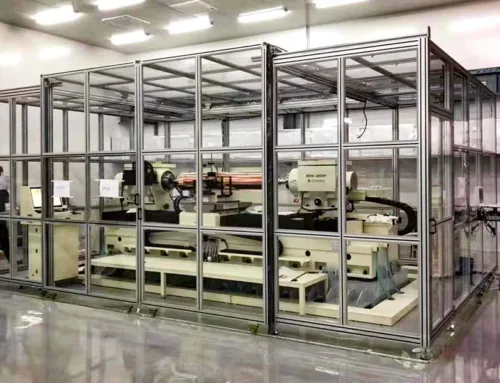
- CNC machine guarding and machine tool guarding with frequent operator access.
- Welding cell guarding where panels change from mesh to solid.
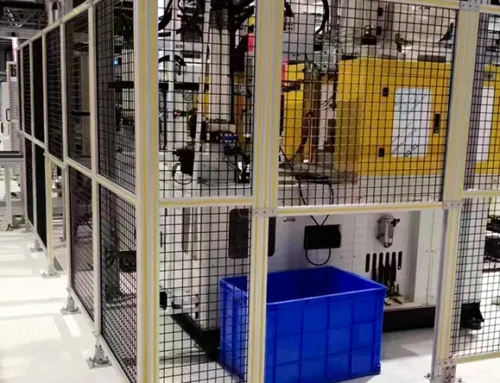
- AGV path guarding, conveyor guarding and palletizer guarding with cable routing along the perimeter.
- Automated warehouse guarding and ASRS high-bay storage guarding with long, uninterrupted runs.
- Cleanroom guarding and relocatable guarding, where aluminium profile and reconfigurability matter more than mass.
- Retrofit guarding that replaces an old welded steel fence without a shutdown for hot work.
One boundary worth stating plainly: Alfence is an indoor, light-to-medium duty modular safety fence. It is not a replacement for a high-impact steel barrier, and outdoor use needs a separate corrosion review. Where EN ISO 13857 distances and EN ISO 14119 interlock arrangements apply, the numbers come from the machine risk assessment and the site’s own conformity file – not from a catalogue page.
What to send us
Send the cell layout with door positions, the required safe distance, the switch or light curtain you intend to use, and the floor fixing method. We will come back with the post profile, panel build-up, door type and switch mounting detail for the T-slot, so your maintenance team can install without a drill and your controls engineer can validate the safety circuit against the actual assembly.
Stop paying for phantom stops
A guarding fence should not create its own downtime. Specify Alfence with T-slot posts, a matched interlock switch and a hinge door frame that stays square, and keep your OEE where it belongs.