ES
ES  EN
EN  DE
DE  RU
RU  PT
PT  JA
JA  IT
IT Valla de Seguridad Industrial
Industrial Safety Fencing for Heavy Scrap-Impact Zones | Mdfence
Industrial Safety Fencing is not just a perimeter line in a scrap yard or dismantling bay. It has to survive flying debris, sudden collisions, and repeated abuse from the same operating zone without bending into a new hazard.
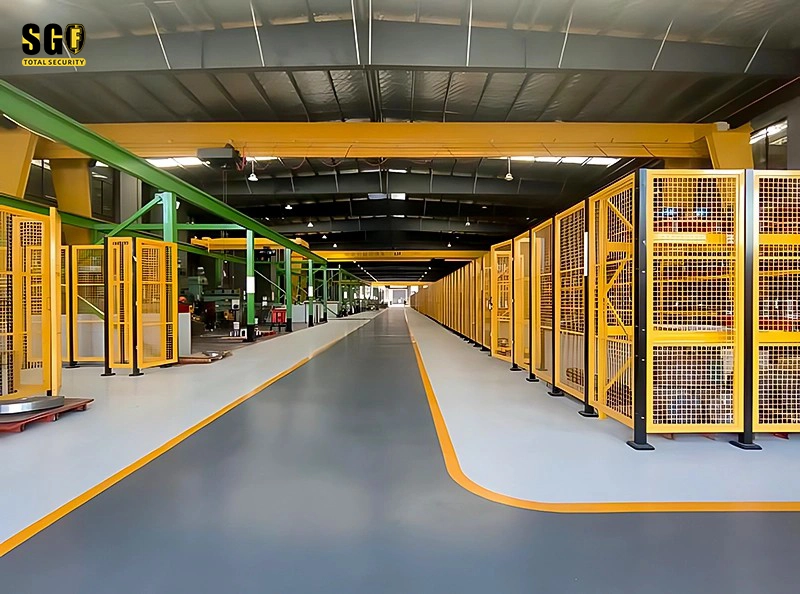
Why light fencing fails in scrap and auto dismantling lines
In waste-metal breaking, scrap shredding, and vehicle dismantling, the danger is rarely limited to one direction. Heavy chunks can rebound, small fragments can spray outward, and forklifts or transport equipment can clip the fence during daily movement. A light mesh guard may look acceptable on paper, but in the field it often deforms first, opens gaps second, and becomes a maintenance problem before it ever becomes a safety asset.
| Problema en el sitio | Respuesta de Mdfence |
|---|---|
| Heavy debris impact | High-strength Q235 carbon structural steel with 60×60 mm posts and a 1600 J impact resistance rating. |
| Fragmentos metálicos voladores | 20×100 mm anti-climb micro mesh helps contain chips and reduce the chance of material spray leaving the cell. |
| Forklift contact and repeated knocks | Rigid fence structure is built for industrial abuse, not light-duty visual separation. |
Why Mdfence fits high-impact industrial safety fencing jobs
Impact resistance that matches real collision risk
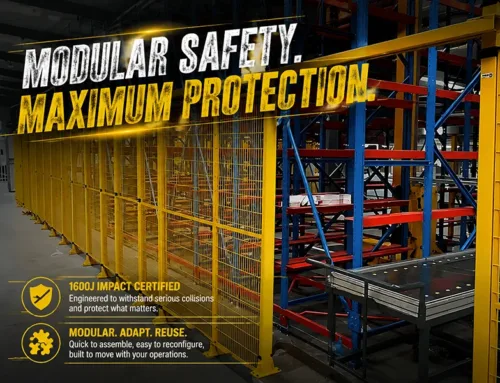
Mdfence is designed for the kind of damage that happens in scrap yards and dismantling lines: sudden contact, repeated bumps, and direct force from moving equipment. The 60×60 mm post structure uses Q235 carbon structural steel and has passed TÜV safety certification. The practical benefit is simple: the fence is meant to stay in service after an impact event instead of turning into a broken edge that creates a second hazard.
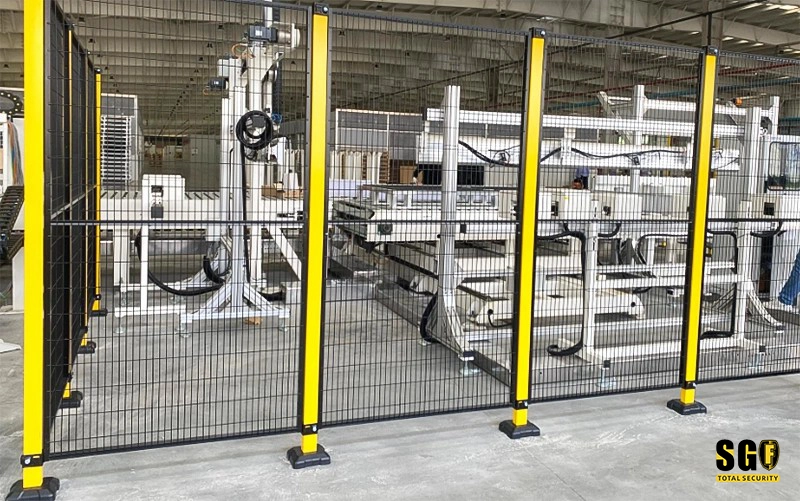
Micro mesh for debris containment and anti-climb control
The 20×100 mm micro mesh format is not only about compliance. It helps close the small gaps that often let fragments escape when a shredder, breaker, or cutting operation throws material outward. In the same layout, the tighter opening also supports anti-climb behavior, which matters when a fence is placed near active maintenance routes or open industrial walkways.
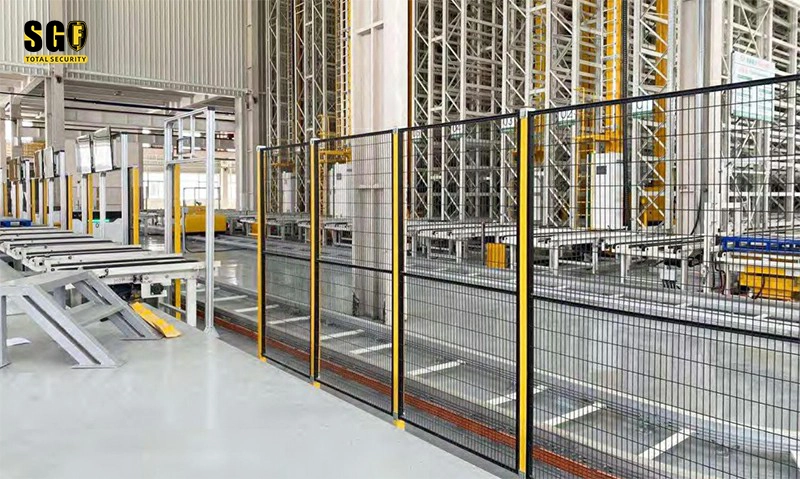
Structure evidence from the fence hardware itself
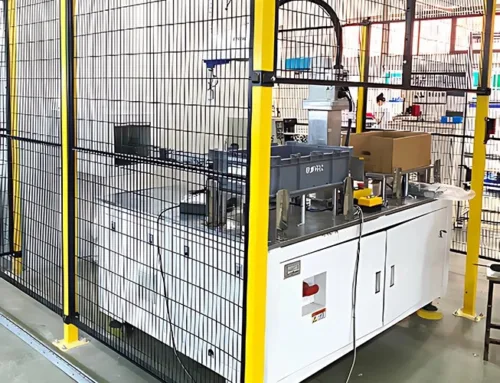
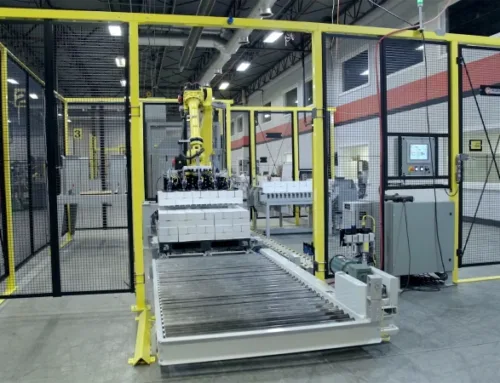
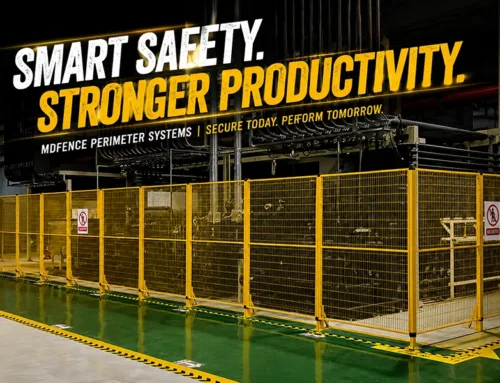
What separates a real industrial barrier from a decorative fence is the detail: posts, clamps, welds, coating, and base plates all have to work together. The product image set shows that Mdfence is built as a structural system, not as a thin panel. That matters in a collision zone because the load path must travel into the post and base, not into a weak face panel that folds on first contact.
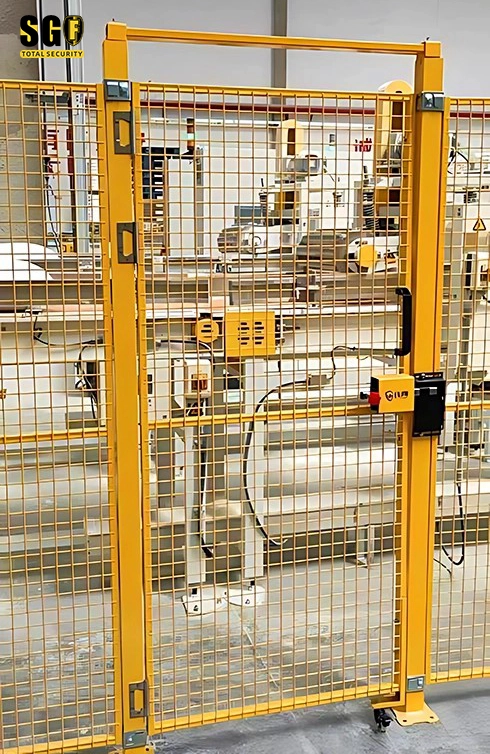
Where this industrial safety fencing is the right fit
- Scrap breaking and sorting lines where flying fragments must stay inside the work cell.
- Auto dismantling lines where impact risk comes from both tools and moving equipment.
- Forklift-accessible industrial aisles where accidental contact is part of daily operations.
- Perimeter isolation around machine lines, transfer points, and high-risk maintenance zones.
In each of these cases, the fence has to do more than mark an edge. It needs to slow damage, hold shape, and keep the production area separated from people and traffic. That is where the combination of impact-rated steel posts and micro mesh becomes valuable.
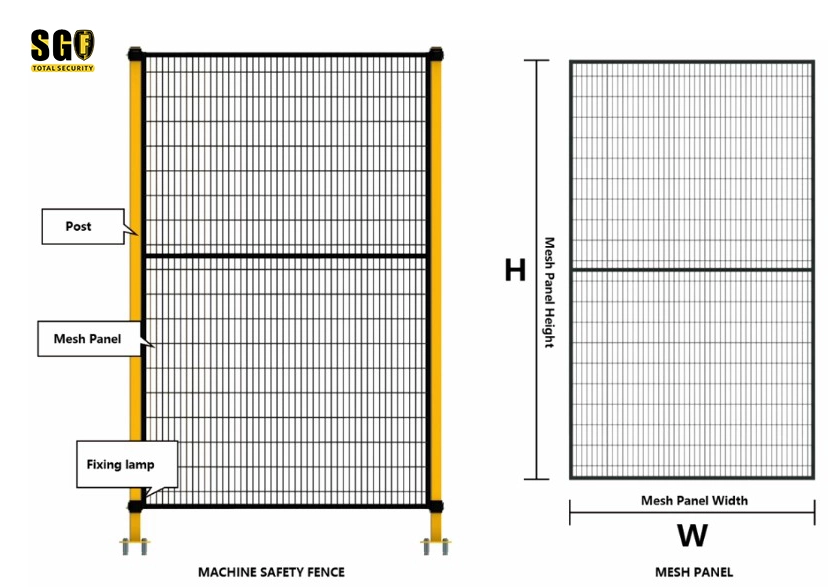
When the site layout is built around collision risk, the final result is not just a fence line. It is a clearer traffic path, fewer exposed hazards, better fragment containment, and less time spent repairing bent guards after every incident.
Qué especificar antes de realizar un pedido
For a scrap or dismantling line, specify the impact risk, the machine throw direction, the traffic route for forklifts, and the width of the containment zone. Then match those conditions to the fence structure, post size, and mesh opening. Mdfence is designed around those industrial inputs so the barrier is selected for the actual duty, not for a generic showroom appearance.
Build the barrier around the risk, not around the guess
If your line faces flying debris and high-impact contact, Industrial Safety Fencing must be specified as a structural safety system. Mdfence combines Q235 steel, 60×60 mm posts, TÜV-certified impact resistance, and 20×100 mm micro mesh to help keep the dangerous side of the process contained.