ES
ES  EN
EN  DE
DE  RU
RU  PT
PT  JA
JA  IT
IT Machine guarding fence panels for cut-heavy light-steel panel lines
Machine guarding fence panels that stop cut debris and keep 8 robots visible
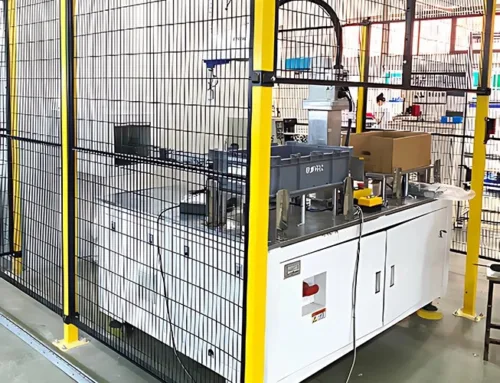
For heavy cutting lines, machine guarding fence panels have to do two jobs at once: trap flying chips and dust, and still leave the supervisor a clean sightline across the full automation cell.
Why this line needs a fence built for chips, dust, and sightlines
A light-steel panel line that cuts door and window openings creates a harsh mix of fast metal fragments and gypsum dust. If the guard is too open, debris escapes into the aisle. If the guard is too opaque, the supervisor loses control of the 8-robot sequence. Mdfence is shaped for that exact trade-off.
| Problema de la línea | Respuesta de Mdfence |
|---|---|
| Flying cut debris | Narrow-mesh opening blocks high-speed fragments before they reach the aisle |
| Worker scratch risk | All wires and the frame are fully welded, reducing loose edges and weak joints |
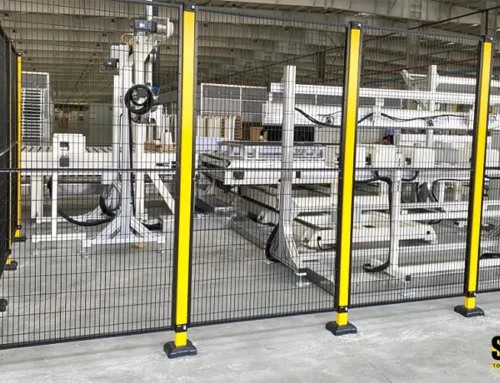
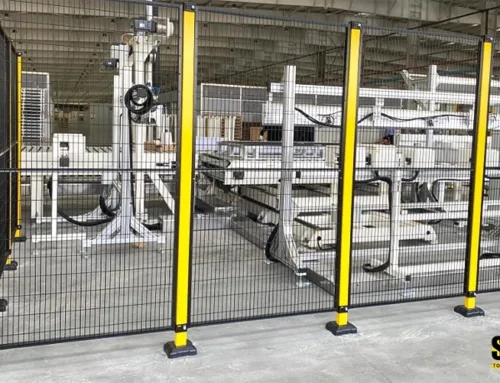
| Blind spots around robots | RAL 9005 black mesh preserves visibility instead of turning the cell into a visual wall |
| Busy line control | Safety yellow RAL 1023 posts stay easy to read from the passageway |
Structure details that explain the fit
1. The frame is built to stay rigid under daily impact
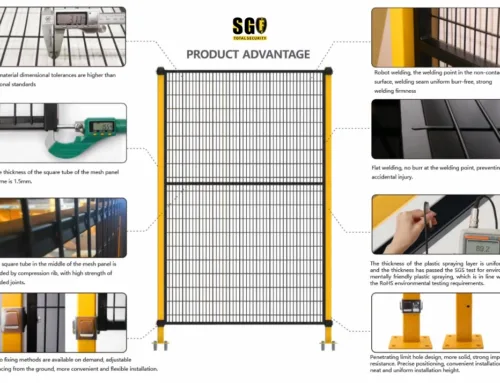
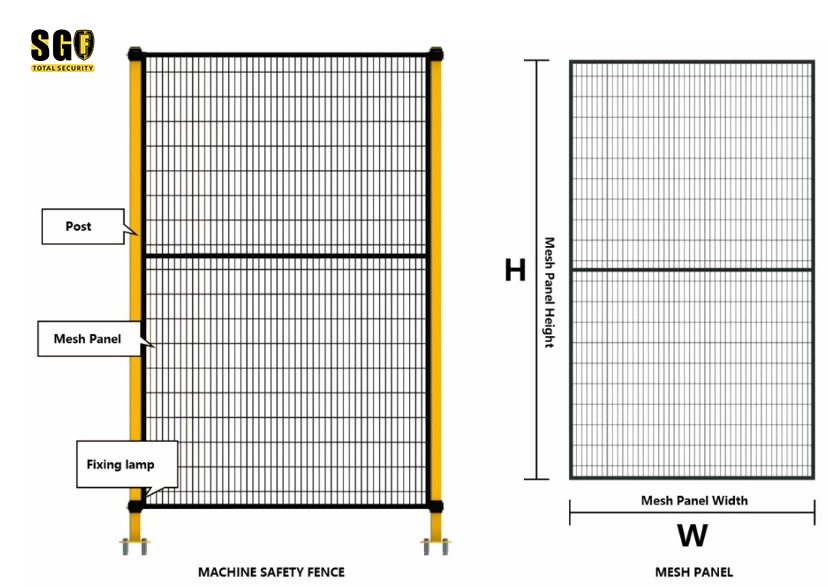
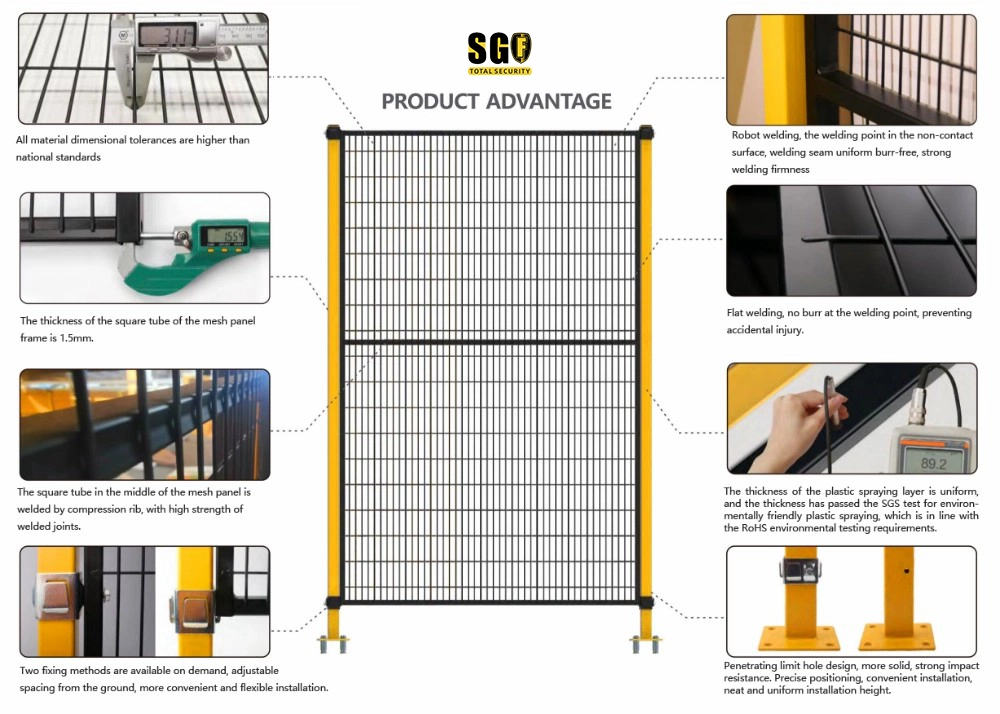
The standard Mdfence panel uses a 20x30x1.5 mm rectangular tube frame, and the steel wires are fully welded to the frame. That matters on a cut-heavy line because the guard is not just a visual boundary; it is a working barrier that must hold shape while chips, vibration, and repeated access keep testing it. The rigid edge also helps the panel keep a straight line around the cell.
2. The mesh is open enough for monitoring, tight enough for safety
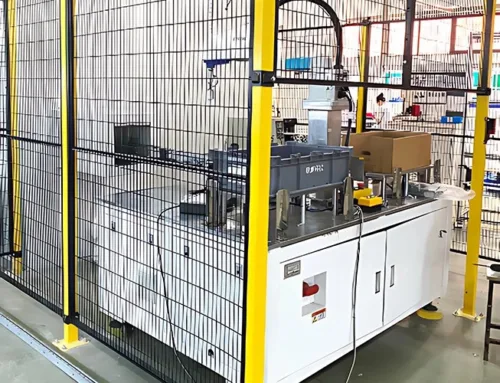
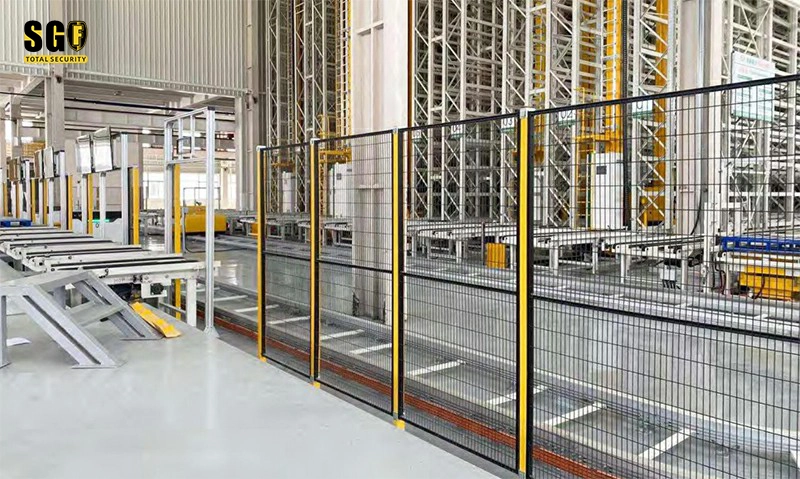
The deep black RAL 9005 mesh is not a cosmetic choice. It is what lets managers watch robot status, tool movement, and line rhythm without walking inside the hazard zone. At the same time, the narrow aperture helps intercept the fine debris stream that comes from high-intensity steel processing and window opening cuts. The result is a guard that protects workers without blocking production visibility.
3. The color code supports fast supervision
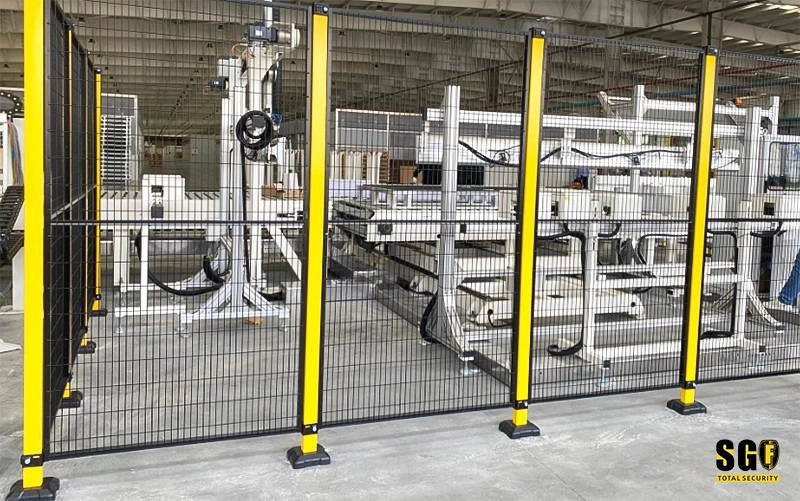
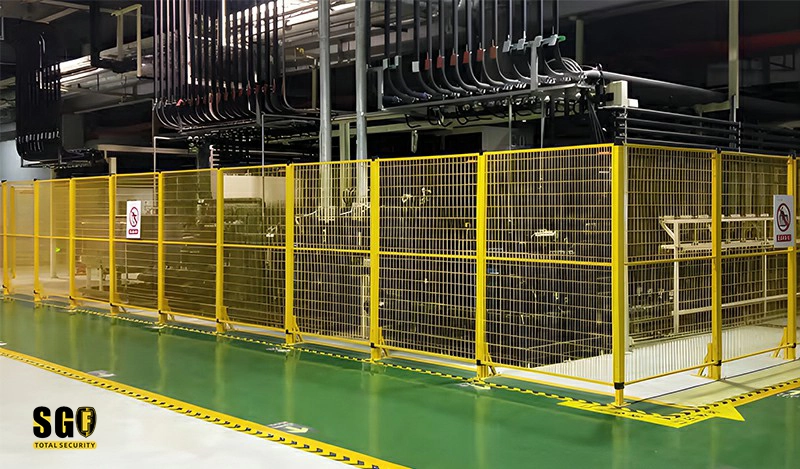
RAL 1023 safety yellow posts make the perimeter easy to read from the aisle, while the black mesh prevents glare and visual clutter. On an 8-robot line, that contrast matters: the supervisor can see the cell boundary immediately, then follow the moving stations inside it. The fence becomes part of line control, not an obstacle to it.
What the installation evidence shows
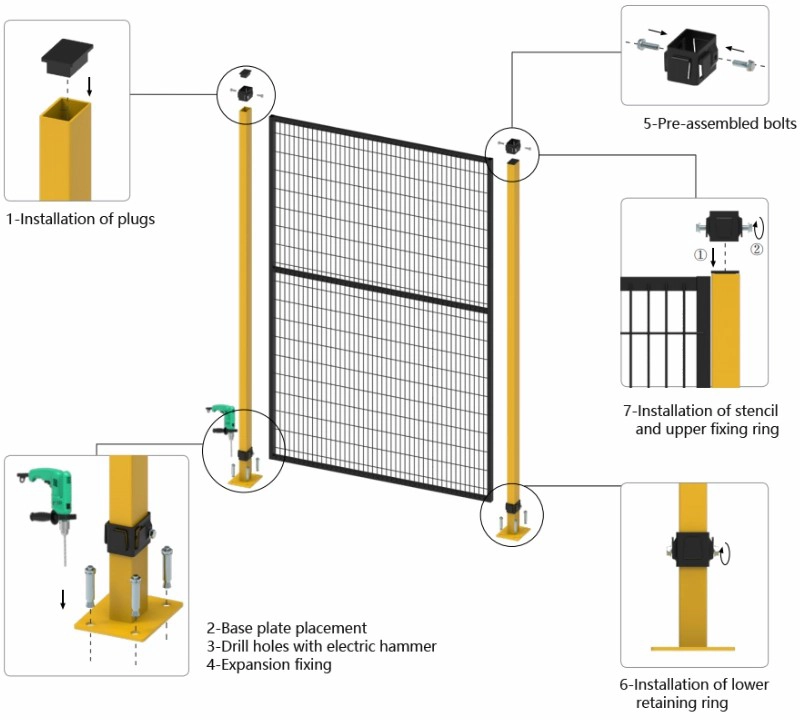
The installation guide and structural photos prove this is not a generic fence package. Base plates, expansion bolts, retaining rings, clamps, and welded joints are all visible in the supporting material, which is exactly what a hard-cut line needs when the guard has to stay aligned through repeated use. The same construction also simplifies maintenance: if the line is reconfigured, the modular frame can be read, adjusted, and reinstalled without guessing where the load points are.
- Keep cut debris inside the cell instead of pushing it into the aisle.
- Maintain clear supervision across the robot sequence from the walkway.
- Use a visual boundary that stays readable even in a dense automation zone.
- Support safe access and stable re-installation through a welded frame and fixed hardware.
In practice, the result is simple: fewer exposed fragments, fewer blind spots, and a production line that stays observable while it stays protected.
For planners who need a guard spec that matches the process
If your line combines heavy cutting with robot coordination, machine guarding fence panels should be specified for both containment and visibility. Mdfence does that with a welded 20x30x1.5 mm rectangular tube frame, narrow mesh, black RAL 9005 panels, and yellow RAL 1023 posts.
Build the perimeter, keep the view
When the fence is sized for debris control and line supervision at the same time, the cell runs cleaner and the manager spends less time guessing. Ask for a layout review if your current guard leaves chips in the aisle or hides the robot state behind an opaque wall.