ES
ES  EN
EN  DE
DE  RU
RU  PT
PT  JA
JA  IT
IT Valla de seguridad para máquinas
Machine safety fencing for scrap yards with impact containment and flying-debris control
In scrap breaking and vehicle dismantling lines, the real risk is not only a stopped machine. Heavy metal fragments can fly, forklifts can clip the perimeter, and light fencing often bends before it protects anyone. Mdfence is a machine safety fencing system built for exactly that environment: a strong frame, a compact anti-entrapment mesh, and verified impact resistance for harsh recycling yards.

Why this machine safety fencing fits impact-heavy recycling lines
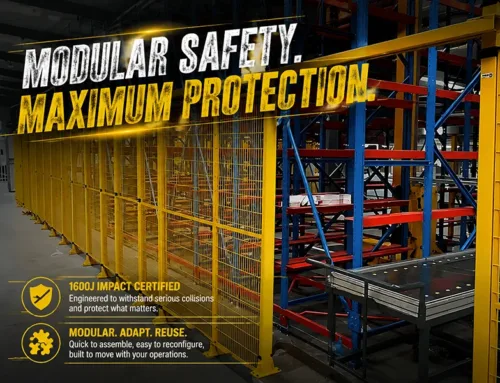
When the line sits beside a crusher, a shredder, or a dismantling station, the fence has to solve two problems at once. It must survive accidental contact from moving equipment, and it must stop flying fragments from reaching operators or walkways. That is why Mdfence uses Q235 carbon structural steel, 60×60 mm uprights, TUV validation, and a design rated to withstand 1600 joules of impact energy. The panel also uses 20×100 mm micro-mesh openings to reduce splash-through and finger access.
| Line requirement | Respuesta de Mdfence |
|---|---|
| Heavy debris flying out of the process zone | 20×100 mm micro-mesh helps block smaller metal fragments before they reach the aisle. |
| Forklift bumps and accidental contact | 60×60 mm uprights in Q235 carbon structural steel are built for harsh yard traffic. |
| High-energy collision risk | TUV-tested impact resistance up to 1600 J gives a measurable safety margin. |
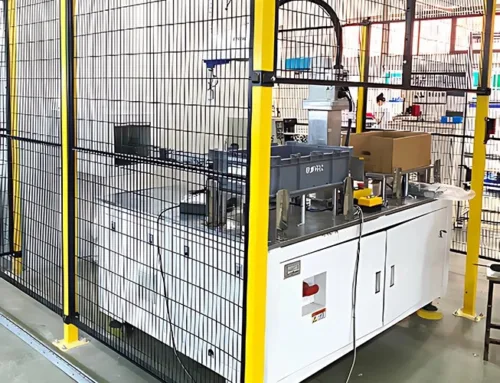
| Operators working close to the machine | The compact mesh format supports anti-entrapment guarding and safer perimeter control. |
Three structural reasons this machine safety fencing stays reliable
1. A frame that can take real yard abuse
The first weak point in many light fences is the post. Mdfence uses 60×60 mm uprights in Q235 carbon structural steel, so the perimeter does not rely on thin wall sections to absorb traffic mistakes. That matters in scrap recovery and dismantling zones, where even a small forklift strike can ripple into a panel failure. The goal is not a cosmetic barrier. It is a structural boundary that keeps its shape when the site gets rough.

2. A mesh that blocks fragments without opening the guard
The second failure mode is splash-through. A fence that looks strong can still leave openings large enough for small metal fragments to pass through. Mdfence uses 20×100 mm micro-mesh openings to create a tighter visual and physical barrier around the machine. That helps protect operators, visitors, and maintenance staff from flying debris while still keeping the line visible for inspection and supervision.
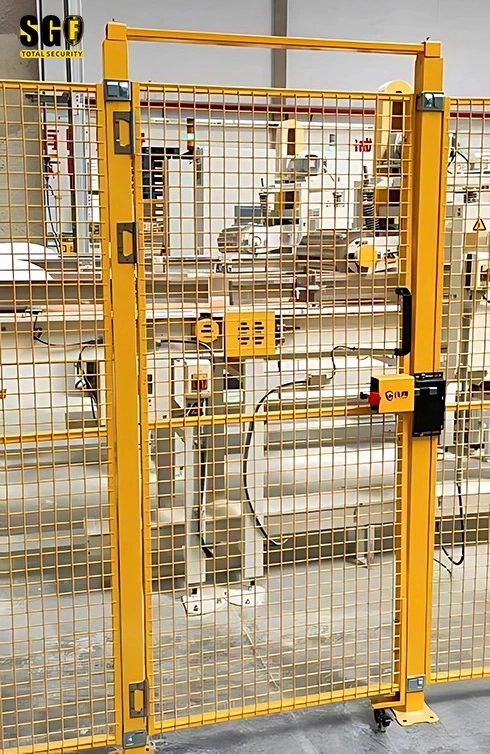
3. A perimeter that matches scrap and dismantling workflows
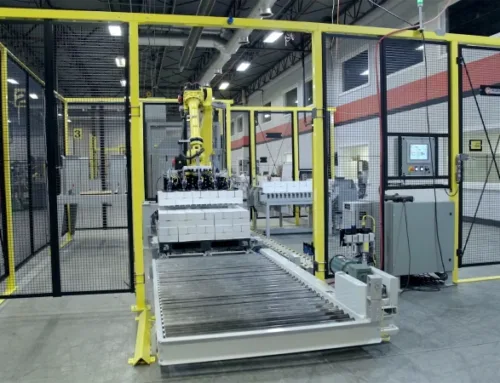
The third reason is layout fit. Scrap yards are not clean factory floors. Traffic routes shift, access points need to stay practical, and the guarding line must work around crushers, shears, sorting bays, and loading lanes. Mdfence is suited to those mixed conditions because it combines impact resistance with anti-flying-debris protection in one machine safety fencing system. You get a perimeter that supports safety discipline without forcing the site into an awkward layout.

Where machine safety fencing like Mdfence is most useful
- Scrap breaking lines where metal blocks can rebound or fly out of the process zone.
- Vehicle dismantling stations where operators work close to cutting, crushing, and sorting equipment.
- Forklift travel corridors beside guarded machinery, where accidental contact is always possible.
- Mixed recycling yards that need one perimeter system for impact containment and anti-entrapment control.
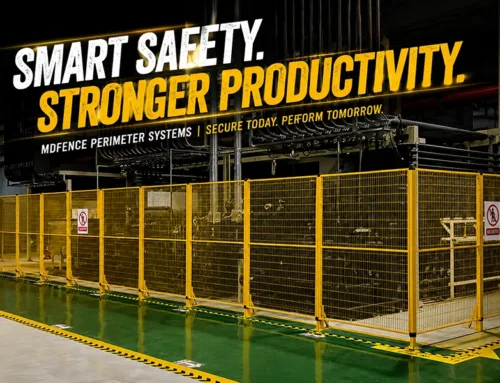
In these applications, the fence is not a decorative boundary. It is part of the risk control strategy. Mdfence is designed to hold its structure, keep smaller fragments inside the guarded zone, and maintain visibility for supervision. That combination is what makes the system practical in high-traffic recycling environments.
What to specify before you order machine safety fencing
Start with the impact zone, the size of the flying debris, and the routes used by forklifts or loaders. Then define the access points that must stay open for maintenance. With those inputs, Mdfence can be selected as a machine safety fencing package around 60×60 mm Q235 uprights, 1600 J impact resistance, and 20×100 mm micro-mesh openings, so the quote is based on the real risk, not a generic fence size.
Construye un perímetro más seguro alrededor de la línea.
If your yard faces heavy debris, accidental impacts, or crowded machine traffic, the right answer is a machine safety fencing system that is built for those loads from the start. Mdfence gives you a measurable structure, a tighter mesh, and a safer boundary for scrap and dismantling operations.