ES
ES  EN
EN  DE
DE  RU
RU  PT
PT  JA
JA  IT
IT Valla de seguridad industrial
Safety Fence Industrial for woodworking lines that throw wood chips and broken nails
When pallet nailing machines and cutting equipment run at speed, the real problem is not only flying wood chips. Broken nails, offcuts, and impact debris can travel farther than a typical open-mesh barrier will safely contain. Safety Fence Industrial uses a 20x100mm narrow-slot mesh to intercept the spray at the perimeter while supporting a legal safety distance reduction down to 120mm, helping teams protect the line without swallowing floor space.
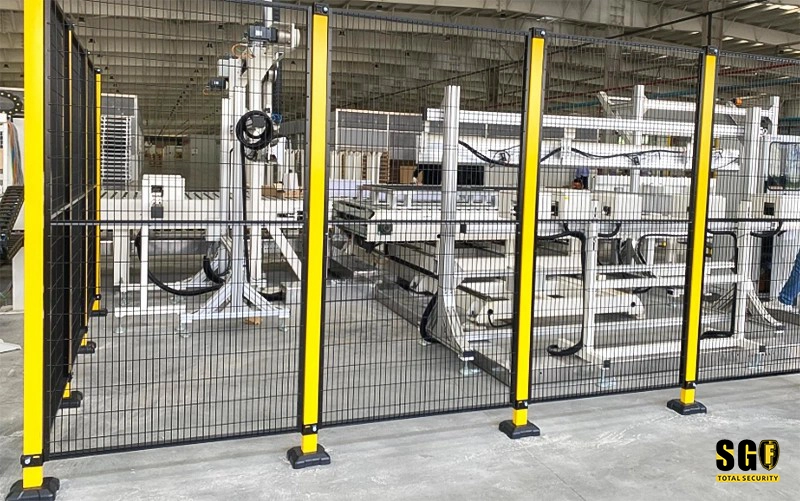
Why the 20x100mm mesh matters in pallet and woodworking guarding
In woodworking and pallet processing, the old answer was to move the fence farther away and call the problem solved. That usually creates a larger exclusion zone, which means less room for storage, less room for movement, and more wasted building area. Safety Fence Industrial is built for the opposite goal: stop high-speed debris at a tighter perimeter, keep the machine guarded, and make the safety layout compact enough to preserve usable production and warehouse space.
| Requisito | Safety Fence Industrial response |
|---|---|
| Flying wood chips and broken nails | 20x100mm narrow-slot mesh is designed to block smaller debris that can pass through larger openings. |
| North American compliance pressure | Mesh structure supports a reduced legal safety distance down to 120mm when the system is applied correctly. |
| Factory floor space loss | A tighter perimeter reduces the size of the exclusion zone and frees production and storage area around the line. |
| High-speed pallet nailing and cutting stations | Perimeter guarding is suited to machines that create repeated impact spray during continuous operation. |
Three reasons Safety Fence Industrial fits this problem better than a wide-open fence
1. Narrow-slot mesh controls the real hazard stream
The main hazard in pallet processing is not a single large object. It is a mixed stream of chips, splinters, and broken nails. Safety Fence Industrial uses a 20x100mm opening pattern to create a tighter physical barrier, which gives the machine perimeter a better chance of catching the debris before it reaches walking routes or neighboring work zones.
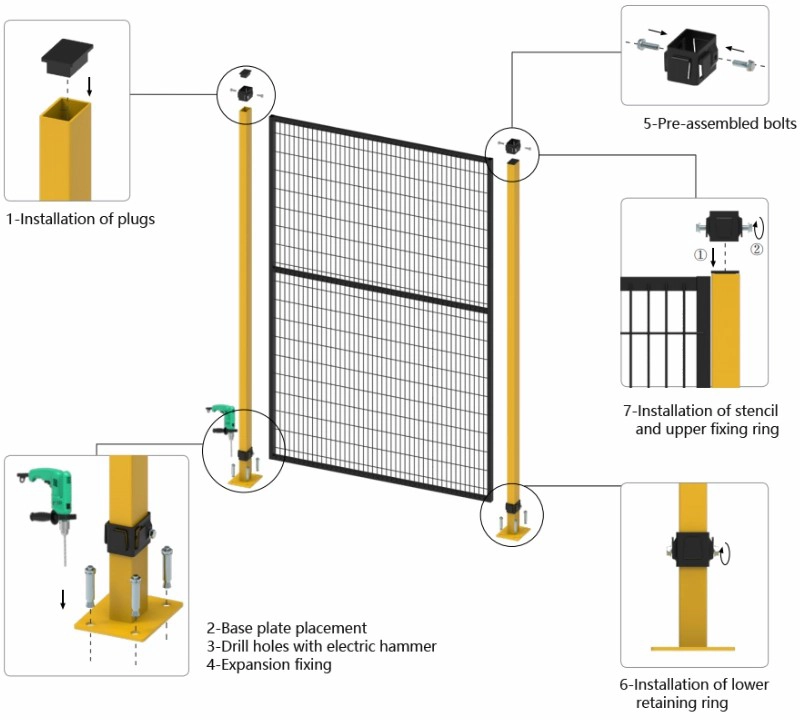
2. Compact guarding supports a smaller safe-distance footprint
Traditional large-aperture panels often force the fence line far away from the machine, which burns expensive floor area just to satisfy spacing rules. Safety Fence Industrial is designed to support a reduced safety distance of 120mm, so the guarding geometry can stay much closer to the source and leave more room for production lanes, inventory, and material handling.
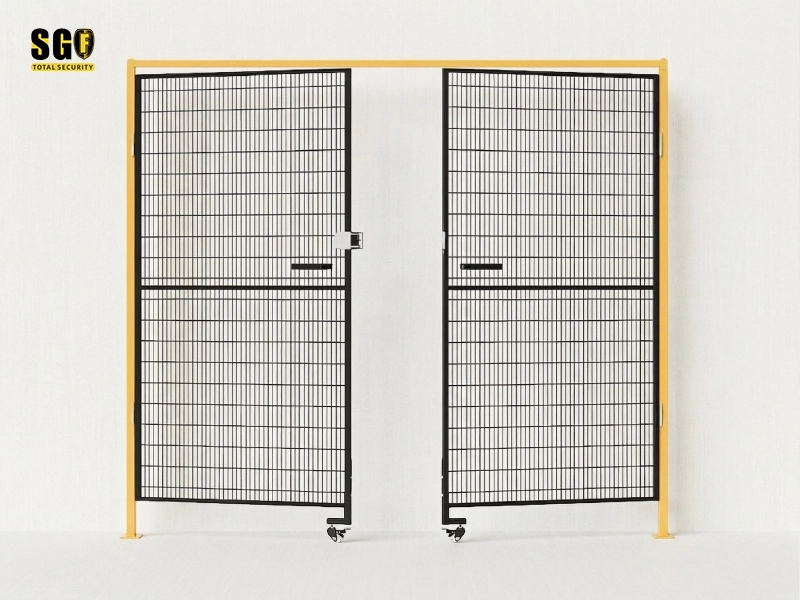
3. Better perimeter design means better plant utilization
Every extra meter of safety clearance becomes dead space if the fence is oversized. Safety Fence Industrial is a machine fencing answer for facilities that need both protection and density. By tightening the perimeter around woodworking equipment, the line keeps compliance intent while returning usable space to the plant layout.
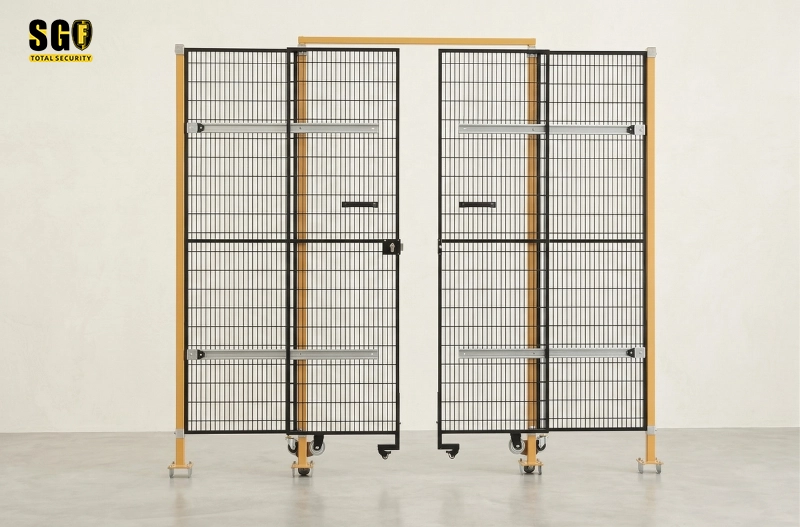
Where Safety Fence Industrial fits best
- Pallet nailing lines where broken nails and fast-moving chips leave the machine zone.
- Wood cutting stations that throw splinters and offcuts into adjacent aisles.
- Compact factories that cannot afford a large safety offset around every machine.
- North American production sites that must balance safety intent with warehouse utilization.
For teams under local labor compliance pressure, the real advantage is not just stronger guarding. It is a more workable floor plan. Safety Fence Industrial lets the perimeter match the hazard instead of forcing the whole building to adapt to a wide, inefficient exclusion zone.
What to specify before you request a quote
Prepare the machine type, line speed, debris profile, target opening size, and the available clearance around the equipment. If your line produces wood chips, splinters, and broken nails, specify that upfront so the guarding layout can be matched to the hazard. For compact facilities, note the floor-space constraint as well, because Safety Fence Industrial is often selected precisely to keep the safety boundary tight without compromising containment.
Build a tighter, safer perimeter around your woodworking line
If your current fence forces the machine to sit too far from the aisle, the problem is usually the mesh, not the machine. Safety Fence Industrial gives you a narrow-slot, space-conscious answer for debris-heavy woodworking and pallet operations.