ES
ES  EN
EN  DE
DE  RU
RU  PT
PT  JA
JA  IT
IT Safety fencing machine guarding for high-fire-risk scrap dismantling
Safety fencing machine guarding for explosive scrap dismantling cells
Safety fencing machine guarding keeps scrap dismantling cells in cold-work mode, so frequent layout changes do not turn into hot-work shutdowns.
Why Mdfence fits fire-sensitive dismantling lines
In end-of-life vehicle dismantling, oily residue, trace fuel, and airborne metal dust make any welding or cutting change risky. Mdfence uses a clamp-based modular system, so the fence is assembled on site without drilling, welding, or cutting. That keeps the work in true cold-work mode and helps plant teams avoid fire permits, sparks, and avoidable shutdown time.
| Lo que la planta necesita | Respuesta de Mdfence |
|---|---|
| No flame, no sparks during line changes | 100% cold assembly with an免钻孔卡扣连接 system |
| Fast modification when layouts change | Modular posts and panels can be removed, reset, and reused |
| Lower long-term replacement cost | Up to 95% asset reuse when the line is reconfigured |
Structure proof: what the photos show
1) Enclosed workcell layout that keeps risk outside the line
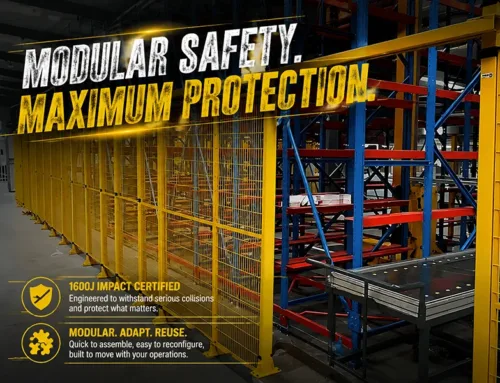
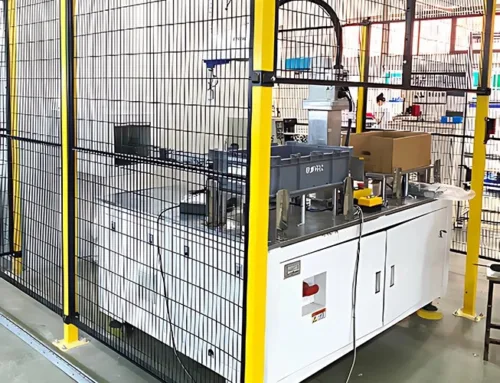
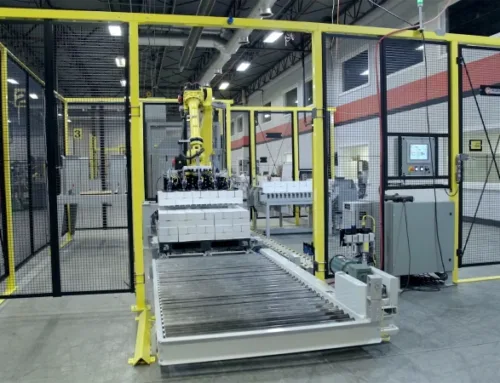
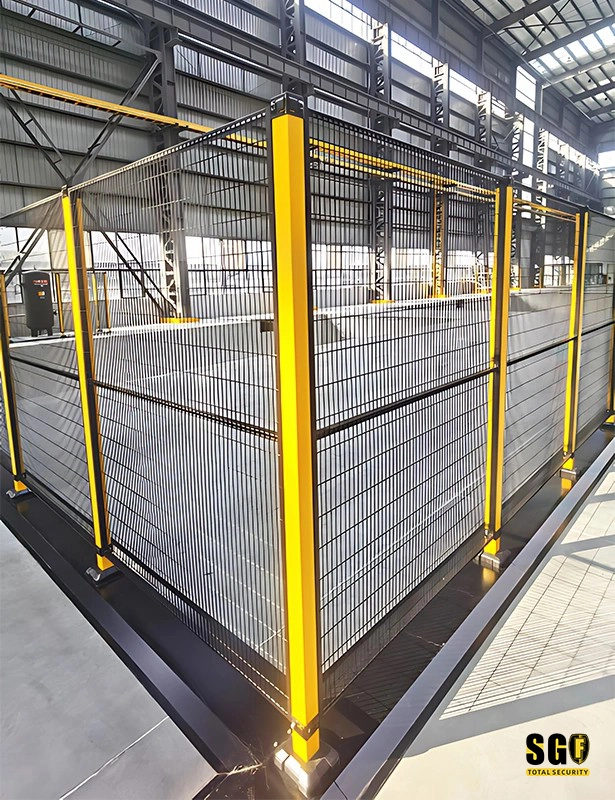
The hero image shows a full perimeter enclosure around the machine cell. That matters in dismantling zones because the fence is not only a visual boundary; it is the physical line between hazardous work and adjacent traffic. The black mesh and yellow posts create a clear guarded zone without forcing the team to build a welded custom frame every time the cell moves.
2) Clamp-based structure for rapid, tool-light changeovers
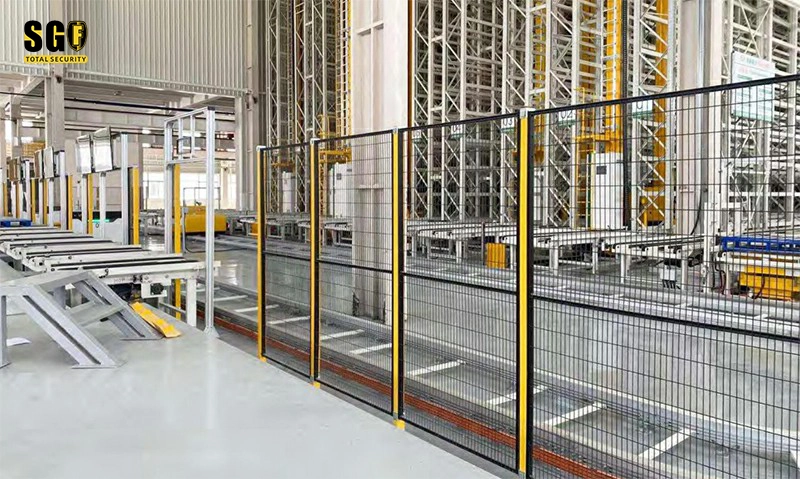
The technical layout image shows the post-panel relationship and the fixing-clamp logic. That is the key reason the system suits frequently changing production cells: instead of cutting away old steel, teams can open the connection, move the panel, and rebuild the layout. For plants with repeated line upgrades, that difference is the gap between a planned change and a fire-risk job.
3) Secure access details for controlled entry
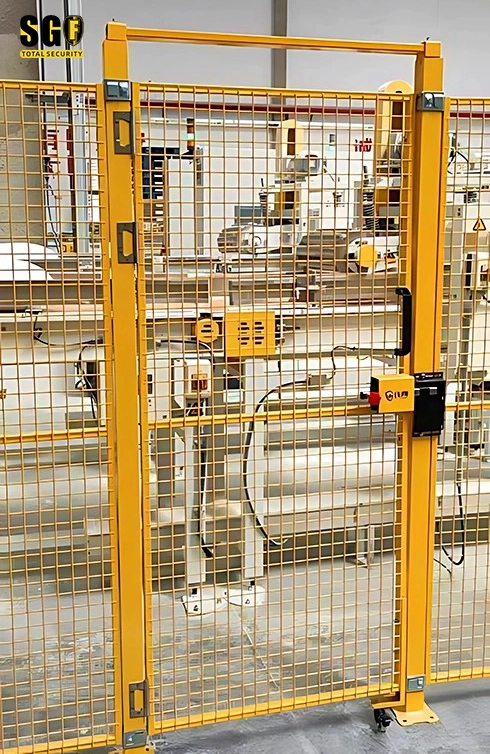
The gate close-up shows lock hardware and a framed mesh opening. In a scrap dismantling cell, access control must stay simple enough for operators and maintenance teams, but robust enough to prevent casual entry. The fence system keeps the access point integrated into the same modular logic, so changing the line does not mean rebuilding the entire safety boundary.
Where this system makes the most sense
- Scrap car dismantling cells with residual fuel, oil, and other ignition-sensitive contaminants.
- Metal dust zones where any cutting or welding work creates avoidable fire and explosion exposure.
- Factories with frequent line upgrades, where downtime and rework cost more than the fence itself.
- Multi-site operators that want the same guarding system to be dismantled, reinstalled, and reused across projects.
For these scenarios, Mdfence is adapted for speed first: the enclosure goes up quickly, the layout can be reworked without hot work, and the same components can be recovered for the next cell. That is what turns machine guarding from a sunk cost into a reusable plant asset.
Evidence checklist for your next guarding project
Before you spec a new fence, check three things: whether the assembly method is truly cold-work, whether the structure can be reused after the next line change, and whether the access gate still supports controlled operation. The Mdfence approach answers all three with modular clamp connections, fast on-site assembly, and a high reuse rate after reconfiguration.
Plan the next layout without sparks
If your dismantling or recycling line cannot afford welding downtime, Mdfence gives you a safer way to build, move, and reuse safety fencing machine guarding around the cell.