ES
ES  EN
EN  DE
DE  RU
RU  PT
PT  JA
JA  IT
IT The production process of temporary metal fence posts

The production process of temporary metal fence posts typically involves the following steps:
-
-
- Material Selection: The first step is to select the appropriate materials for making the fence posts. Generally, the posts are made of steel or aluminum, as these materials are strong, durable, and resistant to weather and corrosion.
- Cutting: Once the material is selected, the metal sheets or bars are cut to the desired length and width using cutting tools such as saws or plasma cutters.
- Shaping: After the metal sheets or bars are cut to size, they are shaped into the desired profile for the fence post. This can be done using tools such as bending machines or rolling machines, which shape the metal into the required curvature.
- Punching Holes: Once the metal is shaped, the next step is to punch holes in the posts to attach fencing materials such as mesh, wire, or panels. The holes can be punched using a drill press or a specialized punching machine.
- Welding: After punching the holes, the fence post components are welded together to create the final structure. The welding process involves melting and joining the metal pieces using a welding machine or torch.
- Finishing: The final step is to apply a finish to the fence post to protect it from rust and corrosion. This can be done by painting, powder coating, or applying a protective coating to the surface of the post.
-
Once the finishing process is complete, the temporary metal fence posts are ready for use. These fence posts can be used for a variety of temporary fencing applications such as construction sites, outdoor events, or crowd control.
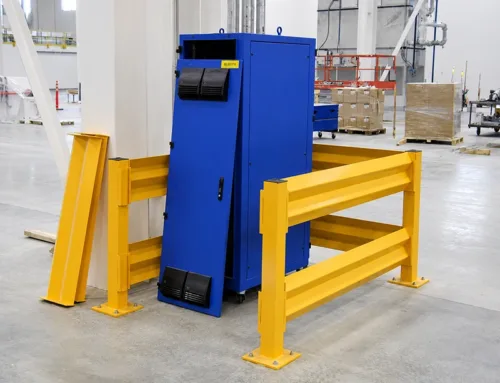
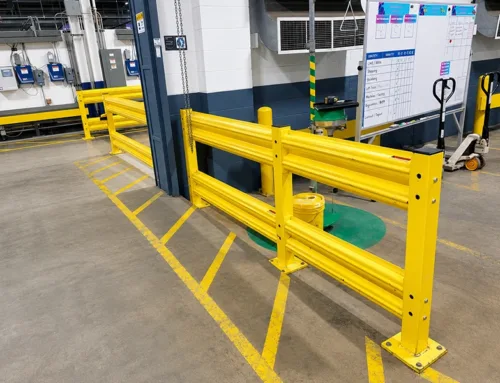
Barrera de seguridad de perfil thrie para separación física entre peatones y MHE en almacén
Cuando los montacargas y los peatones comparten un pasillo, la barrera de protección de viga thrie de Hsafety crea un límite de acero visible y anclado. El recubrimiento amarillo de seguridad y la cinta reflectante opcional complementan los sensores activos y las cámaras con una separación pasiva peatón-MHE.
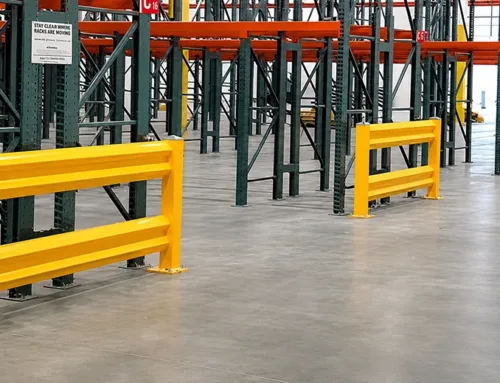
Barrera de haz de onda para zonas de montacargas: construya una línea física entre personas y MHE
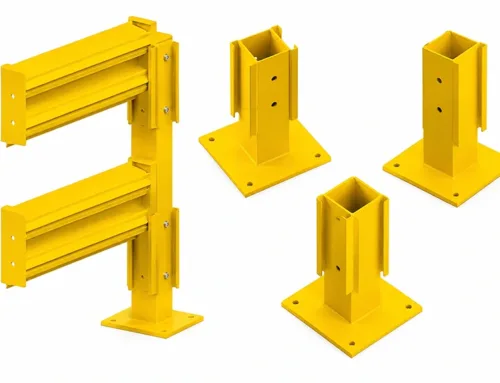
Cuando los peatones y los MHE comparten una ruta de almacén, una barrera de viga ondulada crea una capa de separación pasiva visible y montada en el piso. Vea cómo Hsafety combina rieles de acero corrugado, recubrimiento de advertencia amarillo, cinta reflectante opcional y anclaje modular diseñado para la protección contra impactos de montacargas.
Barreras de seguridad de viga de acero corrugado para el cumplimiento normativo en almacenes a nivel de red
Para la responsabilidad de OSHA NEP y ESG, las barreras de protección de almacén de viga de acero corrugado brindan a las redes de distribución de múltiples sitios una barrera pasiva repetible para la protección contra impactos de montacargas, la separación peatón-vehículo y la protección de activos.