ES
ES  EN
EN  DE
DE  RU
RU  PT
PT  JA
JA  IT
IT 
The Versatile Workshop Fence: Ensuring Safety, Security, Privacy, and Organization

A workshop fence plays a vital role in creating a safe and productive environment. It offers numerous benefits, including safety, security, privacy, noise reduction, and organization. Let’s delve into each of these advantages.
Firstly, the primary function of a workshop fence is safety. It acts as a physical barrier, preventing unauthorized individuals from entering the workshop and reducing the risk of accidents or injuries. By clearly defining boundaries, the fence establishes safety protocols and ensures that only authorized personnel have access to potentially hazardous equipment and materials.
Beyond safety, a workshop fence provides enhanced security. Its presence alone acts as a deterrent against theft, vandalism, and unauthorized entry. When combined with security measures like locks or surveillance systems, it safeguards valuable tools, equipment, and materials, instilling a sense of security among workshop owners and employees.
Privacy is also a significant aspect facilitated by a workshop fence. For workshops engaged in sensitive or confidential work, the fence acts as a shield, preventing unauthorized individuals from observing or accessing projects. This confidentiality is particularly crucial in research and development settings where innovative ideas and intellectual property require protection from prying eyes. The privacy provided by the fence fosters an uninterrupted work environment, encouraging creativity and the pursuit of novel solutions.
Moreover, a well-constructed workshop fence helps in reducing noise pollution. Workshops are often filled with noisy machinery, tools, and equipment. The fence acts as a barrier, minimizing the propagation of sound waves and creating a more peaceful working environment. This noise reduction enhances concentration, facilitates better communication, and reduces stress levels among workshop occupants, ultimately improving productivity and well-being.
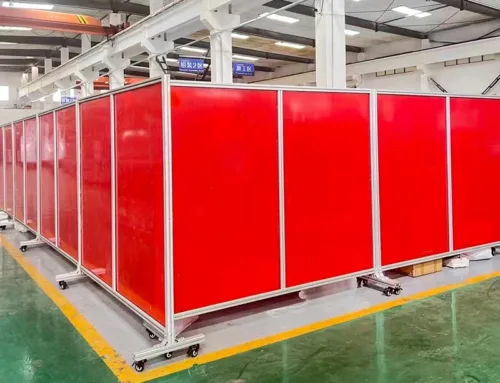
Additionally, a workshop fence offers organizational benefits. It can be utilized to divide the workshop space into distinct work areas, optimizing workflow management. By separating different activities, the fence prevents cross-contamination and enables efficient resource allocation. Furthermore, the fence can be adapted to create dedicated storage areas, ensuring easy accessibility and maintaining a clutter-free workspace.
In conclusion, a well-designed workshop fence serves as an indispensable component for a productive and secure environment. Its multifaceted roles in ensuring safety, enhancing security, providing privacy, reducing noise, and facilitating organization are paramount. As workshops evolve and adapt, the importance of a well-constructed fence remains essential in safeguarding individuals and assets while fostering an atmosphere conducive to innovation and success.
Valla de aislamiento de equipos para celdas de carga de robots: Alfence detiene paradas molestas
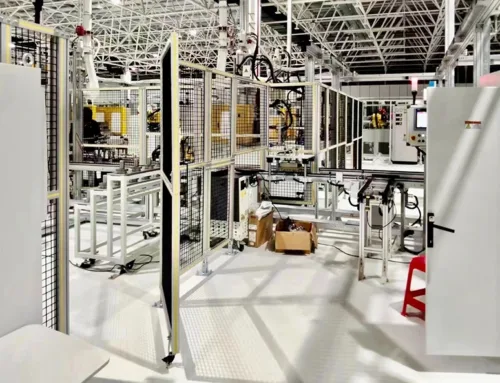
Para celdas de carga robóticas, la valla de aislamiento Alfence mantiene sensores, enclavamientos y rutas de cable fuera de los postes de acero pintado para que el PLC no se dispare con señales falsas de puerta.
Vallado de protección de máquinas para líneas higiénicas de alimentos y farmacia | Alfence
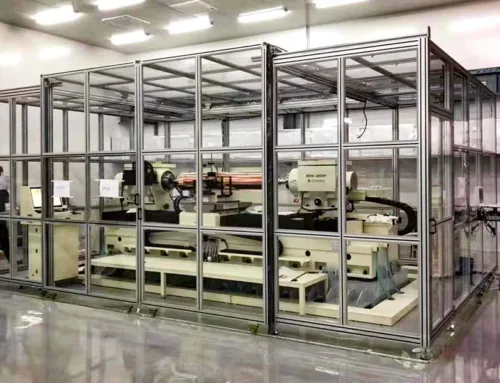
El vallado de protección de máquinas Alfence utiliza construcción de valla de seguridad con perfiles de aluminio y protección anticorrosión con recubrimiento en polvo para soportar diseños higiénicos en alimentos, bebidas, farmacéutica y salas limpias.
Cercas de protección para máquinas en plantas higiénicas de alimentos, bebidas y farmacéuticas | Alfence
El vallado de protección de máquinas Alfence utiliza perfiles de aluminio y recubrimiento en polvo para proteger líneas sensibles a la higiene con una barrera más limpia y fácil de mantener.