EN
EN  DE
DE  RU
RU  PT
PT  JA
JA  ES
ES  IT
IT AGV lanes, robot charging bays, and handoff points
Flexible Rack Protection for AGV Routes
As warehouses move from manual traffic to AGV lanes, robot charging bays, and handoff points, the job is no longer just stopping forklifts. The real task is to create physical separation that protects people, racking, and automation equipment without turning every minor contact into a steel-on-steel repair bill.
Why a polymer barrier fits mixed-autonomy warehouses
Steel guardrails are strong, but in an automation zone they can be too unforgiving. A low-speed scrape from an AGV, autonomous forklift, or mobile robot can still damage sensors, covers, or drive components. FCBarrier approaches the problem as a Flexible Safety Barrier: impact resistant, self-rebounding, and designed to absorb energy at the perimeter instead of passing it back into expensive equipment.
| What the automation zone needs | Why FCBarrier fits |
|---|---|
| Hard separation between people and AGV traffic | Industrial Safety Barrier layout creates a visible, physical line for mixed traffic control. |
| Less secondary damage when equipment brushes the barrier | Polymer Safety Barrier construction is gentler than steel and helps reduce repair cost. |
| Fast retrofit without stopping the whole plant | Mortise & Tenon Quick-Install and modular sections support live-site upgrades. |
| Repeated low-speed contact at route edges and charging bays | 28,950J rated barrier design, self-rebounding behavior, and energy absorbing structure are built for that job. |
What the structure looks like on the floor
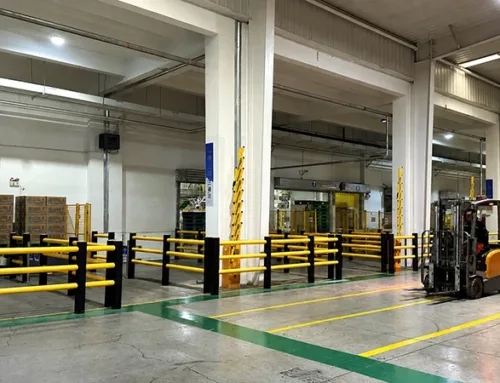
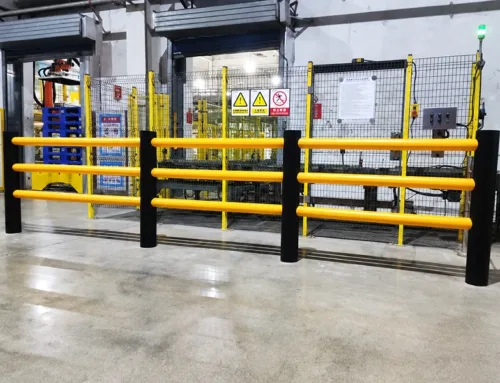
1. Site-installed protection beside machine access
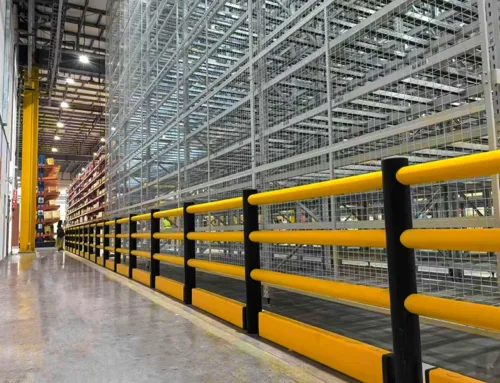
The first image shows a factory-installed barrier running beside a machinery access lane. That is the practical use case for Flexible Rack Protection: define the edge, keep people out of the path, and protect equipment access points without building a rigid steel trap around the line.
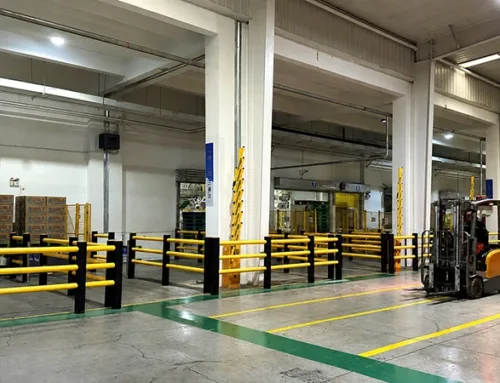
2. Floor-mounted dual-rail geometry for segregation
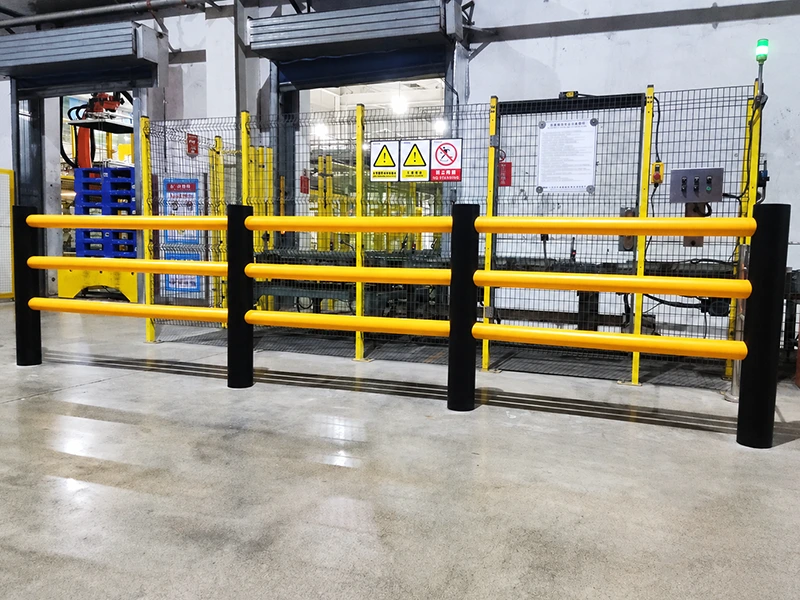
The second image highlights a floor-mounted dual-rail barrier with black posts and bolted base plates. That geometry matters in AGV zones because it separates pedestrians and equipment at eye level and wheel level, while the floor-anchored base keeps the line stable during repeated contact.
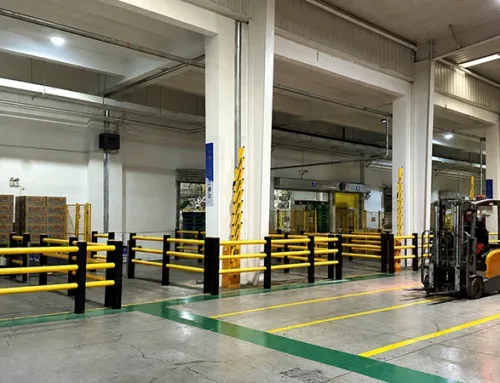
3. Modular options for different automation layouts
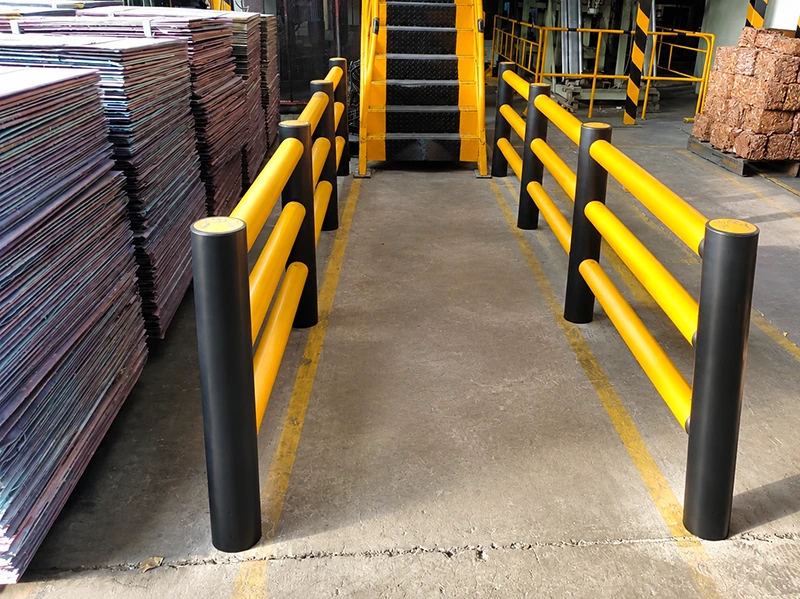
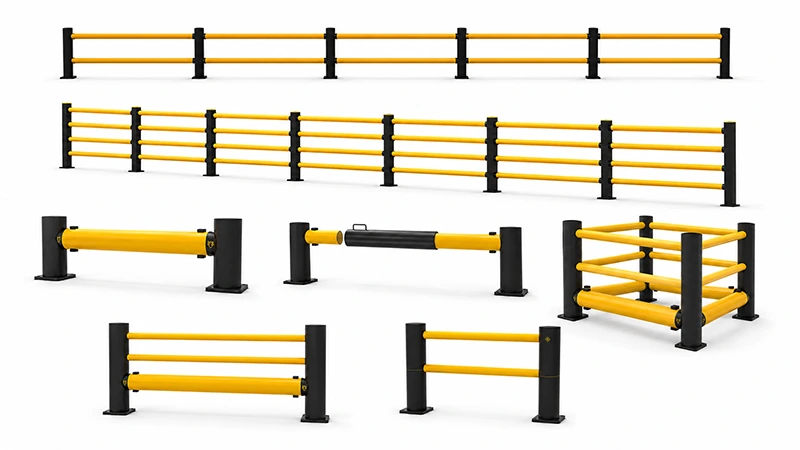
The third image shows multiple modular industrial barrier configurations. That is the advantage of a Modular Barrier family: straight runs for AGV lanes, denser rail options for sensitive equipment areas, and different segment combinations for corners, charging zones, and handoff points.
Where to use Flexible Rack Protection
- AGV main routes and turning points
- Robot charging and parking bays
- Human-machine handoff points beside conveyors or buffers
- Rack ends, column protection, and loading-bay edges
- Retrofit projects in live warehouses and black-light factories
In these zones, the goal is not to block everything. The goal is to guide traffic, separate equipment from people, and let the barrier take the first hit. A Flexible Guardrail made from polymer is often a better fit than a steel barrier when the real risk is repeated low-speed contact rather than a single high-energy crash.
What spec teams should check first
Before you standardize a barrier line for AGV lanes, confirm the impact pattern, aisle width, anchoring condition, and whether the project needs straight runs, corners, or column protection. FCBarrier is built as a modular barrier system, so the same family can cover a route, a charging bay, and a handoff point without redesigning every segment.
Need to replace steel in an automation zone?
If your main problem is repeated low-speed contact, then Flexible Rack Protection gives you a cleaner answer than rigid steel: less secondary damage, faster retrofit, lower maintenance, and a safer separation line for people and machines.