EN
EN  DE
DE  RU
RU  PT
PT  JA
JA  ES
ES  IT
IT Cold Storage & Pharma Warehouses
Flexible Rack Protection for Cold Storage and Pharma Aisles
Steel barriers rust, chip, and lose coating performance in low-temperature, washdown environments. Flexible Rack Protection uses a polymer safety barrier approach to remove repainting, resist corrosion, and keep pedestrian and forklift lanes clean.
Why cold-chain teams move away from steel
Cold storage and pharmaceutical warehouses need more than impact resistance. They need a barrier that stays corrosion free, is easy to clean, and does not depend on paint or touch-up work. FCBarrier’s public product materials support the polymer, impact-absorbing, low-maintenance case, but the website has not yet announced a tested low-temperature dedicated version. If you want to position it for food or pharma cold-chain projects, the right next step is to validate low-temperature impact performance before making external claims.
| Cold-chain requirement | What the barrier needs to deliver |
|---|---|
| Corrosion and coating failure | Polymer safety barrier surfaces avoid rust, repainting, and flaking coatings. |
| Washdown and hygiene | Easy-to-clean geometry supports food and pharmaceutical warehouse hygiene rules. |
| Forklift impact protection | Energy absorbing, self-rebounding barrier behavior helps reduce repair downtime. |
| Aisle segregation | Flexible guardrail layouts separate pedestrians, loading bays, and vehicle routes. |
| Cold-room proof point | Public materials do not yet disclose a tested low-temperature version; −30°C validation should be added before external cold-chain claims. |
| Long-life cost control | Low maintenance and recyclable material logic reduce lifecycle replacement pressure. |
Structure, parameters, and image evidence
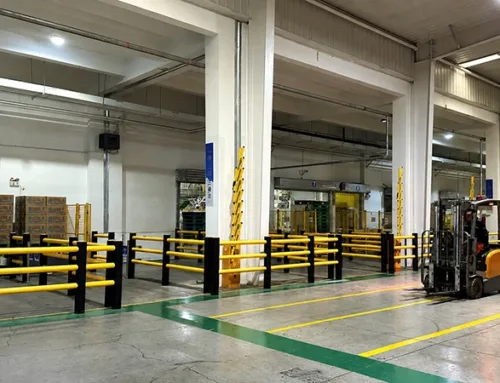
1) Floor-anchored warehouse protection
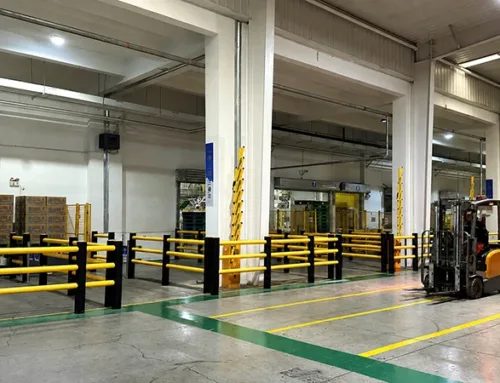
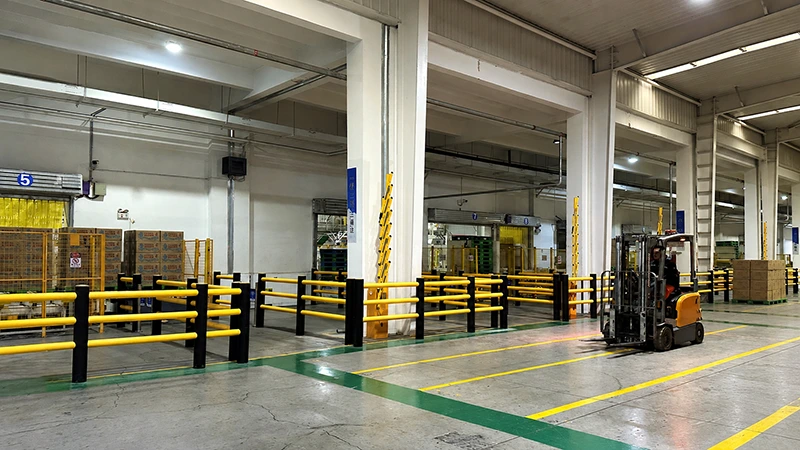
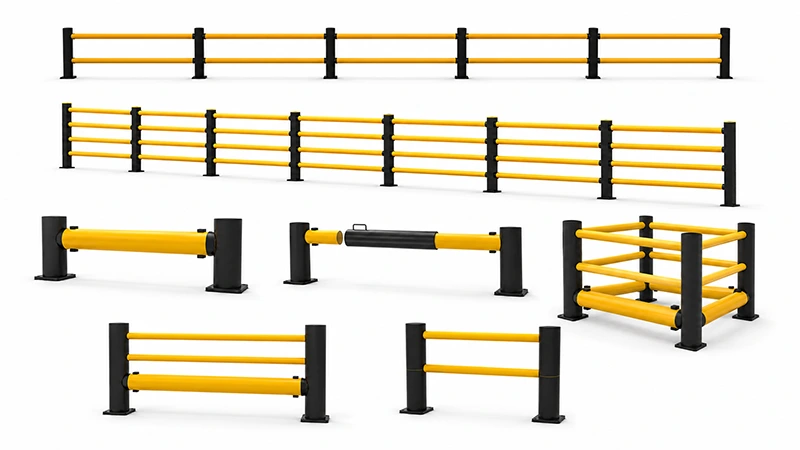
The first image shows a continuous floor-mounted aisle barrier line. That matters for cold storage because the project is not only about stopping impacts; it is also about creating a clean, repeatable boundary that stays stable in busy loading and picking zones.
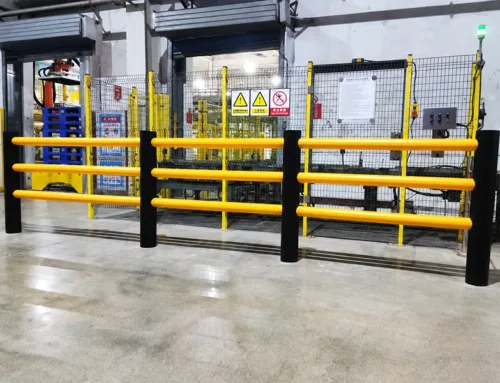
2) Protected access points in machine-heavy zones
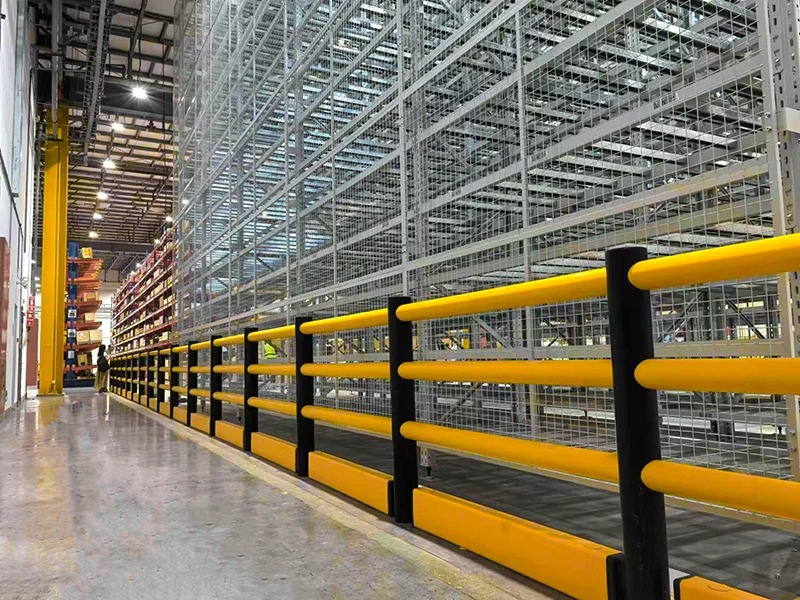
The second image shows a barrier protecting machinery access. For pharma and cold-chain facilities, that same logic helps keep forklifts, pallet jacks, and pedestrians where they belong while preserving access to equipment and service routes.
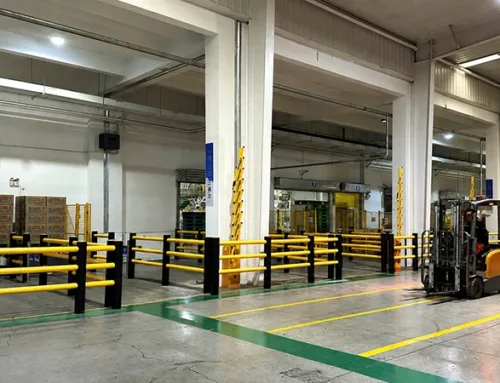
3) Modular layouts with bolted base plates
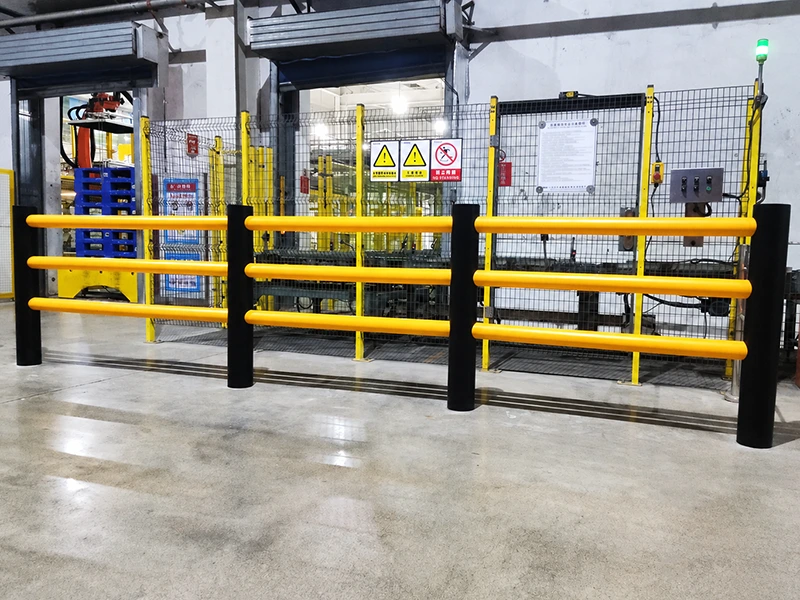
The third image highlights a modular barrier family with bolted base plates and repeated uprights. That structure supports retrofit work in existing refrigerated warehouses, where teams often need to add protection around columns, dock edges, and aisle turns without rebuilding the whole floor plan.
Where Flexible Rack Protection fits best
- Cold storage loading bays where steel coatings usually fail first.
- Pharmaceutical warehouse aisles that need cleanable, corrosion free lane protection.
- Food and beverage distribution centres with humidity, washdown, and traffic separation demands.
- Retrofit projects around columns, dock edges, and rack ends in existing facilities.
- Vehicle and pedestrian segregation routes where forklift impact protection is non-negotiable.
For these projects, the product logic is straightforward: replace rust-prone steel barrier maintenance with a polymer safety barrier system that is easier to maintain, easier to clean, and designed to absorb impact instead of remaining rigid after contact.
Validation note before you promise cold-chain use
FCBarrier’s public materials support Flexible Rack Protection, Flexible Safety Barrier, Polymer Safety Barrier, Forklift Safety Barrier, Corrosion Free, Self-Rebounding, Energy Absorbing, and Modular Installation language. But they do not yet publish a tested low-temperature dedicated version. If the target project is a food or pharmaceutical cold room, add impact testing at the required temperature range before you claim official cold-chain suitability.
Need a retrofit plan for a refrigerated warehouse?
If your current steel barrier is rusting, chipping, or requiring repainting, Flexible Rack Protection is the cleaner lifecycle alternative to evaluate first. Start with aisle width, impact points, and temperature test requirements, then map the barrier layout to the dock, rack ends, and pedestrian routes.