IT
IT  EN
EN  DE
DE  RU
RU  PT
PT  JA
JA  ES
ES 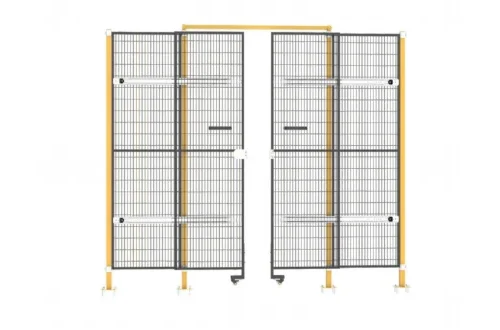

|
Your new robot cell is a black box. Operators are squinting through the glare of all-yellow mesh to check cycle status, and maintenance teams waste precious minutes trying to diagnose a jam from outside the perimeter. Safety is paramount, but blinding your team isn’t the solution. There is a more intelligent way to guard your high-value automation and empower your workforce. |
The Strategic Choice: Why Your Fencing Needs Both Yellow and Black
When specifying a Protezione delle macchine system, the question “yellow or black?” often comes up. Many assume it’s a simple aesthetic choice or that “more yellow is safer.” However, for a modern automation cell, this is a false dilemma. The optimal solution isn’t one or the other; it’s a strategic combination designed to maximize both safety compliance and operational visibility. A well-engineered color strategy can directly impact your OEE (Overall Equipment Effectiveness) by reducing troubleshooting time and preventing unnecessary shutdowns.
The Role of Yellow: Creating an Unmistakable Physical Boundary
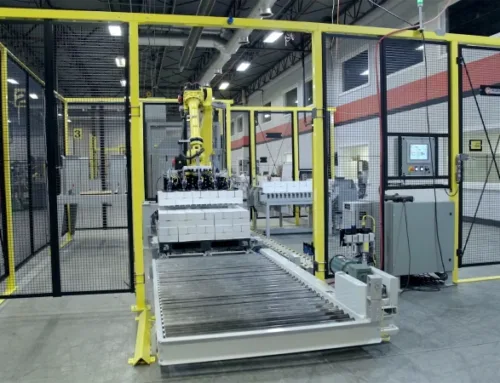
There’s a reason RAL 1023 “Safety Yellow” is the global standard for caution. It’s a high-visibility color that the human brain is hardwired to associate with a potential hazard. In the context of Recinzione di sicurezza per robot, the structural components—the posts—serve as this critical visual warning.
Our posts are not just painted yellow; they are the 60x60mm Q235 carbon steel backbone of your safety system. This color choice ensures that the perimeter of the hazardous area is clearly and instantly defined from any angle on the factory floor. It satisfies OSHA’s visual warning requirements and provides an unambiguous line that personnel know not to cross during operation. This is the foundation of a compliant and visually organized workspace.

The Power of Black: Eliminating Glare for Perfect Visibility
Here is where the counterintuitive logic delivers a massive operational advantage. While yellow posts shout “caution,” the RAL 9005 deep black mesh panels are designed to do the opposite: disappear.
The Problem with All-Yellow or Metallic Fencing
Under the bright, cool-white LED lighting of a modern plant, a yellow or galvanized steel mesh creates significant visual noise. It reflects light, causes glare, and can create a distracting moiré pattern. For an operator trying to monitor an automated process, this leads to eye strain and, more critically, obscures their view of the robot’s end-of-arm tooling, workpiece alignment, or the source of a potential jam on a conveyor.
The Black Mesh Solution
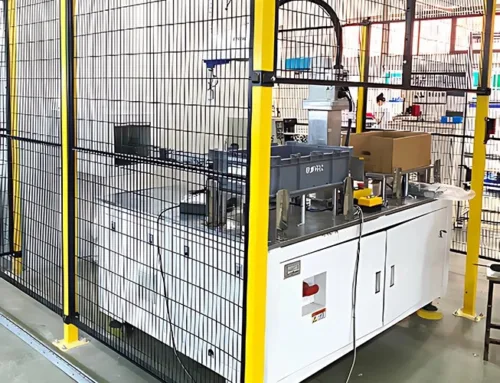
Black, by its nature, absorbs light rather than reflecting it. This simple principle of physics means our black powder-coated mesh panels create a high-contrast, low-glare viewing window into the work cell. The mesh itself seems to fade into the background, allowing your team’s eyes to focus on what matters: the equipment running inside. This enhanced visibility allows for:
- Faster Troubleshooting: Maintenance can quickly diagnose issues visually without needing to shut down and enter the cell for a simple inspection.
- Improved Process Monitoring: Quality control and operators can clearly observe machine cycles, ensuring everything is running to spec.
- Reduced Operator Fatigue: Eliminating glare and visual distraction reduces the cognitive load on your staff, leading to a safer and more focused workforce.

A System Engineered for Performance, Not Just Presence
The yellow and black color scheme is a deliberate design choice, but it’s backed by an engineering philosophy focused on industrial reality. The true value of an Recinzione di sicurezza industriale system is revealed when it needs to perform under pressure or adapt to your changing needs.
Beyond the Paint: Strength and Modularity
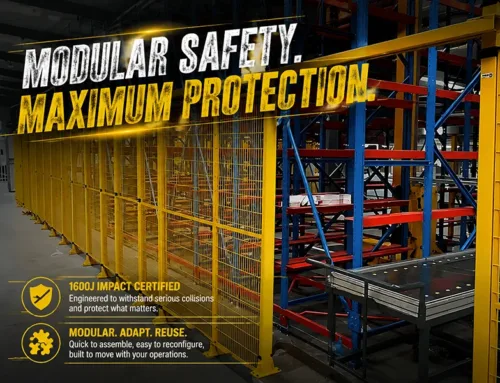
While visibility is key for daily operations, the system’s primary job is physical protection. That’s why our system is built from high-tensile Q235 carbon steel and is certified to withstand impacts of up to 1600 Joules. This means it can absorb the energy of a 220 lbs (100 kg) object moving at 12.5 mph (20 km/h), preventing a catastrophic failure. Furthermore, the entire system is modular and assembles with high-strength bolts, not welds. This means:
- Fast Installation: Your system integrator can deploy 50 meters of fencing in a single day with two workers, without hot work permits.
- 100% Reusability: When your production line layout changes, your safety fencing is a movable asset, not scrap metal. You can unbolt, reconfigure, and redeploy it with zero waste.

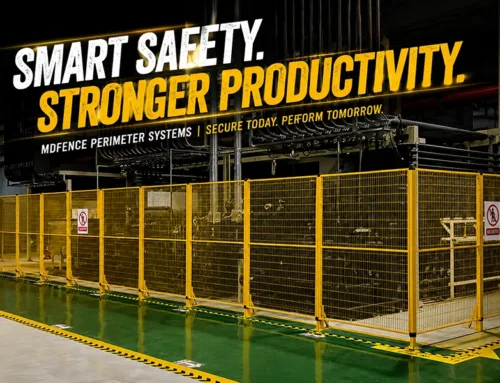
Ultimately, the choice is clear. You don’t need just a yellow fence or a black fence. You need a professionally engineered guarding system that leverages color as a tool to enhance both safety and productivity. The Mdfence system provides an unmistakable yellow boundary for compliance and a non-glare black mesh for unparalleled operational visibility, giving you the best of both worlds.
Domande frequenti
1. Does the black and yellow color scheme meet OSHA requirements?
Yes. OSHA standard 1910.144 specifies yellow as the basic color for designating caution and marking physical hazards. Our use of high-visibility yellow posts clearly marks the hazardous perimeter, while the overall system is designed as compliant machine guarding according to standards like ISO 14120.
2. Will the black mesh make our factory floor look dark?
Quite the opposite. While it sounds counterintuitive, the black mesh enhances the perceived brightness and clarity *inside* the robot cell. By eliminating the visual “clutter” of reflective mesh, it creates a clean, modern, and professional aesthetic. The bright yellow posts ensure the overall area remains visually bright and safe.
3. We have a corporate color standard. Can we get the entire fence in a different color?
While custom colors are available for large projects, we strongly advocate for the standard yellow and black configuration. It is an engineered solution specifically designed to solve the common industrial problem of poor visibility into guarded areas. Moving to an all-yellow or other color mesh would sacrifice the significant operational benefits of glare reduction.
4. How does the black powder coating hold up to coolants and oils in a CNC machining environment?
Our system uses a robust electrostatic powder coating process. The coating is designed to withstand harsh industrial environments and passes ISO 9227 neutral salt spray tests for corrosion resistance. It effectively resists degradation from common industrial coolants, oils, and cleaning agents, preventing the rust that plagues lower-quality painted or welded fences.
5. Does the color of the mesh affect the required safety distance from the machine?
No, the safety distance is not determined by color. It is dictated by the physical opening size of the mesh, as specified by standards like ISO 13857. Our standard 20x100mm “finger-safe” mesh prevents fingers from reaching the hazard, allowing the fence to be installed as close as 120mm (4.7 inches) from the danger zone. This saves valuable floor space compared to fences with larger openings.