IT
IT  EN
EN  DE
DE  RU
RU  PT
PT  JA
JA  ES
ES 

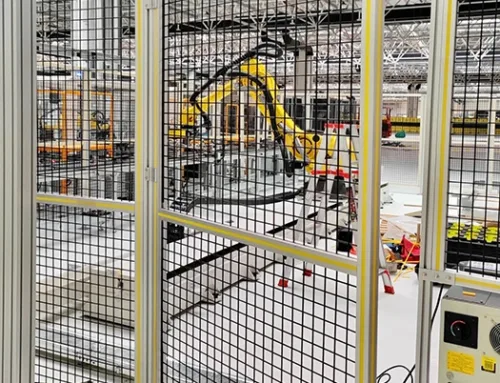
For high-growth System Integrators, the ability to replicate success across multiple global sites is key. You’ve standardized your PLC code and your robotic cells, but are you still treating machine guarding as an afterthought? Relying on local fabrication or “cut-to-fit” solutions creates a fragmented compliance landscape that exposes your business to liability.
It’s time to rethink the perimeter. By adopting a certified, modular safety ecosystem, you turn a passive barrier into a strategic asset—reducing engineering design time, ensuring universal ISO compliance, and delivering a clean, professional aesthetic that matches the quality of your automation.
The Compliance Trap: Are You Inheriting Liability?
When you hand over a turnkey solution to a Tier 1 automotive supplier or a medical device manufacturer, you are handing over liability. If a safety guard fails during a high-speed projectile event, the spotlight turns to the integrator. Using uncertified, locally welded fences leaves you without a documentation trail.
Partnering with a supplier that offers Recinzione di sicurezza industriale backed by third-party TUV certification changes the game. It allows you to demonstrate due diligence immediately. Whether your project is in Stuttgart, Detroit, or Shanghai, utilizing a system that universally meets ISO 14120 and OSHA standards acts as an insurance policy for your engineering reputation, ensuring your physical barriers are as validated as your safety logic.

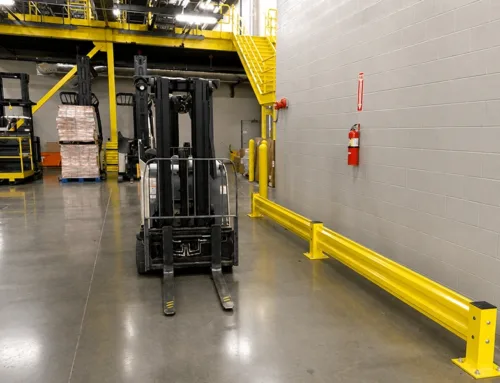
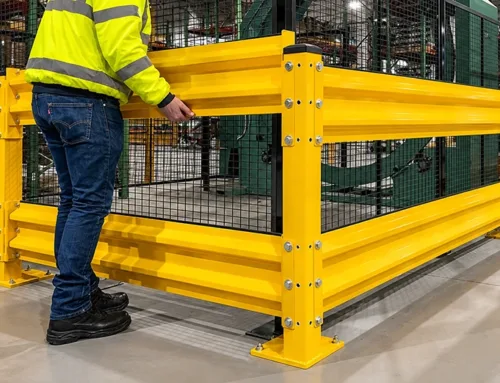
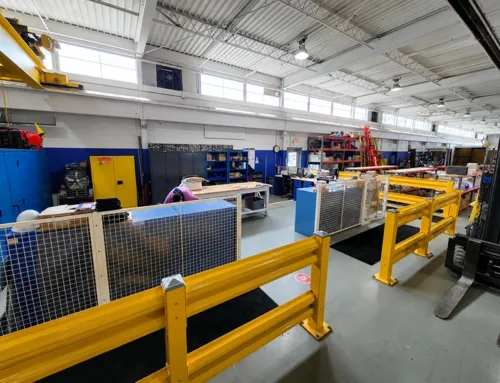
Robust Q235 steel construction provides the certified impact resistance global clients demand.
From CAD to Reality: Cutting Engineering Overhead
“Build-to-print” shouldn’t mean “redesign from scratch.” One of the biggest hidden costs in integration projects is the engineering hours spent detailing perimeter layouts. If your designers are drawing every fence post and calculating mesh cuts, they aren’t focusing on the core value—the automation process.
A modular system empowers your team to work with standardized blocks. With a predefined matrix of panel widths and adjustable fixing rings, you can accommodate floor variance and layout changes without revisiting the drawing board. This flexibility is crucial when retrofitting existing factories where columns and cable trays rarely match the initial CAD file. It effectively outsources the “structural engineering” of the safety cell, allowing your team to simply spec it and forget it.
Aesthetic Consistency as a Brand Differentiator
In the world of high-end manufacturing, perception is reality. A robotic cell worth millions of dollars shouldn’t be surrounded by a fence that looks cobbled together. Rusty welds, misaligned drilling, and inconsistent paint jobs detract from the perceived quality of your entire system.
Using a system with a factory-applied, ISO 9227 salt-spray tested powder coat ensures that your installation looks pristine from Day 1 to Day 1000. Features like full-frame sliding doors and concealed floor anchors demonstrate a level of polish that resonates with high-value clients in sectors like electronics and pharma. It signals that every detail of your system—right down to the door handle—is engineered for excellence.

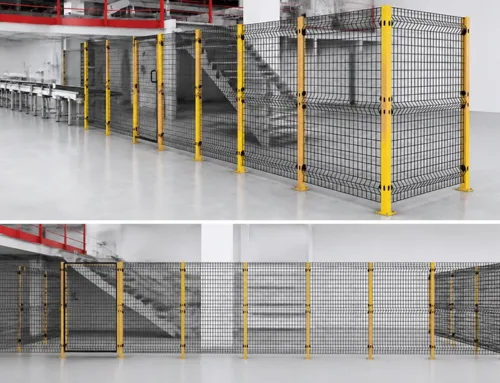
Modular sliding doors offer professional access control without custom fabrication.
Future-Proofing Your Client’s Investment
Manufacturing lines are living organisms; they grow and change. A welded fence is a permanent structure that becomes scrap metal the moment a line needs to be expanded. A modular bolt-on system is an asset.
By installing a modular solution, you offer your clients the flexibility to reconfigure their floor plan without destructive demolition. Panels can be unbolted, moved, and reassembled to accommodate new robot cells or conveyor extensions. This “reusability” is a compelling value proposition during the bidding phase, positioning you not just as a vendor of today’s line, but as a partner in their long-term operational agility.
ally meets ISO 14120 and OSHA standards acts as an insurance policy for your engineering reputation, ensuring your physical barriers are as validated as your safety logic.
Domande frequenti
1. Does your fencing system come with compliance documentation for EU markets?
Yes. Our systems are TUV certified and meet ISO 14120 standards. We provide the necessary technical documentation to support your CE marking process for the entire machine cell.
2. Can we customize the fence color to match our client’s branding?
While our standard high-visibility safety yellow (RAL 1023) and black (RAL 9005) are in stock for rapid delivery, we can accommodate custom RAL colors to align with specific corporate branding requirements for larger projects.
3. How does the system handle uneven factory floors?
Our unique adjustable fixing rings allow panels to be mounted at varying heights on the posts. This provides built-in tolerance for uneven surfaces without the need for shimming or cutting legs onsite.
4. Is the fencing suitable for clean-room or food-grade environments?
The “flat welding” technology eliminates burrs and crevices where dust can accumulate, and the powder coating is highly durable. For strict hygiene requirements, we can also offer specific panel materials like polycarbonate to prevent contamination.
5. What is the lead time for a custom layout design?
We can typically turn around a detailed Bill of Materials (BOM) and layout proposal within 48 hours of receiving your CAD floor plan, helping you meet tight bidding deadlines.