IT
IT  EN
EN  DE
DE  RU
RU  PT
PT  JA
JA  ES
ES 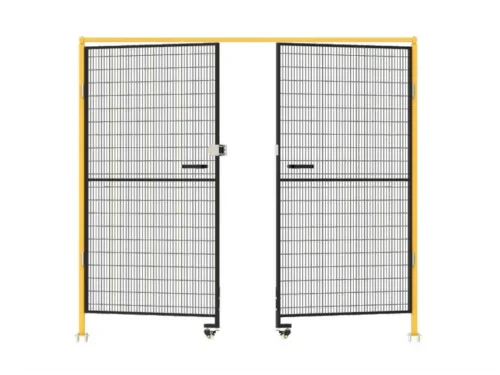

|
Stop Compromising Your Automation Cell Integrity.In high-speed automotive assembly and heavy robotics, a “flimsy” perimeter guard is a liability. You need a barrier that integrates seamlessly with your PLC safety circuits, withstands weld spatter, and holds its ground when a forklift clips a post. Secure your kinematic envelopes with certified structural rigidity. |
The Reality of Guarding in Heavy Manufacturing
In the world of automotive Tier 1 suppliers and heavy machinery integration, “safety fencing” is not just a visual boundary; it is a critical component of the machine’s control loop. Whether you are housing a KUKA welding robot or a high-speed stamping press, the physical barrier must perform two non-negotiable functions: containment of high-energy hazards e integration with safety logic.
Common wire mesh solutions often fail in heavy-duty environments because they lack the structural rigidity to maintain alignment for sensitive safety interlocks. A slight vibration from a press or an accidental nudge from a pallet jack can misalign a door switch, tripping the safety circuit and causing expensive, unplanned downtime. For Recinzione di sicurezza industriale to be effective in this sector, it must be engineered as robustly as the machines it guards.

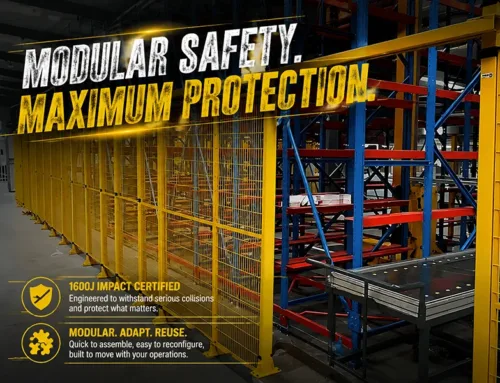
Figure 1: Heavy-duty 60x60mm Q235 Carbon Steel posts engineered for maximum stability in high-vibration environments.
Structural Integrity: Beyond the Wire
The core differentiator for heavy-duty environments is the frame. Standard “frameless” mesh panels often warp under the thermal stress of welding cells or physical impact. Our system utilizes a Framed Panel architecture.
The panels are constructed from Q235 Carbon Steel with a 20x30mm tubular frame. The wire mesh (3mm or 4mm diameter) is flat-welded to the inside of this frame. This design eliminates sharp edges—crucial for preventing cuts to operators during maintenance—and significantly increases impact resistance (TUV certified). This rigidity ensures that the Recinzioni di sicurezza per macchine maintains the calculated safety distance (ISO 13857) from the hazard zone, even under stress.

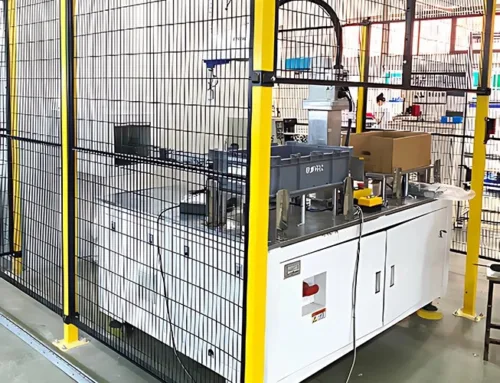
Figure 2: The framed panel design ensures rigidity, preventing mesh deformation that could violate safety distances.
Seamless Integration with Automation Logic
For System Integrators (SIs), the biggest headache is often the mechanical interface between the fence and the electronic safety components. Drilling holes on-site to mount an Omron D4NL or a Pizzato interlock is a waste of valuable engineering hours and compromises the coating integrity.
Our system treats the fence as an active part of the automation cell. We provide pre-engineered Portachiavi di sicurezza (such as the KKCK-LCK series). These are not generic brackets; they are precision-engineered mounting points that allow for the direct installation of third-party safety switches. This turns a passive barrier into an integrated Recinzione di sicurezza per robot system that communicates directly with your PLC, ensuring that opening a gate immediately triggers a Safe Torque Off (STO) condition.
Access Solutions for Large Component Handling
In automotive assembly, you aren’t just moving people; you are moving pallets of engine blocks, chassis components, and large dies. A standard hinged door is often insufficient due to the swing radius obstructing AGV paths or forklift lanes.
For these scenarios, we deploy heavy-duty Sistemi di porte scorrevoli. Utilizing a top-hung track with bearing rails, these doors can span up to 14 feet (approx. 4300mm) without a floor track, allowing forklifts to pass smoothly without jarring the fence structure. For even wider openings where lateral space is limited, our Folding Door systems provide a massive opening clearance while maintaining a compact footprint.

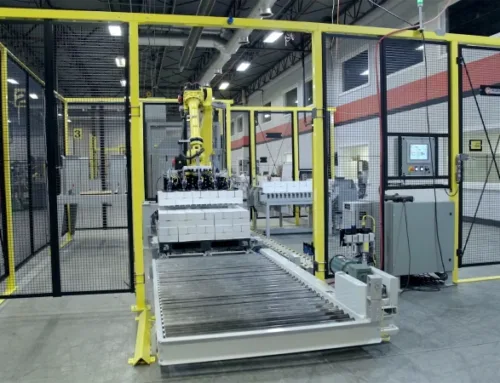
Figure 3: Sliding door configurations allow for wide forklift access without compromising the perimeter’s structural integrity.
Installation Efficiency for Tight Shutdown Windows
We understand that in the automotive industry, installation often happens during short shutdown windows or weekends. The Mdfence system is designed for speed. The “framing” connection method uses upper and lower fixing rings that clamp the panels to the posts.
There is no welding required on site. The modularity allows installers to adjust for slight floor unevenness (common in older plants) without fabricating shims. This rapid deployment capability ensures that your Protezione perimetrale industriale is up and compliant before the first shift starts on Monday morning.

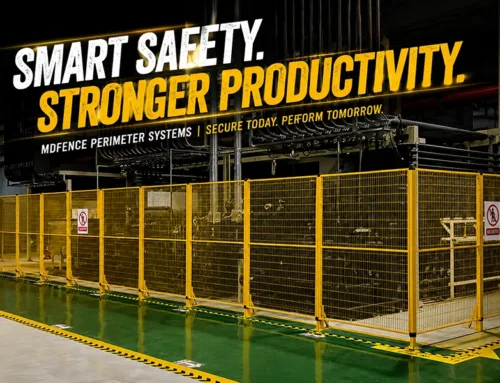
Figure 4: The modular clamp system allows for rapid assembly and panel replacement without cutting or welding.
Frequently Asked Questions (Heavy Industry Context)
Q: Can this fencing withstand weld spatter in a robotic welding cell?
A: Yes. The panels utilize a high-quality powder coating (RAL 9005 Black for mesh) that adheres to GB/T9286-1998 standards. For extreme proximity to welding arcs, we can substitute wire mesh with solid steel or polycarbonate sheet panels to contain sparks and UV radiation.
Q: We use Omron D4NL safety switches. Do I need to fabricate brackets?
A: No. We provide specific “lock carrier” kits (e.g., KKCK-LCK-B-D4NL-SET) designed to mount Omron, Pizzato, and other major safety interlock brands directly to our door frames, saving installation time.
Q: Our AGVs require a clear floor path. Do your sliding doors have bottom rails?
A: Our standard heavy-duty sliding doors are top-hung using a robust track and bearing system. This leaves the floor completely clear for AGVs, forklifts, and pallet jacks, eliminating trip hazards and track damage.
Q: How do you handle robot reach over the fence?
A: We offer customizable post heights up to 2440mm (8 feet) and beyond. This allows us to build the fence high enough to meet ISO 13857 reach-over requirements based on the specific kinematic range of your robot arm.
Q: Is the system modular enough for layout changes?
A: Absolutely. In the automotive sector, model years change and lines get reconfigured. Our bolt-together system allows you to unclamp panels, relocate posts, and reconfigure the cell layout without scrapping the material.