IT
IT  EN
EN  DE
DE  RU
RU  PT
PT  JA
JA  ES
ES 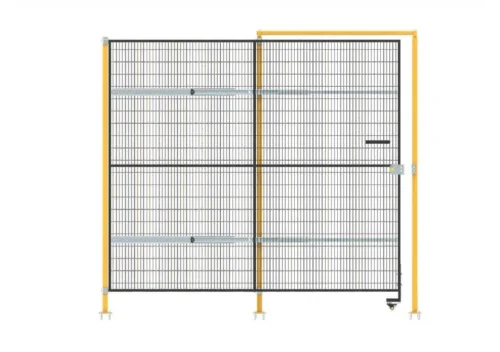

When designing a high-speed mechanical assembly machine or a robotic welding cell, a simple padlock won’t cut it. If an operator opens the cell door to clear a jammed component, the robotic arm must instantly drop to a Safe Torque Off (STO) state. Relying on passive gates without dedicated safety interlocks leads to fatal pinch-point accidents and immediately failed EHS audits. You need a physical barrier that acts as an active, fail-safe node in your PLC safety circuit.
The Fatal Flaw of “Passive” Perimeters in Automotive Automation
In turnkey solutions for CNC machining centers and automated production lines, system integrators often encounter legacy facilities using basic wire mesh with standard slide bolt locks. The pain point is severe: What happens when a maintenance worker bypasses a manual latch while a 6-axis industrial robot is still moving at full speed? A passive perimeter only defines a visual boundary; it cannot communicate with your Siemens or Rockwell PLC. When a 2,000 lbs (approx. 900 kg) payload is swinging, a standard gate is nothing more than a false sense of security.
Why it works: A dedicated safety switch (such as an Omron D4NL or Pizzato guard locking switch) acts as the mechanical-to-electrical bridge. When the actuator key is withdrawn from the switch body mounted on the Pannelli di recinzione per protezione macchine, it mechanically forces the safety circuit open.
The actual benefit: Instant Safe Torque Off (STO). The machine simply cannot restart until the door is physically closed, the key is re-engaged, and the circuit is manually reset at the HMI. This guarantees ISO 13849 compliance, completely eliminating the chance of human error during routine tool changes or jam-clearing procedures.

Why Your Safety Interlocks Keep Failing (And How to Fix It)
You specified expensive, high-tier safety interlocks for your robotics integration project, but your OEE (Overall Equipment Effectiveness) is tanking. The pain point: You mounted precision electrical switches on cheap, frameless wire mesh doors. Over time, the constant vibration from the automated high-speed manufacturing lines and daily opening/closing causes the door hinges to sag. A misalignment of just 0.2 inches (5mm) means the actuator key won’t engage the switch properly. This results in “ghost” machine stops, where the PLC thinks the door is open, causing hours of frustrating troubleshooting for your maintenance team and spiking your MTTR (Mean Time To Repair).
Why it works: Mdfence utilizes a rigid 20x30x1.5mm tubular steel frame for all its panels, combined with heavy-duty hinges and engineered upper door frame beams. Furthermore, we provide pre-engineered Safety Interlock Carriers (e.g., KKCK-LCK-B-D4NL-SET). Instead of your technicians drilling random holes into posts on-site—which destroys the powder coating and weakens the steel—the switches bolt directly onto precise, factory-welded mounting plates.
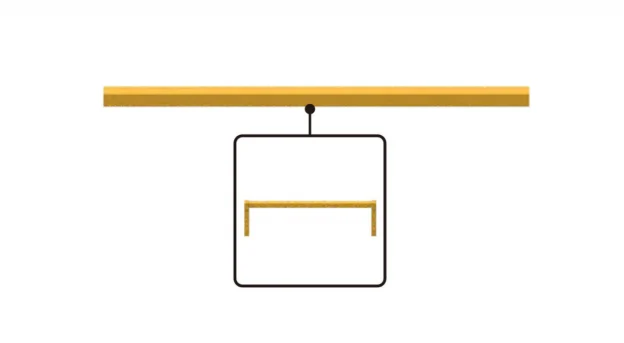
The actual benefit: Zero door sag and perfect switch alignment every single time. The upper door frame beam ensures the posts remain perfectly parallel. Your automated lines maintain maximum uptime, and you eliminate the nuisance trips that tempt operators to illegally bypass safety systems.
Integrating Safety Switches into Complex Robotic Layouts
When engineering material handling areas or warehouse AGV paths, space is a premium. The pain point: Standard hinged doors require a large swing radius, eating up valuable floor space. When integrators try to mount safety switches on sliding doors, they often resort to clumsy, custom-welded brackets that fail under the heavy vibration of passing forklifts or automated guided vehicles.
Why it works: Il nostro Sistemi di recinzione di sicurezza per robot offer robust sliding and folding door systems equipped with heavy-duty bearing rails. Whether you need a 6-foot (1.83m) wide sliding door for tooling access or a compact bi-fold door for a tight CNC loading zone, the safety interlock integration remains native. The sliding mechanism ensures the actuator key slides perfectly into the switch without lateral stress.

The actual benefit: You save up to 30% on mechanical installation time during your turnkey deployment. There is no hot work (welding) required on site, preventing sparks near sensitive electro-optical elements. The system is plug-and-play, allowing you to hand over a fully compliant, space-saving robotic layout to your automotive client ahead of schedule.
Active vs. Passive Guarding: The Engineering Breakdown
To clearly understand why a dedicated switch is non-negotiable for high-speed assembly lines, review the operational differences below:
| Guarding Approach | Door Hardware | Machine Response upon Opening | Best Application |
|---|---|---|---|
| Passive Perimeter | Standard Padlock / Slide Bolt | None. Machine continues running unless manually stopped at HMI. | Low-risk quarantine zones, static material storage. |
| Active Interlocked Guarding | Dedicated Safety Switch (e.g., Omron D4NL) | Instant Safe Torque Off (STO). Power to servo motors is cut. | Robotic welding cells, CNC machining centers. |
Frequently Asked Questions in Automation Integration
1. Can I mount an Omron D4NL or Pizzato safety switch directly to your standard fence post?
Yes. We provide pre-engineered Safety Interlock Carriers (such as the KKCK-LCK-B-D4NL-SET) that bolt directly onto our 60x60mm Q235 carbon steel posts, eliminating the need for on-site drilling and ensuring exact alignment.
2. How does door sag affect safety interlocks in automated production lines?
If a door sags due to weak frames, the switch actuator key misaligns with the switch body. This prevents the PLC from registering the door as closed, causing false machine stops and severely degrading your OEE. Our framed panels and upper door frame beams prevent this sag entirely.
3. Do your sliding doors support guard locking switches for CNC machining centers?
Absolutely. Our Recinzione di sicurezza industriale sliding doors utilize heavy-duty bearing rails that provide the linear stability required for precision guard locking switches, ensuring they function reliably even in high-vibration environments.
4. What is the difference between a simple padlock and a dedicated safety interlock in a robotic cell?
A padlock relies entirely on administrative control (human procedure). A dedicated safety interlock is an engineering control wired directly into the machine’s safety circuit. If the door is opened, the interlock physically cuts the power signal to the robot’s servo motors, preventing pinch-point accidents.
5. How do your pre-engineered switch brackets save time for system integrators?
By using our factory-designed brackets, integrators avoid the “build to print” hassle of fabricating custom mounts on-site. This eliminates hot work, prevents damage to the powder coating, and cuts mechanical assembly time by up to 30% during turnkey deployments.