IT
IT  EN
EN  DE
DE  RU
RU  PT
PT  JA
JA  ES
ES 

|
In high-speed mechanical assembly lines and robotic welding stations, a dropped payload or a part ejected from a CNC machining center isn’t just a minor hiccup—it’s a kinetic energy nightmare. When a 220 lb (100 kg) automotive block flies off a six-axis robot at 12 mph, flimsy frameless wire mesh will snap, sending shrapnel into your PLC cabinets or, worse, your operators. You don’t just need a visual perimeter; you need a physical barrier engineered to absorb massive impact forces without catastrophic failure, ensuring your turnkey solutions pass strict OSHA and ISO audits the first time. |
Decoding [machine guarding fence panels impact rating.] in High-Speed Automation
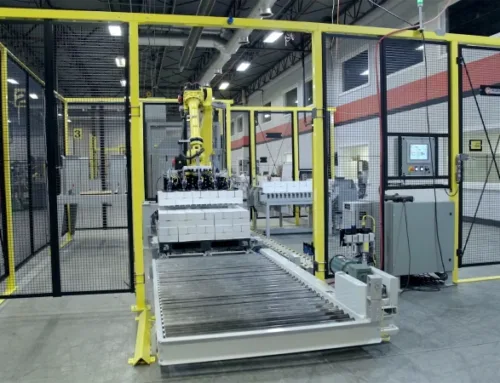
System integrators often face a critical dilemma when designing robotics layouts: balancing cycle times with the stringent requirements of ISO 14120. Standard commercial fencing relies on tensioned wire that acts like a trampoline. When struck by a heavy workpiece or bumped by a forklift in the material handling area, these panels deform permanently, pulling the posts out of alignment. This misalignment immediately wreaks havoc on your safety torque off (STO) circuits, causing safety interlocks to miss their targets and triggering frustrating nuisance machine trips that plummet your OEE (Overall Equipment Effectiveness).

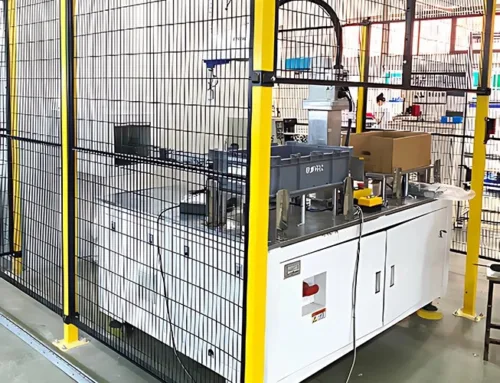
The physics of our Pannelli di recinzione per protezione macchine fundamentally changes this dynamic. Instead of relying solely on the wire, the Mdfence system utilizes a fully welded 20x30x1.5mm tubular frame. The 3.0mm or 4.0mm wire mesh is flat-welded directly to the inner side of this frame. When an impact occurs, the out-of-plane stiffness of the frame distributes the concentrated point load across the entire panel structure, preventing the mesh from tearing or sagging.
The Engineering Behind a Certified 1600 Joules Impact Resistance
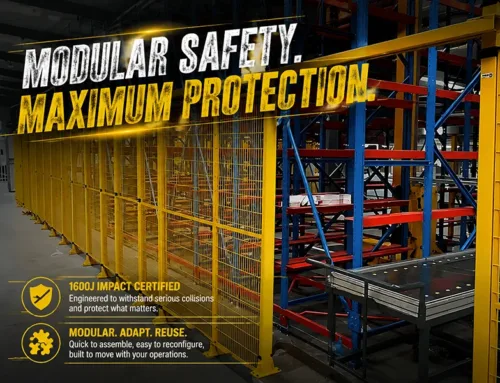
To protect dedicated manufacturing lines, the barrier must act as an energy dissipator. An impact rating of 1600 Joules—certified by TUV—means the system can successfully intercept a 220 lbs (100 kg) object moving at 12.4 mph (20 km/h). Why does it work? It comes down to the material science of Q235 carbon steel and the mechanical anchoring strategy.

Unlike brittle aluminum profiles (T-slots) that can snap under sudden kinetic loads, the Q235 cold-rolled seamless steel posts (60x60mm) undergo plastic deformation. They bend to absorb the shock rather than fracturing into dangerous projectiles. The force is transferred from the panel frame through heavy-duty steel connection clips directly into the post, and finally down to the heavy “ear” style base plates anchored into the concrete floor via four M10x70mm expansion bolts. This closed-loop load transfer is what keeps your high-value KUKA or FANUC robots safe from external forklift impacts, and your personnel safe from internal part ejections.
Shrinking the Safety Envelope for AGV/AMR Integration
In modern automotive assembly plants, floor space is fiercely contested. If you use standard 2″x2″ (50x50mm) mesh, ISO 13857 reach-distance standards dictate that the recinzione di sicurezza per robot must be installed up to 33.5 inches (850mm) away from the hazard zone to prevent an operator’s arm from reaching through. This wastes massive amounts of valuable real estate, often choking the pathways required for your Warehouse AGV/AMR routing.
By switching to our finger-safe 0.78″x3.9″ (20x100mm) mesh configuration, you restrict penetration to just the fingertips. This mathematically allows you to push the physical barrier as close as 4.7 inches (120mm) to the moving automation. For a 150-foot automated production line, this reclaims hundreds of square feet of active manufacturing space without violating a single safety directive.

Furthermore, when integrating wide access points for overhead cranes or forklift tooling drops, large doors are notorious for sagging. Our double sliding doors utilize heavy-duty top bearing rails and the same framed panel architecture. This rigid construction guarantees that the pre-engineered lock carriers (designed specifically for Omron D4NL or Pizzato FS switches) remain perfectly aligned year after year, guaranteeing that your safety control equipment and software always receive the correct STO signal.
Eliminating Hot Work in Turnkey Solutions
For system integrators, on-site welding is a massive bottleneck. Hot work permits, flying sparks near sensitive electro-optical elements, and the inevitable rusting of burnt powder coating delay project handovers. Our recinzione di sicurezza industriale is a 100% cold-assembly system. Using standardized M8 fasteners and modular clips, two technicians can deploy a complex robotics layout rapidly. When the automotive model year changes and the assembly line needs reconfiguration, the system boasts a 95% asset reuse rate, simply unbolting and reassembling in the new layout.
Frequently Asked Questions (Industry Specific)
1. Does a 1600J impact rating satisfy OSHA and RIA R15.06 requirements for robotic welding cells?
Yes. The 1600J rating is certified under ISO 14120 testing protocols, which directly supports compliance with ANSI/RIA R15.06 and OSHA machine guarding mandates by proving the barrier can contain calculated kinetic ejections from standard robot payloads.
2. How does the 20x100mm mesh size affect our CNC machining center footprint?
According to ISO 13857, the 20mm slot width prevents hand and arm penetration, allowing the fencing to be installed as close as 120mm (4.7 inches) to the hazard point, drastically shrinking the required floor space compared to standard 50x50mm mesh.
3. Can your sliding doors accommodate forklift access for heavy automotive tooling without sagging?
Absolutely. Our sliding doors utilize a 20x30mm tubular steel frame combined with heavy-duty bearing rails, preventing the structural sag that typically causes safety interlock misalignment in wide forklift entryways.
4. Do we need to drill the Q235 steel posts to mount our Omron or Pizzato safety interlocks?
No. The system features pre-engineered lock carriers (e.g., KKCK-LCK-B-D4NL-SET) that bolt directly onto the modular frame, integrating seamlessly with your PLC/HMI without any on-site drilling or metal shavings.
5. Is hot work required to modify the machine guarding fence panels during an assembly line changeover?
Zero hot work is required. The entire system uses cold-assembly mechanical fasteners (M8 bolts and clips), eliminating the need for hot work permits, protecting nearby electro-optical sensors from welding sparks, and allowing for rapid line modifications.