IT
IT  EN
EN  DE
DE  RU
RU  PT
PT  JA
JA  ES
ES 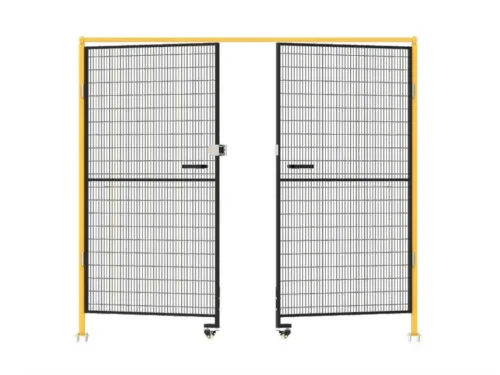
 |
Your project deadline is non-negotiable, but on-site welding for safety guarding is a bottleneck of hot work permits, rework, and EHS compliance headaches. There’s a faster, cleaner, pre-engineered way to secure your automation cells and pass the final audit on the first attempt. |
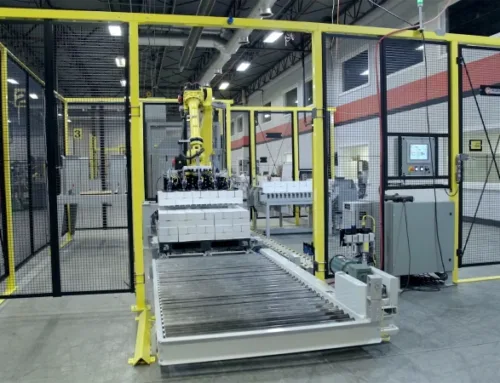
For automation system integrators, the final 10% of a project can consume 50% of the effort. You’ve programmed the robots, integrated the PLCs, and calibrated the vision systems. But the physical Protezione delle macchine, often treated as an afterthought, suddenly becomes a major obstacle. Traditional welded-on-site fencing introduces variables you can’t control: welder availability, hot work permits, messy grinding, and the inevitable layout “adjustment” that requires cutting and re-welding, compromising the finish and your timeline. A bolt-on assembly philosophy changes this from a variable to a constant—a predictable, fast, and compliant final step.
Why Welded Fences Sabotage Your Project Timeline and Budget
The “old way” of fabricating safety fences on-site is a direct threat to the lean, agile process of modern automation integration. It’s an analog solution in a digital workflow, creating predictable—and expensive—problems.
The “Hot Work” Permit Bottleneck
In any operational facility, welding, cutting, and grinding require extensive “hot work” permits, fire watches, and designated safe zones. This isn’t just paperwork; it’s a logistical delay that can halt all other work in the area, directly impacting your critical path to project completion. The process is slow, dirty, and introduces significant fire hazards.
The Zero-Flexibility Trap
The end-client requests a last-minute change: a conveyor needs to be shifted by six inches. With a welded fence, this “minor” change becomes a major rework order. It involves angle grinders, re-welding, and crude touch-up paint that will never match the original finish. The asset is permanently scarred, and your labor costs skyrocket. The fence becomes a sunk cost, not a reusable asset.
The EHS Compliance Gamble
A sharp-eyed EHS manager will instantly spot the problems with on-site fabrication. A hole drilled by hand to mount an Omron or Pizzato interlock switch has broken the powder coat, inviting corrosion. A rough weld seam presents a snag hazard. These seemingly small details are enough to fail a final safety audit, forcing costly rework and delaying the client’s production start-up.
The Bolt-On Advantage: From CAD to Reality, Faster
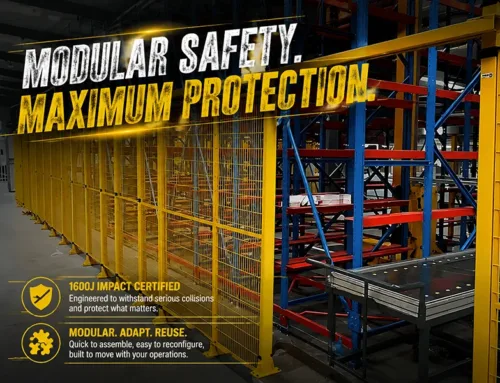
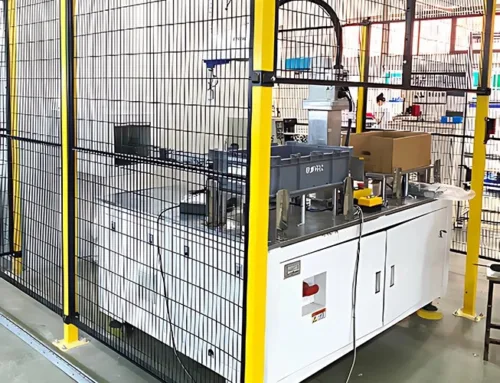
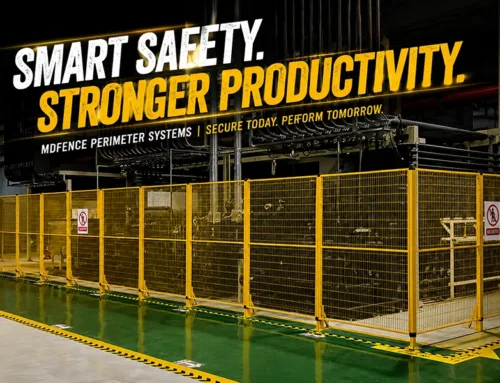
A modular, bolt-on recinzione di sicurezza industriale system is designed to be the physical counterpart to your CAD model. It’s a predictable kit of parts that eliminates on-site fabrication and its associated risks.
Cold Assembly: From Crate to Complete in Hours, Not Days
Imagine your guarding system arriving on a single pallet. Each post, panel, and door is a standardized component. Using only a wrench, a small team can execute the assembly. The process is clean, quiet, and requires no hot work. You can install the guarding in parallel with other final commissioning tasks, drastically compressing the project timeline.

Engineered for Integration, Not Modification
A true bolt-on system anticipates your needs. Need to mount a safety interlock? There’s a pre-engineered lock carrier plate with the correct hole patterns. No drilling, no compromising the finish. Need a wide access point for a forklift? A pre-fabricated sliding door system integrates seamlessly. This isn’t just a fence; it’s a mechanical system designed to work with the electronic safety components you’re already using.

Standard hinged door systems for personnel access. |

Sliding door systems for wide equipment access points. |
Built for the Realities of the Factory Floor
The value of a bolt-on assembly is backed by robust engineering. The core components are designed for the harshness of an industrial environment, ensuring that your integration work is durable and requires minimal callbacks.
The entire structure is built from high-tensile Q235 carbon steel, providing superior impact resistance compared to lighter aluminum profile systems. A durable electrostatic powder coating resists industrial oils and solvents, ensuring the system looks as professional as your automation cell performs. Even the smallest details, like protective post base covers, are included to prevent trip hazards and simplify floor cleaning—details that demonstrate a commitment to quality to your end-client.

Let’s compare the two approaches directly:
| Caratteristica | Mdfence Bolt-On System | Traditional Welded Fence |
|---|---|---|
| Metodo di installazione | Cold Assembly: Mechanical fastening with bolts and clips. | Hot Work: On-site cutting, welding, and grinding. |
| On-Site Tools | Wrenches, hammer drill. | Welder, angle grinder, chop saw, extensive PPE. |
| Modifiche al layout | Simple to unbolt, reconfigure, and re-assemble. 100% asset reusability. | Destructive removal required. Asset value is zero. |
| Safety Interlock Integration | Pre-engineered mounting plates for major brands. | Requires custom on-site drilling and bracket fabrication. |
| EHS Audit Risk | Low. Standardized, compliant components with a factory finish. | High. Risk of non-compliance from sharp edges, corrosion, and inconsistent quality. |
For your next automation project, don’t let the physical guarding be a source of risk and delay. Adopting a bolt-on assembly for your recinzione di sicurezza per robot is a strategic decision. It aligns the final physical integration with the precision and speed of your entire automation design process, ensuring you deliver a high-quality, compliant system on time and on budget.
Domande frequenti per gli integratori di sistemi
1. How quickly can we get a Bill of Materials (BOM) and CAD models for our layout?
Typically, once we receive your layout drawing (DWG or STP file), we can provide a complete BOM and corresponding 3D models for your system design within 24-48 hours. This allows you to check for interferences and finalize your floor plan immediately.
2. Are your safety interlock mounting plates compatible with brands like Schmersal or Allen-Bradley?
Yes. While we have standard carriers for common models from Omron and Pizzato, we offer a universal mounting plate and can provide custom-drilled plates to accommodate virtually any safety interlock switch, including those from Schmersal, Allen-Bradley, Banner, and others. Just provide the model number with your RFQ.
3. What is the typical installation time for a standard 30-foot robot cell with one door?
With a two-person crew who has reviewed the installation drawings, a standard 30-foot L-shaped or U-shaped cell can typically be fully assembled in 3 to 5 hours. This includes anchoring the posts, mounting the panels, and installing a pre-assembled hinged door.
4. How does the bolt-on system accommodate uneven concrete floors?
Our posts are designed with a slight tolerance in the connection points. For more significant variations, we offer shims that can be placed under the post baseplates before anchoring to ensure the entire fence line remains level and plumb.
5. Can we order custom-width panels for conveyor cutouts and other specific openings?
Absolutely. We provide custom-width panels as a standard offering. You can specify the exact width needed to create precise tunnel guards for conveyors or openings for control panels, ensuring compliance with ISO 13857 safety distance requirements without any on-site cutting.