IT
IT  EN
EN  DE
DE  RU
RU  PT
PT  JA
JA  ES
ES 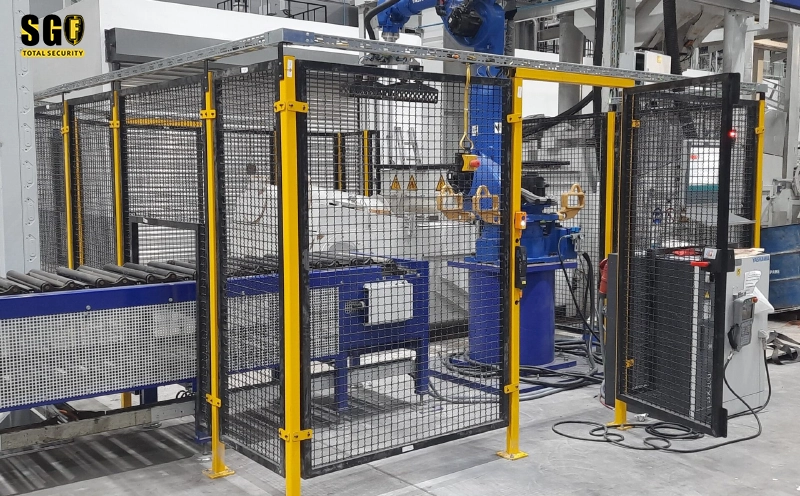
When an automation integrator specifies Omron D4NL or Pizzato safety interlocks, the real reliability problem often starts long before electrical commissioning. Field drilling can damage coating, shift hole centers, and leave the gate leaf slightly out of plane. In high-cycle robot cells, that small mechanical error becomes switch misalignment, nuisance stop alarms, and repeated maintenance calls. Mdfence robot cell guarding addresses the issue at the fence-door interface first: pre-engineered lock-carrier plates, framed 20×100 mm mesh doors, stiff 20x30x1.5 mm tube geometry, and caster-supported gate formats that keep the STO signal path mechanically stable over time.
Why switch brand is not the root cause of many false stops
Omron and Pizzato interlocks are widely specified because machine builders need proven safety components and consistent export-ready sourcing. Yet in practice, many stop events are not caused by the interlock itself. They come from a door system that was treated as a simple fabricated opening instead of a precision mechanical interface. If installers mark holes on site with a hand drill, three problems appear immediately: coating damage at the post, dimensional scatter at the mounting area, and door geometry drift as the leaf cycles under load.
For a robot cell, even minor door sag or latch-side deflection matters. The actuator must enter the switch at the intended angle and repeat that position over thousands of cycles. Once the gate frame twists, the switch target no longer lands consistently. Operators see intermittent alarms, technicians start readjusting hardware, and production loses confidence in the guarding package.
What Mdfence changes at the gate and post interface
Factory-prepared lock-carrier logic
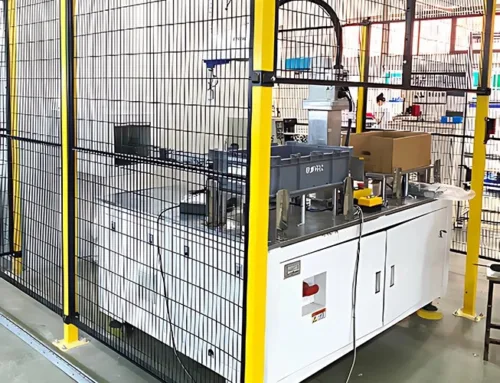
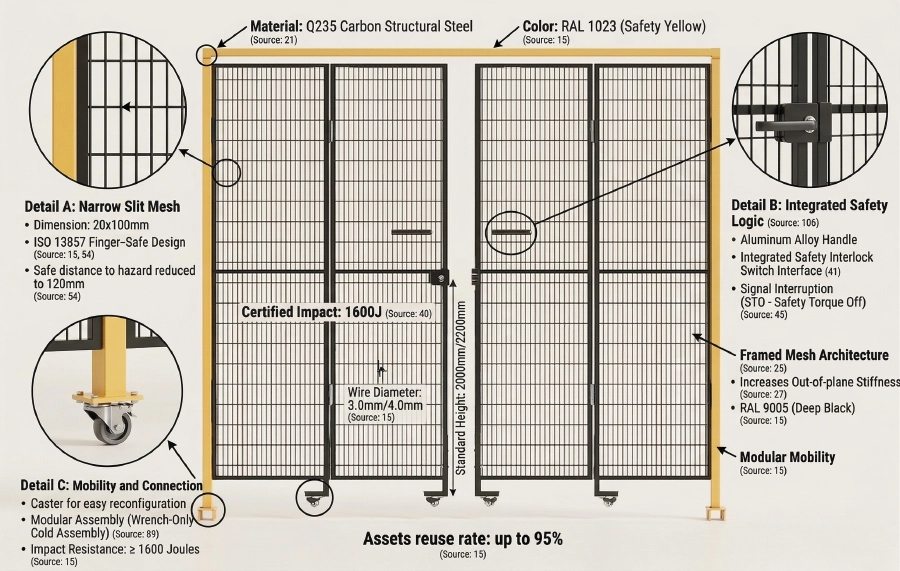
Mdfence is designed as machine guarding, not a generic wire partition. The gate structure can be prepared around universal mounting carriers for mainstream safety lock and interlock brands, helping teams avoid improvised drilling and bracket-making at site.
Framed mesh instead of light frameless wire
The typical framed panel and gate construction uses Q235 steel with a 20x30x1.5 mm tube frame. That frame stiffness gives the lock side a much better foundation than light-duty unframed mesh systems.
Caster-supported gate stability
Where opening width or usage frequency would otherwise encourage sag, supported gate formats with industrial casters reduce long-term deformation and keep the closing path repeatable.
20×100 mm mesh for compact guarding
The dominant Mdfence opening is 20×100 mm, supporting finger-safe guarding and allowing compact safety layouts under ISO distance logic, so reliability does not have to come at the cost of excessive floor space.
How mechanical alignment protects STO signal stability
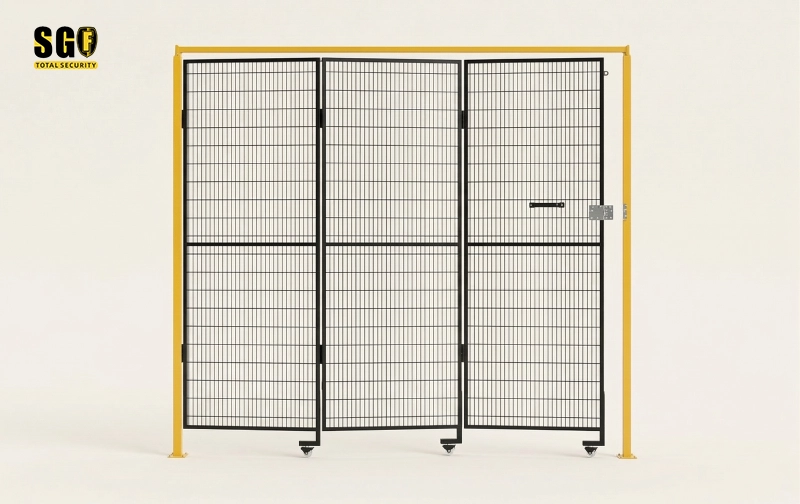
In an interlocked safety gate, electrical reliability depends on mechanical repeatability. The actuator, tongue, or keyed element must enter the sensing position the same way every cycle. A fence supplier that only sells mesh panels leaves the integrator to solve this at the last minute. Mdfence instead turns the door into an interlock-ready assembly where the gate leaf, post, carrier plate, latch area, and support wheel all contribute to repeatable closure.
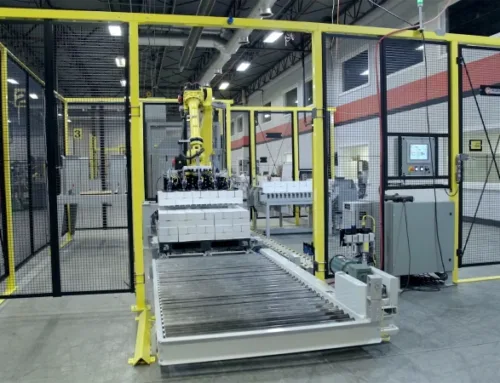
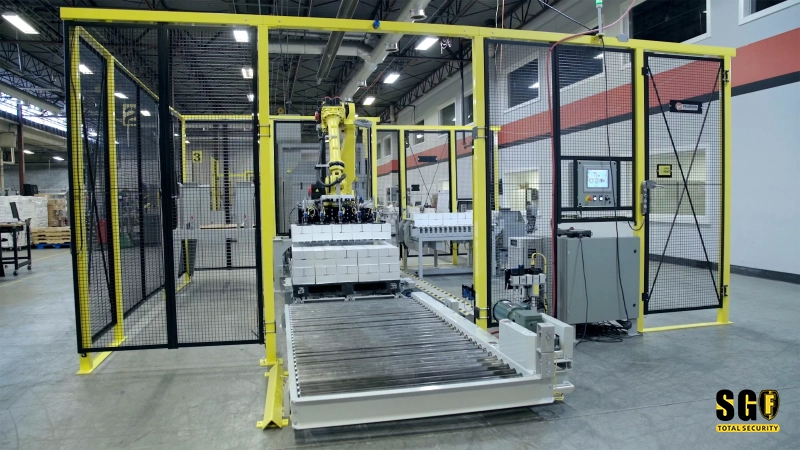
This is especially important in automated palletizing, conveyor transfer zones, and robot assembly cells where operators access the protected area for reset, adjustment, or maintenance. These are not once-a-week openings. They are frequent-use safety doors. When a door is opened and closed all day, tiny installation errors become operational downtime.
- Rigid framed leaf reduces twist at the switch side
- Support wheels limit long-term sag on larger or heavier openings
- Factory carrier positioning reduces field tolerance stacking
- Clamp-based modular assembly avoids hot work and coating burn-off at site
- Stable closure geometry helps the safety circuit avoid intermittent misreads
Where this matters most in real automation layouts
| Application area | Typical risk | Risposta di Mdfence |
|---|---|---|
| Robot palletizer access gate | Frequent resets and adjustment access increase door cycle count | Framed gate formats, caster support, and interlock-ready mounting help preserve alignment |
| Conveyor infeed or discharge guard door | Improvised site drilling causes switch offset and poor closure repeatability | Universal carrier logic and modular assembly reduce ad hoc field rework |
| Tight automation cells | Teams choose between compact footprint and dependable guarding | 20×100 mm mesh supports compact placement without giving up machine-guard positioning |
| Export machine projects | Different end users specify Omron, Pizzato, or similar brands | Compatibility planning at the fence stage reduces engineering hours and change-order friction |
Why integrators prefer solving this before shipment
Every field correction after delivery is expensive. Re-drilling posts, repainting exposed steel, shimming hinges, and re-aligning actuators consume technician time that could be spent commissioning the process equipment itself. For OEMs and automation integrators, a fence package that arrives interlock-ready shortens installation, protects finish quality, and reduces the chance that a safety review uncovers inconsistent door behavior.
Mdfence also supports broader gate selection logic. Hinged, sliding, folding, and large-opening formats let engineers choose an access method that fits traffic flow, maintenance routines, and available aisle width. That flexibility matters because a poorly chosen door type can create its own alignment and wear problems even when the switch hardware is correct.
The result is not just compliance language on paper. It is a guarding package that stays functional in daily production, preserves operator confidence, and helps the end user avoid repeated nuisance-stop troubleshooting.
Key specification signals buyers should verify
- Q235 carbon steel structural base for machine-risk guarding applications
- Framed mesh panel construction rather than light unsupported wire
- 20x30x1.5 mm typical frame tube logic for gate and panel stiffness
- 20×100 mm mesh commonly used for compact finger-safe guarding
- Modular clamp-based assembly to reduce field welding and finish damage
- Compatibility planning for Omron, Pizzato, and similar interlock devices
- Gate formats with header beams and support casters where opening width demands long-term stability
Specify robot cell guarding that keeps the safety door repeatable
If your project requires Omron or Pizzato interlocks, the safest way to reduce nuisance stops is to engineer the fence door, support geometry, and switch interface together from the start. Mdfence helps automation teams deliver compact, interlock-ready machine guarding with fewer field corrections and more predictable STO stability.