
 IT
IT  EN
EN  DE
DE  RU
RU  PT
PT  JA
JA  ES
ES MDFence Machine Guarding Fence Solution for GBIM Automation & Robotics LTD
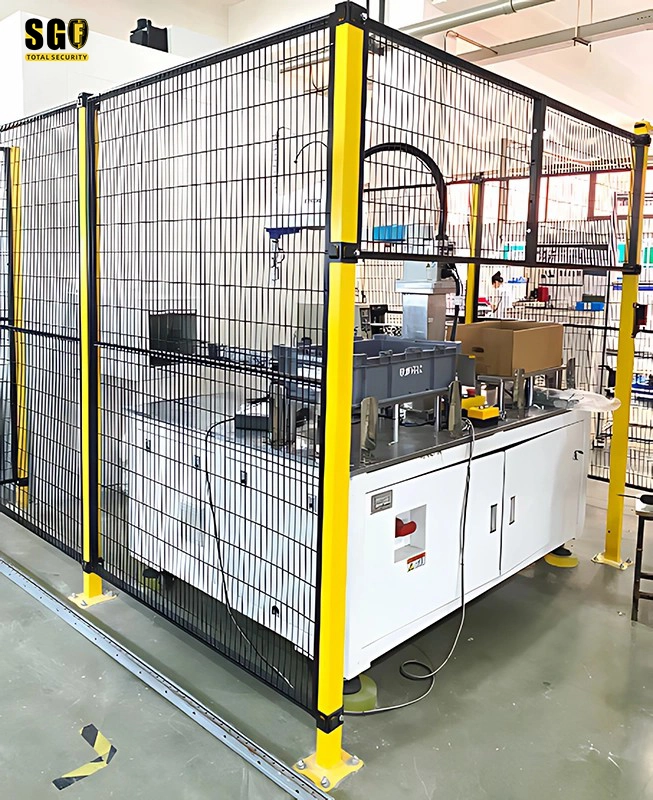
For GBIM Automation & Robotics LTD, an automation specialist with more than 35 to 50 years of engineering background, SGF configured an MDFence machine guarding fence system built around drawing-based layout confirmation, Omron-ready access control, and robust steel panel construction for robot cells and equipment safety zones.
Layouts Reviewed
Confirmed Mesh Opening
Gate Interlock Interface
GBIM serves industrial automation and robotics applications where guarding is not a cosmetic accessory but a functional part of machine delivery. The project started from four customer drawings and a clear need for reliable perimeter separation around equipment areas, while still keeping installation practical for the end site and compatible with controlled service access.
Based on the reviewed layouts and the technical discussion recorded in the Mdfence solution package, SGF aligned the fence geometry, gate structure, and hardware interfaces around a standardized MDFence platform. This reduced engineering ambiguity, protected the confirmed opening dimensions, and allowed the customer to move faster from drawing review to manufacturable guarding modules.
GBIM needed a machine guarding fence solution that could fit multiple equipment drawings, provide dependable physical segregation for automation cells, and support interlocked access control without forcing a risky on-site redesign. The challenge was not only fence supply, but also matching post sections, mesh spacing, gate support details, and lock mounting provisions to a real automation use case.
Drawing-Confirmed Layout Logic for Automation Projects
The customer submitted four separate fence layouts. During the technical review, SGF used the MDFence modular structure to translate those drawings into a buildable guarding plan with consistent post logic, panel dimensions, and gate adjacency rules. This approach is valuable for automation integrators because it limits installation guesswork and makes later procurement, assembly, and field alignment easier to control.
Instead of treating each drawing as an isolated fabrication job, the solution was structured around repeatable unit logic. That means easier quantity validation, clearer packing, and lower coordination risk when multiple guarded zones must be delivered under one project schedule.
Omron-Ready Access Control Without Overcomplicating Procurement
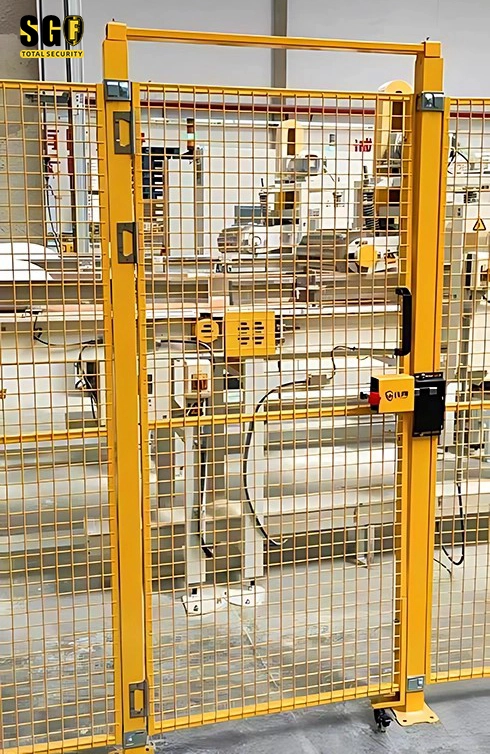
The technical file specifically references an Omron D4NL-4EFG-B safety interlock concept with a D4DS-K3 key arrangement. In this project model, the electrical safety lock can be locally sourced by the customer while SGF provides the compatible carrier and door-side structural provisions. This is a strong fit for export-oriented automation projects because it preserves warranty flexibility and avoids unnecessary delays tied to region-specific electrical sourcing.
To support daily operation, the hinged door structure includes a top beam connection and a support caster. These details matter in long-term use because they improve door stability, reduce sag risk on larger openings, and maintain more consistent alignment at the interlock position.
Why the Confirmed Mesh and Steel Structure Matter
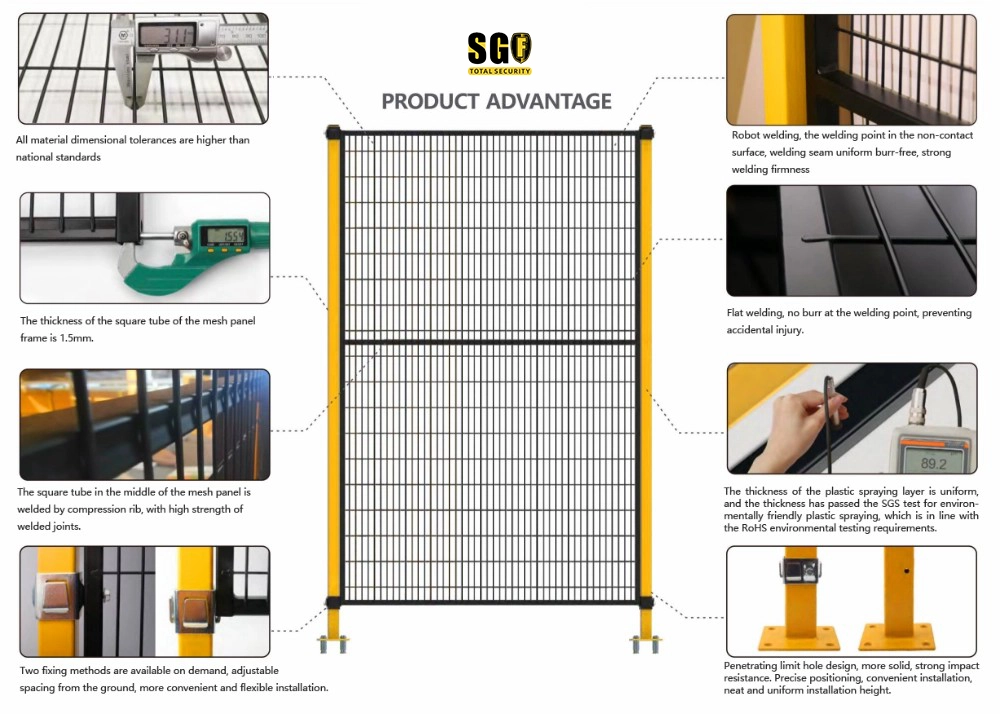
After the review, the confirmed configuration moved toward a 60×60 mm post section, 20×100 mm mesh opening, and 4.0 mm wire diameter. The body material is Q235 carbon steel, paired with framed mesh panels and coordinated mounting hardware. For robot cells and equipment isolation, this combination balances visibility, structural rigidity, and practical manufacturing repeatability.
The added top beam above gate-adjacent posts also helps preserve opening stability where service traffic is frequent. Together with metal handle-and-lock arrangements and support wheel details, the fence system becomes more suitable for controlled access points rather than simple static partitions.
Manufacturing and Site Execution Advantages for GBIM
For an experienced integrator such as GBIM, project value comes from predictable execution. The MDFence system supports that by using standardized posts, framed mesh panels, and accessory kits that are easier to identify, pack, and install. The technical package also shows parameter drawings for each reviewed layout, helping the customer validate dimensions before fabrication moves forward.
This improves communication between design, purchasing, production, and site teams. It also lowers the chance of field modifications that can slow commissioning or compromise access control performance around automation equipment.
Export and Packing Logic for Multi-Zone Guarding
The underlying Mdfence documentation also emphasizes structured accessory packing, protective corner treatment, wooden pallet loading, and unit-based packaging tied to each drawing set. For international automation projects, this is more than a logistics note. It supports cleaner receiving, faster sorting, and better traceability when several guarded areas are installed in sequence.
That packaging discipline aligns well with GBIM’s automation project environment, where schedule pressure is real and installation teams benefit from a fence kit that arrives in a controlled, component-based format rather than as mixed steel bundles.
Specifiche del prodotto
| Technical Characteristic | SGF Specification Detail |
|---|---|
| Product Platform | MDFence machine guarding fence system |
| Applicazione primaria | Automation equipment perimeter guarding and controlled access |
| Reviewed Layout Quantity | 4 drawing sets |
| Post Section | Confirmed toward 60×60 mm |
| Maglia di apertura | 20×100 mm |
| Diametro del filo | 4.0 mm confirmed option |
| Base Material | Acciaio al carbonio Q235 |
| Gate Type | Hinged access gate with top beam connection |
| Door Support | Support caster for better stability and lower sag risk |
| Interlock Strategy | Omron-ready mounting provision for D4NL / D4DS concept |
Risk Controls & Operating Guidelines
- Freeze the final layout dimensions against the approved drawings before production release.
- Confirm local sourcing responsibilities for the electrical interlock hardware before shipment.
- Keep gate post alignment and top beam geometry within installation tolerance to protect lock engagement quality.
- Use support casters and correctly anchored posts to reduce long-term door sag under repeated operation.
- Label packed accessories by drawing zone so site teams can install each guard section in the intended sequence.
- Recheck handle, latch, and interlock carrier positions during commissioning before equipment handover.
SGF Engineering Insight: For mature automation integrators like GBIM, the best fence solution is usually the one that removes ambiguity across drawings, hardware interfaces, and site execution. MDFence delivers that value by combining modular steel guarding, interlock-ready gate details, and a structure that can be repeated across several automation layouts without losing control of access safety.

