IT
IT  EN
EN  DE
DE  RU
RU  PT
PT  JA
JA  ES
ES Cross-Region EHS Audit Pack
What a Multinational Polymer Crash Barrier Documentation Has to Contain — and What It Cannot
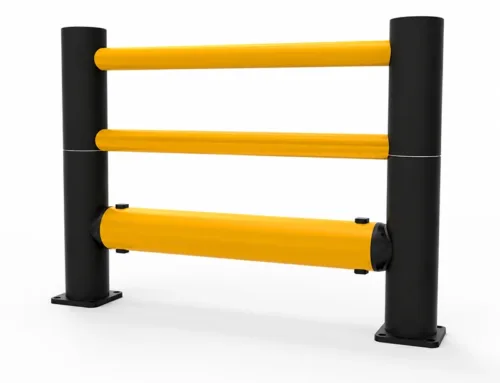
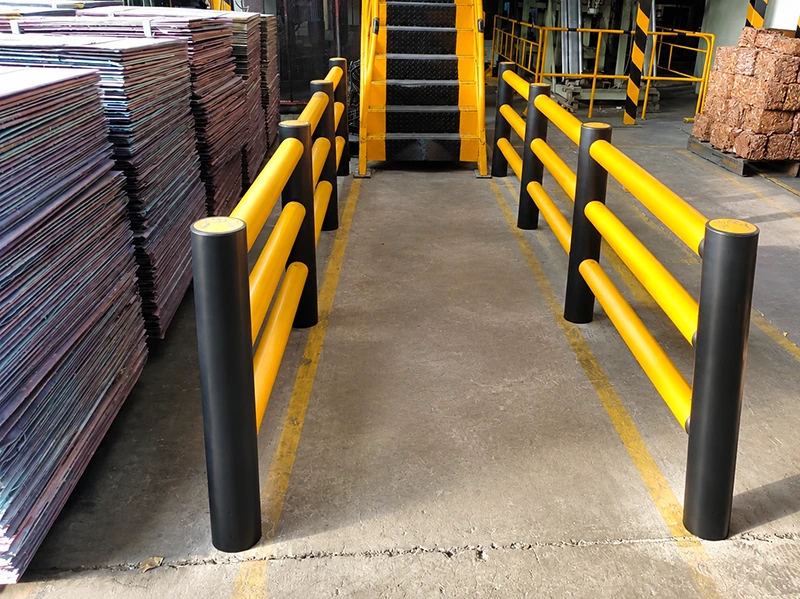
A multinational EHS director with twelve country sites can publish a corporate barrier standard, but every plant still has to clear its own national safety code. The barrier line item itself stops the audit when there is no group-wide spec, no shared Joule ladder, and no test report an auditor can trace. FCBarrier SR, DR, TR and CTR publish one impact-energy ladder from 3,850 J to 28,950 J, one mortise & tenon quick-release cell, and one documentation pack. PAS 13 third-party certification is the open workstream that has to close before Amazon-class procurement boards sign off a network rollout.
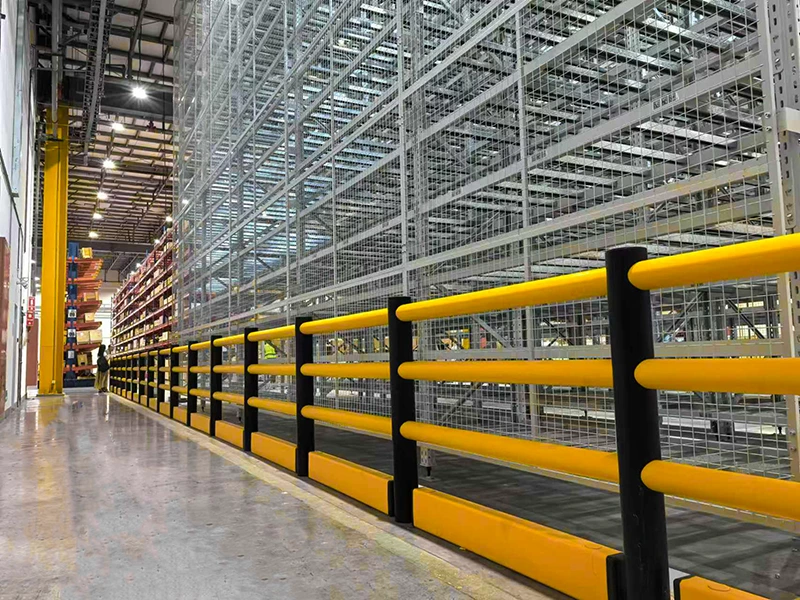
One Joule Ladder, Four Series: The 3,850–28,950 J Spec an Auditor Can Read Across Plants
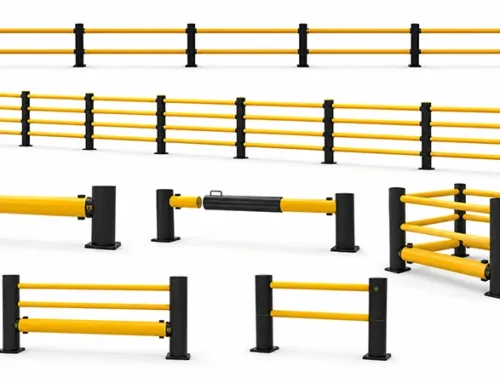
When a corporate EHS office sets a group standard, the spec has to map cleanly to four standard polymer barrier series. The series share one Joule rating system tied to forklift class and travel speed, so a plant auditor in Stuttgart, a plant auditor in São Paulo and a plant auditor in Osaka can read the same table. The 28,950 J figure has a stated forklift envelope: 8 t @ 9.6 km/h, which is the test condition FCBarrier publishes for DR190, TR190+ and CTR190+.
| Modello | Energy & Forklift Envelope |
|---|---|
| SR100 | 3,850 J — 1.5 t @ 8 km/h |
| SR148 | 14,400 J — 4 t @ 9.6 km/h |
| SR190 | 21,350 J — 6 t @ 9.6 km/h |
| DR100 | 6,500 J — 3 t @ 7.5 km/h |
| DR148 | 19,000 J — 6 t @ 9 km/h |
| DR190 | 28,950 J — 8 t @ 9.6 km/h |
| TR100 / CTR100 | 8,200 J — 3 t @ 8.4 km/h |
| TR148+ / CTR148+ | 19,000 J — 6 t @ 9 km/h |
| TR190+ / CTR190+ | 28,950 J — 8 t @ 9.6 km/h |
What an Audit-Ready Documentation Pack Has to Contain
1. One Quick-Release Cell Across All Series
The mortise & tenon quick-release is identical across SR, DR, TR and CTR. A plant engineer in any country can install 3 rails + 2 posts in the same sequence, with the same electric hammer drill, torque wrench and rubber mallet. Cross-region training is one SOP, not twelve. The cell also means a damaged rail after a forklift strike is replaced at the segment level, not the run level — a measurable CapEx line on the audit form, and a CapEx line that does not have to be re-justified at every site.
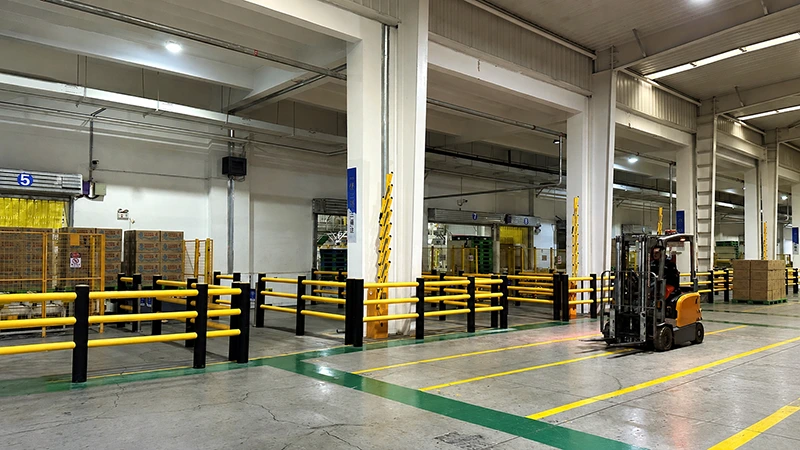
2. One Test Method, One Stated Forklift Envelope
The 28,950 J figure is published against a stated forklift envelope (8 t @ 9.6 km/h), and DR190, TR190+ and CTR190+ share that figure. The auditor sees one test method, one reference vehicle, one reference speed — not a table of vendor-specific test rigs. Where site-local steel barriers ship with no published Joule rating at all, the FCBarrier spec travels with a published envelope every plant can cite in a procurement audit and every auditor can re-trace to the same test condition.
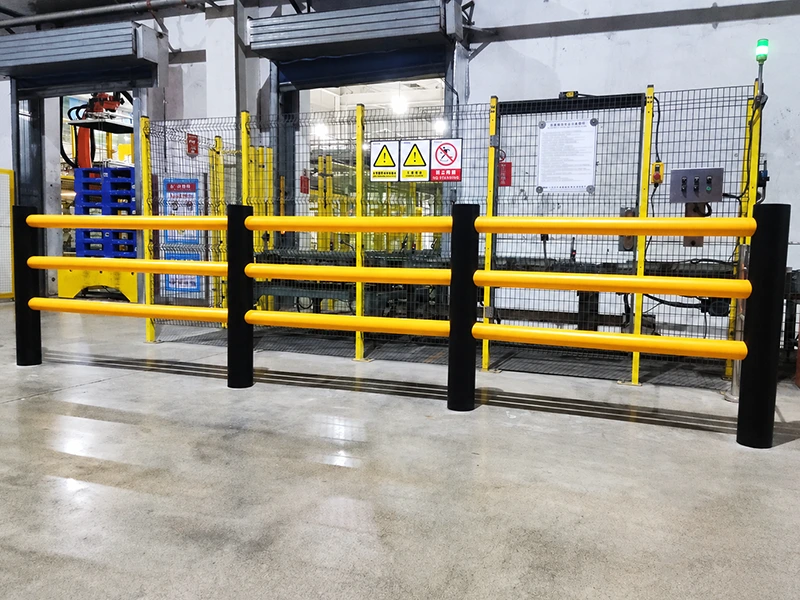
3. Honest Scope of the Pack — and the Open PAS 13 Workstream
The pack ships: (a) the Joule ladder table above, (b) the mortise & tenon install SOP with the electric hammer drill, torque wrench, rubber mallet and solid-concrete anchor sequence, (c) the ARMORFLEX material disclosure sheet (corrosion-free, UV-resistant, recyclable), (d) the modular replacement list at the segment level. What the pack does NOT ship, and what an Amazon-class procurement board will flag, is a public PAS 13 third-party certificate. That workstream is on the FCBarrier roadmap and is the next gate before a corporate EHS office signs a network rollout.
Where a Cross-Region Audit Pack Actually Saves the Group
- Cross-Region EHS Standard — one Joule ladder that satisfies twelve national safety codes simultaneously, instead of one site-local spec per plant.
- Multi-Plant Rollout — identical mortise & tenon cell across twelve country sites, with no per-site adaptation cost for the install SOP.
- Internal Compliance Review — a standardized spec an internal auditor can trace back to a test method and a forklift envelope, not a catalogue page.
- Single-Site Sourcing Reconciliation — replace twelve site-local steel barrier invoices and their open-ended repair budgets with one group-wide polymer barrier spec.
The biggest saving is in the audit cycle, not the unit price. When a corporate EHS audit can read one Joule ladder across the network and one test method per spec, the audit form fills in days, not weeks, and the site that has the right barrier wins the next refresh on evidence rather than on local preference.
Request the Cross-Region EHS Audit Pack Outline
The pack outline lists every document a corporate EHS office receives per FCBarrier line: the Joule ladder table, the mortise & tenon install SOP, the ARMORFLEX material disclosure sheet, the modular replacement list, and the open PAS 13 third-party certification workstream note. Send the request and a member of the engineering team replies within two business days with the PDF outline and the contact for any plant-specific question.
Build a Group Polymer Crash Barrier Standard Your Plant Auditors Can Read
If your corporate EHS office is rebuilding a group polymer crash barrier standard, send the current line item and the country sites the spec has to cover. The engineering team will return an audit-ready FCBarrier spec with the Joule ladder, the mortise & tenon install SOP, the ARMORFLEX material disclosure and the open PAS 13 workstream note — the same document every plant in the network reads from the same table.