IT
IT  EN
EN  DE
DE  RU
RU  PT
PT  JA
JA  ES
ES COASTAL TERMINAL | CORROSION CONTROL
Multi-Berth Loading Dock Protection with Hot-Dip Galvanized Corrugated Guard Rails
Salt spray, seawater splash, humidity and temperature swings expose coastal loading areas to a failure mode that ordinary paint cannot solve. Bare steel guardrails rust; powder-coated barriers can crack, peel and leave the substrate exposed. Hsafety warehouse guard rails can be specified with a hot-dip galvanized finish, Q235 corrugated steel beams, bolted square posts and optional reflective tape. The result is a visible warehouse safety barrier for loading dock protection, asset protection and pedestrian-vehicle separation that is designed to reduce repainting and replacement interruptions across multi-berth and multi-yard operations.

Specify the corrosion barrier and the impact boundary together
A low-cost steel pipe railing or painted barrier may look acceptable at handover, but the coating is not the structure. At a marine terminal, once corrosion reaches the beam, post or base, the warning color and the physical boundary deteriorate together. Hsafety lets the project team select the corrosion finish, beam geometry, anchoring and visibility accessories as one warehouse guard rail specification. The figures below are product and planning references; the final drawing must confirm the exposure class, concrete condition and vehicle-risk calculation.
| Voce di design | Hsafety reference for coastal loading areas |
|---|---|
| Primary application | Loading dock protection, industrial guard rail boundaries, asset protection guardrail and pedestrian-vehicle separation. |
| Steel and finish | Q235 carbon steel with a hot-dip galvanized finish specified for salt-laden outdoor exposure; powder coating and yellow safety coating remain alternative or supplementary options. |
| Beam structure | Corrugated steel beam in 2-rib/W-beam or 3-rib/thrie-beam format; single-rail or double-rail layouts are selected against the risk assessment. |
| Geometria comune | About 1,000 mm high; rail width about 300–310 mm; wave height about 85 mm; 3 mm or 4 mm thickness, subject to the selected drawing. |
| Anchoring and modules | Bolted guard rail system with floor-mounted posts, commonly planned around 1,500 mm spacing and custom-length panels for straight runs and transitions. |
| Visibilità | Yellow safety coating and optional reflective tape guard rail treatment for night shifts, fog and low-visibility transfer routes. |
Why the Hsafety configuration fits a salt-exposed terminal
Hot-dip galvanizing targets the repaint failure cycle
Spray paint is a visible finish, not a substitute for a corrosion specification. Hsafety can be ordered as hot-dip galvanized steel so the protective zinc layer is metallurgically bonded to the steel substrate rather than relying only on a paint film. That distinction matters where salt deposits, wet cleaning, sea spray and condensation repeatedly attack edges and fasteners. It does not remove the need to inspect damage, anchors and concrete; it gives the terminal a more appropriate starting point for low-maintenance corrosion control than bare steel or a paint-only barrier.
Corrugated rails create a visible, bolted physical boundary
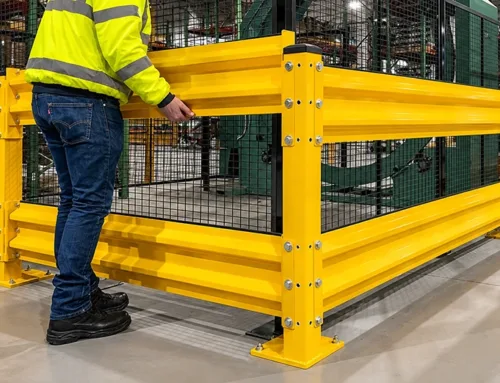
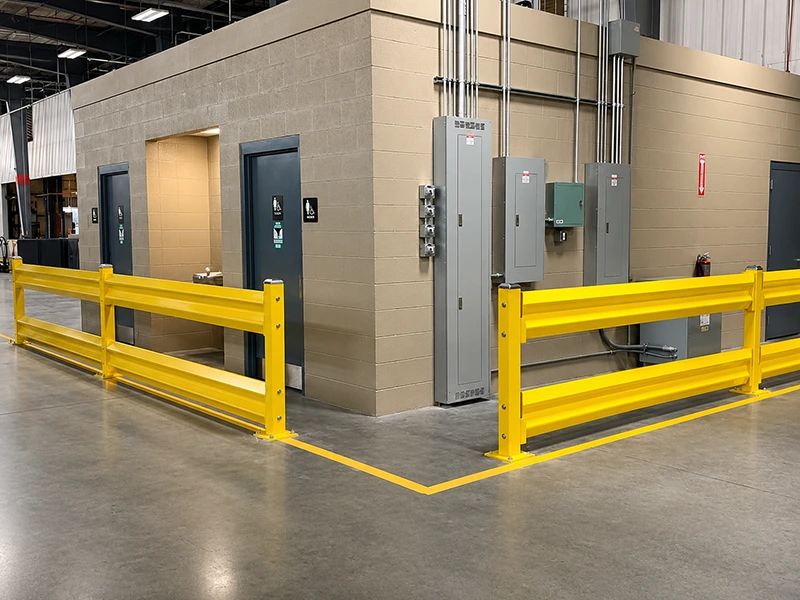
The wave beam profile uses peaks, valleys and formed bends to stiffen the corrugated guard rail. Combined with square posts, base plates and bolted connections, the double-rail arrangement separates vehicle movement from equipment, pipework and pedestrian edges without depending on a rope or strap barrier. The 1,000 mm reference height, 300–310 mm rail width and 3–4 mm thickness must be matched to the selected 2-rib or 3-rib configuration and the site impact assessment. Hsafety is an industrial guard rail, not an unverified highway guardrail or a blanket collision certification.
Modular lengths and reflective details scale across berths
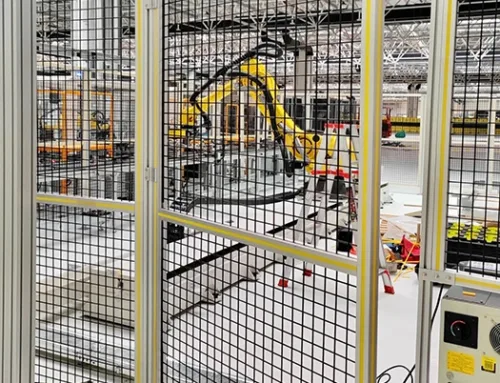
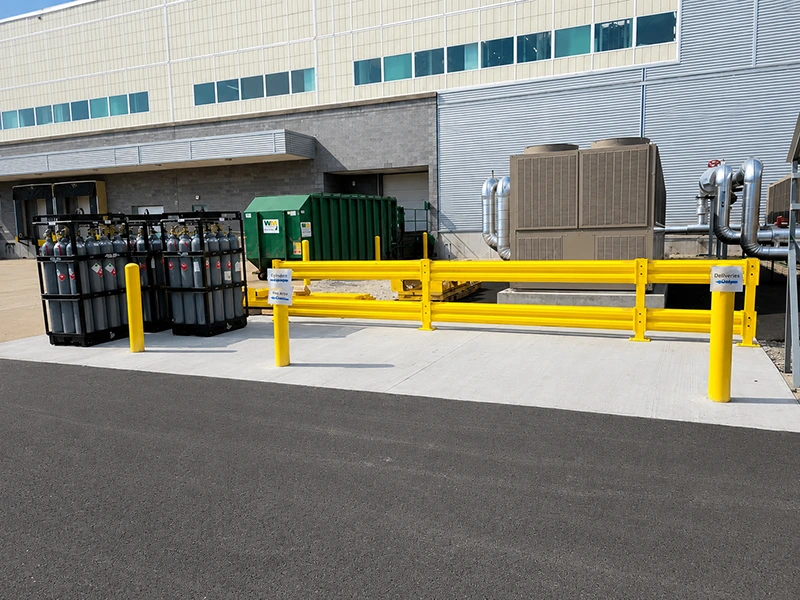
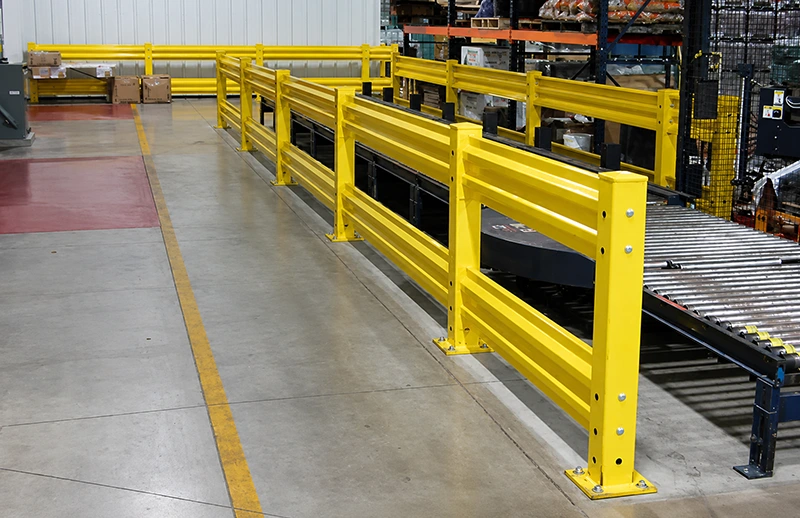
Multi-berth terminals rarely have one continuous, repeatable opening. Hsafety panels can be combined in regular 1,500 mm modules with custom-length sections to close out each loading dock, yard edge or warehouse transition. Q235 steel keeps the material choice cost-controlled for network-level deployment, while bolt-on assembly supports planned replacement of a damaged section instead of cutting out a welded rail. Add reflective tape where night operations, fog or glare make a yellow safety barrier difficult to read from a vehicle cab. The image below shows the same continuous, anchored boundary logic used around conveyor and transfer equipment.
Where to use a galvanized warehouse safety barrier
- Protezione della banchina di carico: define the vehicle edge around dock equipment, transfer points and exposed walls where seawater and forklift traffic meet.
- Asset protection guardrail: shield electrical cabinets, pipework, conveyors and fixed handling equipment from vehicle intrusion after the corrosion finish is selected for the exposure.
- Separazione pedoni-veicoli: establish a continuous physical line between walking routes, tally points and forklift or yard-tractor paths; reflective tape is available for low visibility.
- Rack end protection and warehouse transitions: carry the same steel guard rail standard from an open dock apron into the covered warehouse, with custom lengths at corners and changes in clear width.
For every location, confirm vehicle type, speed, approach angle, clearance, concrete thickness, anchor design and inspection access. Outdoor marine exposure is not the same as an indoor warehouse or a highway application, so the finish and impact design should be approved for the actual site.
What to confirm before ordering
Send the berth or dock plan, each required rail length, exposure conditions, splash and washdown zones, vehicle profile, visibility requirements and preferred finish. Hsafety can then align hot-dip galvanized steel, Q235 corrugated guard rails, 2-rib or 3-rib geometry, 1,000 mm height, post spacing, base plates, custom-length panels and optional reflective tape. If a project has a defined forklift load target, treat it as a design input—not as an independent test result—and request the supporting engineering review before installation.
Keep corrosion from becoming the next dock-safety project
Replace paint-only thinking with a documented coastal warehouse guard rail specification. Share your loading dock lengths and marine exposure with SGF to discuss a hot-dip galvanized corrugated guard rail system for collision protection, asset protection and long-term pedestrian-vehicle separation.