
 IT
IT  EN
EN  DE
DE  RU
RU  PT
PT  JA
JA  ES
ES Cleaning and maintaining Machine Guarding Systems.
In high-speed automotive assembly and robotics layouts, Machine Guarding Systems aren't just static barriers—they are active components of your production line. When CNC machining centers splash synthetic coolant, robotic welding stations accumulate spatter, or a forklift nudges a perimeter, cheap frameless wire mesh degrades rapidly. Rust sets in, doors sag,
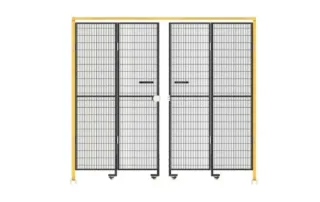
What is the standard height for Industrial Safety Fencing?
When integrating high-speed mechanical assembly machines or robotic welding cells, a failed safety audit due to incorrect barrier heights can derail your entire turnkey solution handover. You don't just need a generic fence; you need an ISO 14120-compliant perimeter that integrates seamlessly with your PLC's safety torque off (STO) circuits,
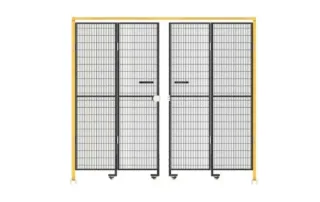
Managing industrial automation safety in tight spaces?
When integrating 6-axis robots or high-speed CNC machining centers into existing facilities, every square inch of floor space translates to thousands of dollars in manufacturing real estate. Traditional fencing forces you to waste valuable aisle space to meet safety distances, choking your AGV pathways and material handling routes. You need
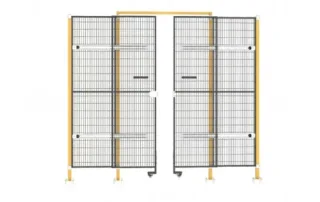
Future-proofing with robot fencing systems?
In the high-stakes environment of automotive manufacturing and robotics integration, production line layouts are constantly evolving. Relying on static, custom-welded barriers to protect your high-speed mechanical assembly machines is a bottleneck waiting to happen. You need a physical perimeter that adapts as fast as your CNC centers and 6-axis robots,
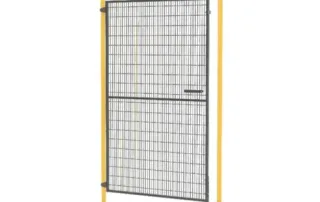
Does industrial safety fence panels meet ISO 14120?
Designing a turnkey robotic welding cell or a high-speed assembly line? You already know the headache: generic perimeter guards either fail the ISO 14120 impact test or leave your technicians drilling holes on-site to mount Pizzato/Omron interlocks, eating up your integration margin. You need a modular barrier that drops into
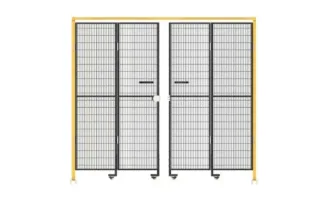
ROI of modular safety guarding systems?
Waiting weeks for custom-welded guarding to secure your new robotic welding cell? Every day your automated production line sits idle, your OEE plummets. Discover how modular machine guarding eliminates on-site hot work, integrates seamlessly with your safety PLCs, and gets your turnkey solutions commissioned 40% faster. Talk With An Expert
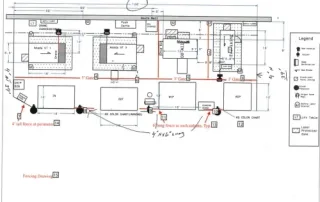
Machine Perimeter Guarding vs. area scanners?
When engineering dedicated manufacturing lines or complex robotics layouts, relying solely on optical area scanners leaves your high-speed mechanical assembly machines vulnerable. Laser scanners can trigger a Safety Torque Off (STO), but they cannot stop a 220 lbs ejected workpiece from a CNC milling center or prevent a rogue forklift
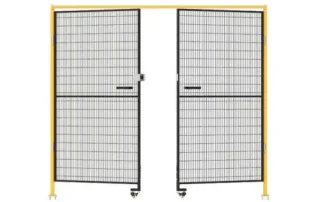
Safety fencing machine guarding for press machines?
Safety fencing machine guarding for press machines? Operating high-tonnage press machines and press brakes means dealing with violent stamping cycles, the constant threat of flying metal shrapnel, and tight floor space. When your facility relies on cheap, frameless wire mesh, a single piece of ejected scrap or an accidental forklift
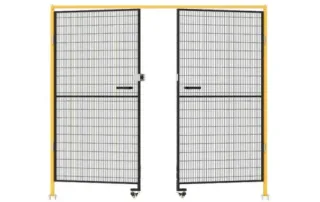
Emergency stop placement on machine guarding safety fence?
For automation system integrators, field-mounting Emergency Stops and safety interlocks is a notorious bottleneck. Drilling into flimsy, pre-painted generic fences ruins the powder coating, introduces metal shavings into clean environments, and guarantees alignment failures when doors inevitably sag. You don't just need a barrier; you need a rigid, pre-engineered carrier
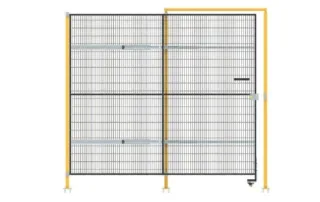
How to align a safety guarding fence during setup?
Struggling with misaligned panels and sagging doors in your robotics layout? In high-speed automotive assembly, a perimeter that is off by just a quarter-inch (6mm) can cause safety interlock pins to miss their mark, triggering nuisance Safety Torque Off (STO) faults and tanking your OEE. Discover the cold-assembly alignment method

