
 IT
IT  EN
EN  DE
DE  RU
RU  PT
PT  JA
JA  ES
ES 
La vostra strategia di recinzione di sicurezza protegge i margini del progetto o solo i vostri robot?
As a System Integrator delivering turnkey automation solutions, you live in the gap between the CAD drawing and the factory floor. You specify high-end industrial robots, precise PLC control systems, and efficient automated production lines. Yet, too often, the physical perimeter—the industrial safety fencing—becomes the bottleneck that drains your
Is Your Robotic Welding Cell Leaking Hazards?
For managers of Automotive Welding Stations and fabrication shops, safety goes beyond stopping the robot. A standard wire mesh fence cannot stop the intense UV radiation (arc flash) or molten weld spatter generated by high-amperage Industrial Robots. These escaping hazards pose severe risks to the eyesight and safety of
Is Your CNC Machine Guarding Strong Enough to Stop a Projectile?
For Metalworking Shop Managers, the nightmare scenario isn't just a stopped line; it's a catastrophic tool failure inside a CNC Machining Center. A carbide end mill shattering at 20,000 RPM carries the kinetic energy of a bullet. Standard, lightweight perimeter fencing is not designed for these ballistic impacts. We
Is Your Legacy Machine Guarding Putting Your Facility at Risk?
For Facility Managers overseeing older manufacturing plants, safety upgrades often feel like a choice between compliance and production uptime. Ripping out old, welded "home-made" barriers usually requires hot work permits and lengthy shutdowns. We provide a retrofit-ready Industrial Safety Fencing system designed for the realities of Brownfield Projects. With
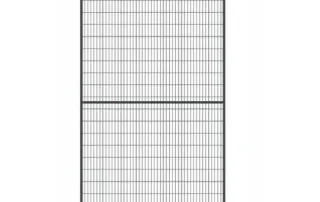
Is Your Machine Guarding Creating Hidden Safety Risks?
For EHS Managers and Safety Officers, passing an OSHA Machine Guarding audit is just the baseline. The real challenge is fighting the "bypass culture"—where frustrated operators disable safety devices to maintain production speed. We provide a human-centric Industrial Safety Fencing system designed to work with your operators, not against
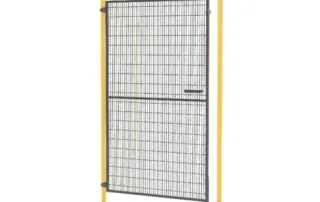
Is Your Machine Guarding Ready for Global Export?
For OEM machine builders and System Integrators exporting to Europe, the USA, and Asia, navigating the patchwork of safety regulations can be a logistical nightmare. A guard that passes in Shanghai might fail in Stuttgart. We provide a globally compliant Industrial Safety Fencing system. Backed by TUV Certification and
Can Your Precision Manufacturing Line Stay Clean and Safe?
In the high-stakes world of Electronics Manufacturing and 3C assembly, floor space is expensive, and contamination is the enemy. Bulky, welded safety barriers that generate dust during installation have no place in a modern Clean Room or precision assembly hall. We provide a modular Industrial Safety Fencing system that
Is Your Warehouse Safety Infrastructure Blocking Your Agility?
In the era of Smart Warehousing and e-commerce, flexibility is the new currency. Static, welded barriers that worked for traditional factories are now obstacles to your Warehouse AGV/AMR Path optimization. We provide a scalable Industrial Safety Fencing system designed for the dynamic nature of Automated Logistics. From protecting Conveyors
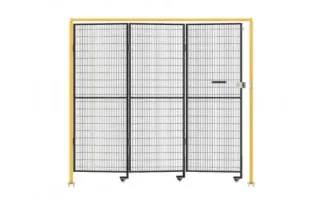
Una scarsa integrazione della sicurezza ritarda il lancio di una linea automatizzata?
For System Integrators delivering high-value Turnkey Solutions, the physical safety barrier is often treated as a commodity. However, a misaligned fence post or a lack of mounting points for Control Equipment can halt the final commissioning of an Automated Production Line. We provide a modular Industrial Safety Fencing system
La vostra protezione perimetrale è in grado di contenere la robotica automobilistica ad alta velocità?
In the high-stakes world of automotive manufacturing, a Robot Safety Fencing system is more than a boundary; it is a critical containment vessel. When you deploy heavy-payload Industrial Robots on an Automated Production Line, the kinetic energy involved is immense. Standard fencing often fails under impact. We provide a

