IT
IT  EN
EN  DE
DE  RU
RU  PT
PT  JA
JA  ES
ES Peak-day fulfilment · self-rebounding polymer crash barrier
One Forklift Strike on a Peak Day Can Cost a Fulfilment Floor More Than a Decade of Self-Rebounding Polymer Crash Barriers
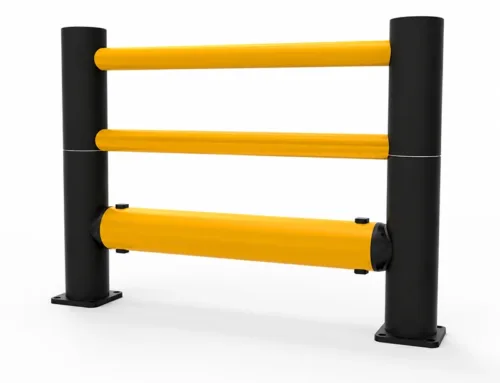
A high-throughput pick module is paid for by the minute. When a forklift catches a rack end, the bill is not the dent in the steel guard — it is the blocked pick face, the rerouted carts, the damaged totes, the occasional injured operator, and the 12 minutes of severity that nobody put on the invoice. A 28,950 J self-rebounding ARMORFLEX™ polymer crash barrier is engineered to stay on the floor through every strike, so the parking lot keeps picking while telematics, third-lane models and collision-avoidance systems handle the operator warning layer.
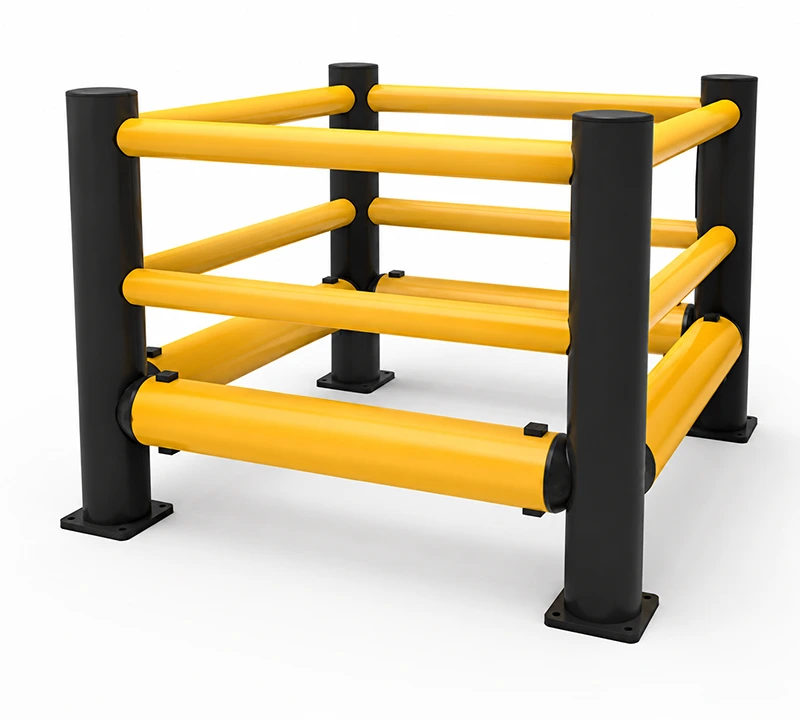
Impact Energy Ladder for Peak-Day Forklift Traffic
Peak-day fulfilment traffic is not a 1.5 t pallet jack. Eight-tonne forklift trucks at 9.6 km/h do the heaviest lift cycles in DR / TR / CTR lanes, and a guard rated for one strike turns into four site visits in a single quarter. The FCBarrier Joule ladder below lets a site engineer match the platform up to the load class before the truck is dispatched — no more over-spec steel or under-spec polymer.
| FCBarrier series / model | Rated impact energy and forklift condition |
|---|---|
| SR100 Guida Singola | 3,850 J · 1.5 t @ 8 km/h |
| SR148 Guida Singola | 14,400 J · 4 t @ 9.6 km/h |
| SR190 Guida Singola | 21,350 J · 6 t @ 9.6 km/h |
| DR100 Doppia Guida | 6,500 J · 3 t @ 7.5 km/h |
| DR148 Doppia Guida | 19,000 J · 6 t @ 9 km/h |
| DR190 Doppia Guida | 28,950 J · 8 t @ 9.6 km/h |
| TR100 / CTR100 Traffic Rail / Column Protector | 8,200 J · 3 t @ 8.4 km/h |
| TR148+ / CTR148+ Traffic Rail / Column Protector | 19,000 J · 6 t @ 9 km/h |
| TR190+ / CTR190+ Traffic Rail / Column Protector | 28,950 J · 8 t @ 9.6 km/h |
Three Reasons Peak-Day Floors Replace Painted Steel Guards With FCBarrier
Self-Rebounding and Bidirectional — the Polymer Barrier That Stays on the Floor
ARMORFLEX™ polymer is engineered to absorb roughly 80% of strike energy and rebound to its original shape. The strike does not deform the barrier permanently; the next pick cycle sees the same face geometry, the same clearance to the column, the same traffic envelope. Because the deformation is symmetric, the strike protects both the rack and the truck — a bidirectional hit that does not bend sheet metal into the rack face or scratch the fork carriage. On a peak-day fulfilment floor this is the difference between a printed incident card and a printed pallet ticket that never gets fulfilled.
Modular Mortise & Tenon Quick-Release — One Segment Swaps in Minutes, Not Days
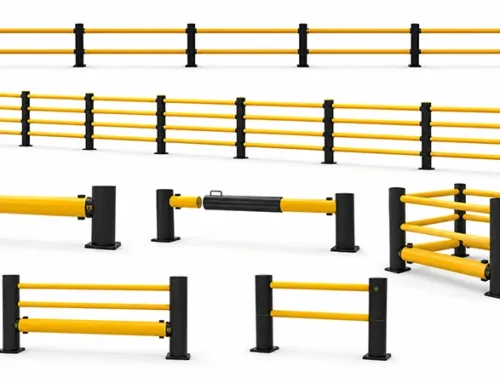
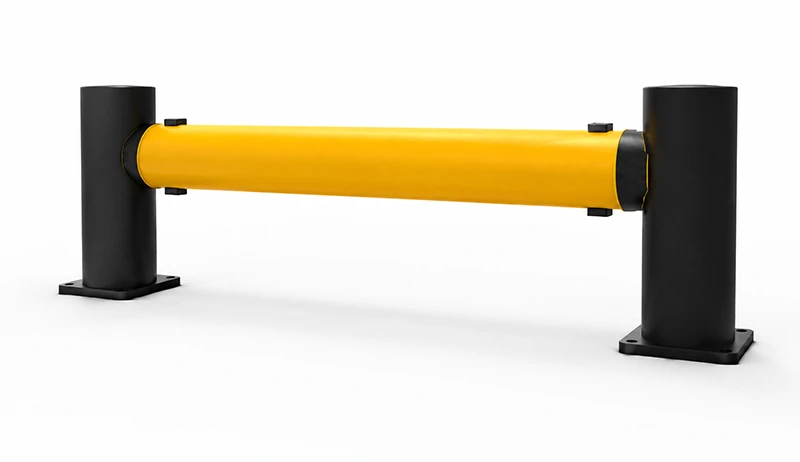
The basic FCBarrier unit is three rails and two posts joined by a mortise & tenon quick-release with an internal pin. When a single rail takes a bad strike, the maintenance team pulls the pin, drops a fresh rail, and loads the floor back into picking — no welder, no crane, no two-day shutdown, no 4 m of men and women standing around a permit. A grid of segmented barriers means one strike never becomes one stop of the pick module.
Lifecycle Cost Beats Painted Steel — Repaint, Re-Straighten, Replace Add Up Over 10 Years
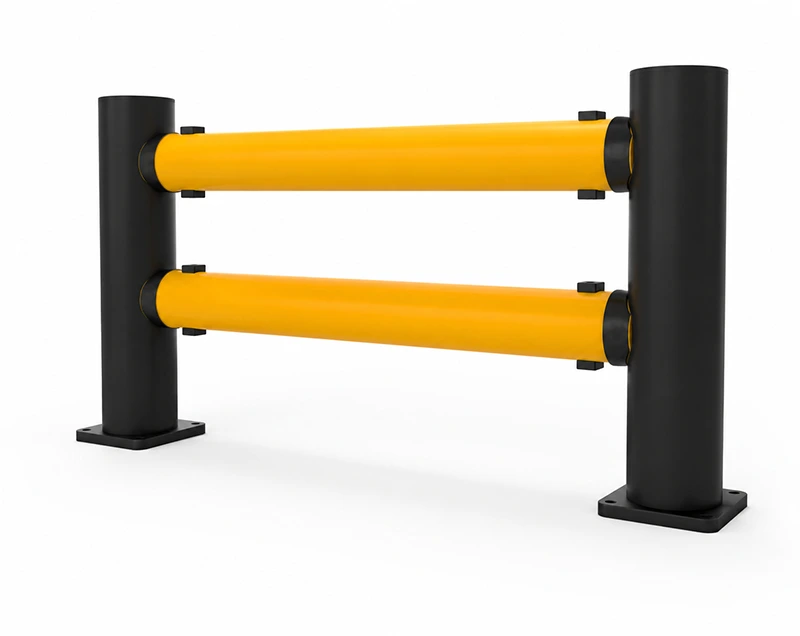
A painted steel guard wins on the first purchase order and loses on the second year of the budget. A heavy fork strike bends the tube, chips the powder coat, and pulls the anchor bolt out of the slab — and the next 10 years of repaint, re-straightening, and full-segment replacement add up to multiples of the original purchase order. ARMORFLEX™ polymer is corrosion-free, UV-resistant, recyclable, and rated for the same 8-tonne forklift truck at 9.6 km/h in DR190 / TR190+ / CTR190+. Over one decade of peak days the polymer option costs less than the steel option it replaces.
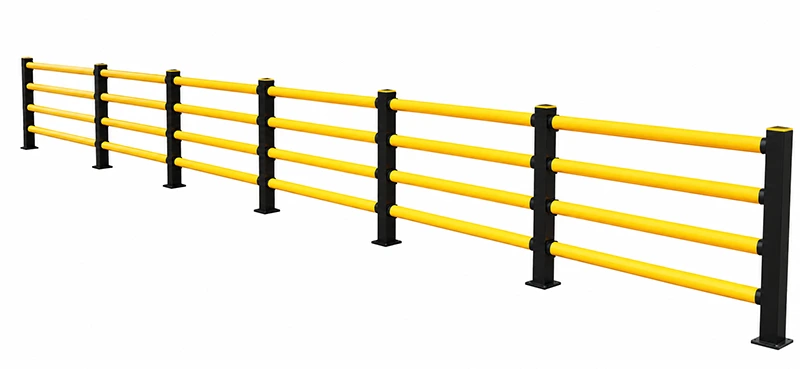
Where the Self-Rebounding Polymer Crash Barrier Earns Its Place on Peak-Day Floors
- Warehouse pick module rack ends and aisle terminations on the highest-traffic pick face
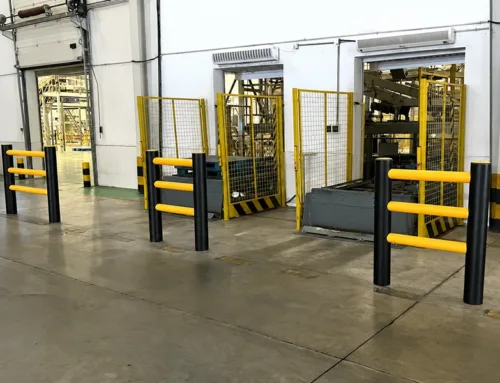
- Loading dock apron and dock-door posts where a reversing truck stalls out a door
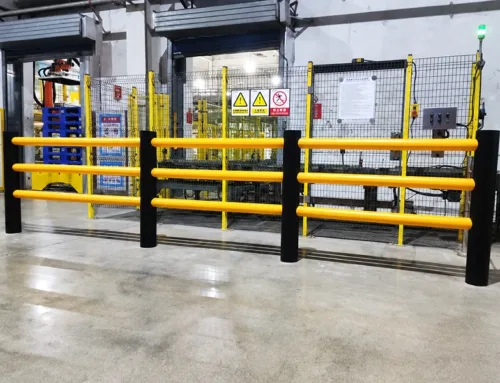
- Building column corners inside the high-throughput zone, especially beside picker walkways
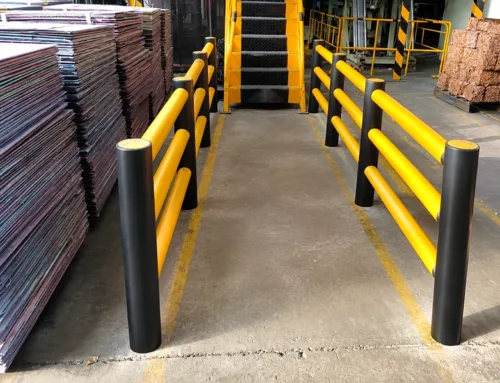
- Pedestrian walkway boundaries where pickers, scanners and forklifts share the 2.4 m of shared corridor
- Conveyor transitions, induction lanes and divert arms that take the angled reverse strike
- Distribution centre staging zones where inbound trailers cross the forklift sweep path
Anything that takes repeated forklift traffic and cannot tolerate a 12-minute stoppage is a candidate for a self-rebounding polymer crash barrier. Forklift telematics warns the operator; the FCBarrier absorbs the strike that still gets through — passive backup for the active collision-avoidance system already on the floor.
Get the Joule-Ladder Specification for Peak-Day Floors
Download the FCBarrier peak-day fulfilment specification with the full 3,850–28,950 J ladder, the mortise & tenon quick-release install sequence, and the four-series coverage map (SR Single Rail, DR Double Rail, TR Traffic Rail, CTR Column Protector). Use it to replace painted-line discipline on the floor and adopt a mobile, self-rebounding perimeter that pairs with your active telematics and reduces your near-zero-compliance audit trail.
Plan a Peak-Day Floor with Self-Rebounding Polymer Crash Barriers
Send the floor layout, the forklift truck class, and the worst-case strike history of the last 12 months. The SGF engineering team will match the FCBarrier platform up to the load class and confirm where a self-rebounding polymer crash barrier replaces the next repaint, re-straighten, replace cycle.