IT
IT  EN
EN  DE
DE  RU
RU  PT
PT  JA
JA  ES
ES 
The Importance of Factory Warning Stickers in Ensuring Workplace Safety

Factory adesivi di avvertimento are an essential component of any industrial workplace. These stickers play a critical role in ensuring the safety of workers by alerting them to potential hazards and risks associated with machinery, equipment, and other workplace activities. In this article, we will discuss the importance of factory warning stickers and how they can help prevent accidents and injuries in the workplace.
What are Factory Warning Stickers?
Factory warning stickers are small, adhesive labels that are affixed to machinery, equipment, and other work surfaces. These stickers typically feature bright colors and bold text, along with pictorial representations of potential hazards or safety instructions. Warning stickers may be placed on anything from simple hand tools to large, complex machines.
The Importance of Factory Adesivi di avvertimento
Factory warning stickers are crucial in ensuring workplace safety for several reasons. First and foremost, they help to identify and communicate potential hazards to workers. When workers are aware of potential hazards and risks, they are better equipped to take the necessary precautions to prevent accidents and injuries.
Warning stickers also provide a constant reminder of safety procedures and guidelines. These stickers serve as a visual cue to workers, reminding them to follow safety protocols and use appropriate safety equipment. By providing this constant reminder, warning stickers help to prevent complacency and encourage a safety-conscious workplace culture.
Factory warning stickers can also help to improve communication and comprehension among workers. By using simple, easy-to-understand pictorial representations of potential hazards or safety instructions, warning stickers can help to overcome language and literacy barriers. This can be particularly important in diverse workplaces where workers may speak different languages or have varying levels of literacy.
Types of Factory Warning Stickers
There are many different types of factory warning stickers, each designed to communicate specific safety information. Some common types of warning stickers include:
-
-
- Hazard warning stickers – these stickers are used to alert workers to specific hazards, such as electrical shock, entanglement, or high temperatures.
- Safety instruction stickers – these stickers provide instructions for safe equipment operation or general safety guidelines.
- Equipment and machinery stickers – these stickers are used to identify specific pieces of equipment or machinery and provide information on safe operation.
- Emergency response stickers – these stickers provide information on emergency procedures and contact information for emergency responders.
-
Ensuring the Effectiveness of Factory Warning Stickers
To ensure the effectiveness of factory warning stickers, it is important to place them in visible locations where they will be noticed by workers. Warning stickers should be placed on or near the specific hazard or equipment they are associated with, and they should be easily legible from a distance.
It is also important to regularly inspect warning stickers to ensure that they remain in good condition and are not faded or damaged. Damaged or illegible warning stickers should be replaced as soon as possible to ensure that workers are receiving the necessary safety information.
Conclusione
Factory warning stickers play a critical role in ensuring workplace safety by alerting workers to potential hazards and risks associated with machinery, equipment, and other workplace activities. By identifying and communicating safety information, warning stickers can help prevent accidents and injuries in the workplace. Employers should ensure that warning stickers are placed in visible locations, regularly inspected, and promptly replaced when damaged or illegible to maximize their effectiveness.
Interlock Switch Mounting Without Drilling: Why Alfence T-Slot Posts End Phantom Stops
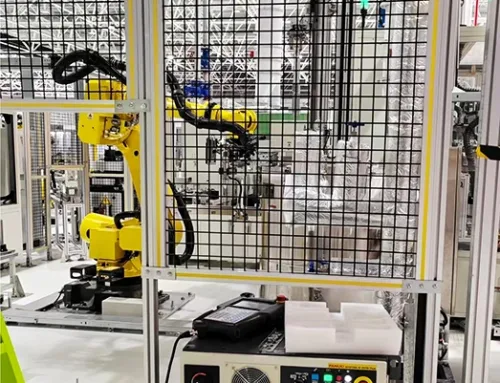
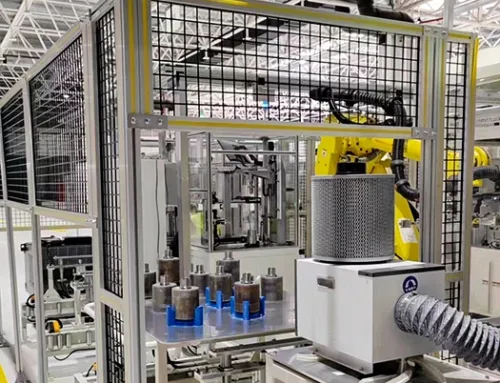
Bolting an interlock switch bracket through a powder-coated steel post drills the coating, drops swarf into the cell and leaves a rust line — and when the hinged leaf sags, the tongue misaligns and the PLC reports a phantom guard fault. Alfence mounts sensors, e-stops and conduit in the T-slot groove of a 40×40 mm or 45×45 mm aluminum post, with door hardware sized to keep the safety switch aligned.
Phantom Safe Torque Off Stops: T-Slot Guarding Fence Posts Mount Interlocks Without Drilling
Painted steel guarding posts force maintenance to drill for interlock switches, dropping swarf in the cell and breaking the coating where rust starts. Sagging hinge doors then misalign the interlock tongue and the PLC trips Safe Torque Off while the gate is closed. Alfence industrial safety fence mounts sensors, e-stops and cable routing into the T-slot aluminum profile post without drilling, and uses hinged, folding or sliding door frames that keep interlock geometry stable - protecting OEE through phantom stops and line changes.
Automotive Plant Industrial Safety Fence: Keep the Robot Cell Close to the Hazard
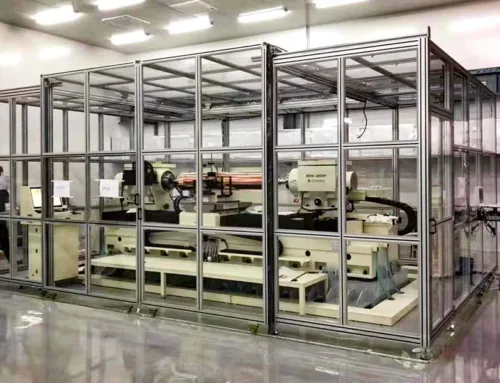
Automotive plants cannot afford to lose production floor to an oversized machine guarding perimeter. Alfence combines 20×100 mm mesh with slim 40×40 mm or 45×45 mm aluminum posts for a compact, reconfigurable industrial safety fence layout, with final clearance confirmed by the project risk assessment.