IT
IT  EN
EN  DE
DE  RU
RU  PT
PT  JA
JA  ES
ES AUTOMATED WAREHOUSE GUARDING | ALFENCE MODULAR SAFETY FENCE
Equipment Isolation Fence for Phased Automated Warehouse Expansion
When an automated warehouse is built in stages, the equipment isolation fence must expand with new storage zones, AGV paths, conveyors, and ASRS capacity. Alfence combines a bolt-free modular frame, reusable panels, doors, and connectors so a perimeter guarding layout can be extended or reconfigured without scrapping the first phase.
Why a phased warehouse outgrows welded steel fencing
A welded steel fence can suit a fixed first-stage perimeter, but later expansion usually means cutting, welding, repainting, and rebuilding around live automation. That adds installation labor and downtime, makes panel relocation difficult, and can turn usable fence sections into waste when the storage zone or conveyor route changes. Alfence is an aluminum profile safety fence designed for indoor plant installation, retrofit guarding, and relocatable guarding.
| Expansion requirement | Alfence equipment isolation fence response |
|---|---|
| Add a new warehouse bay | Standard T-slot aluminum posts, steel wire mesh panels, doors, and connectors allow an extra bay to be added to the existing post-and-panel system. |
| Change an AGV or conveyor route | Removable, reconfigurable panels can be detached and reinstalled around the revised AGV path, shuttle car protection zone, or conveyor guarding line. |
| Limit installation disruption | Bolt-free assembly avoids on-site welding labor and supports quick modular installation during a planned retrofit window. |
| Preserve the first investment | Reusable components can be relocated as capacity grows, reducing repurchase and rebuild cost instead of scrapping a welded perimeter. |
| Maintain machine-guarding clearances | Use the 20×100 mm mesh option and project-specific positioning to support the approximately 120 mm safety distance referenced by EN ISO 13857; final guarding design requires site verification. |
Modular evidence behind the expansion strategy
Standard components arrive ready for the next phase
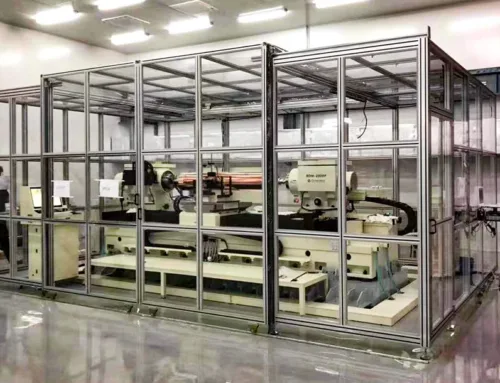
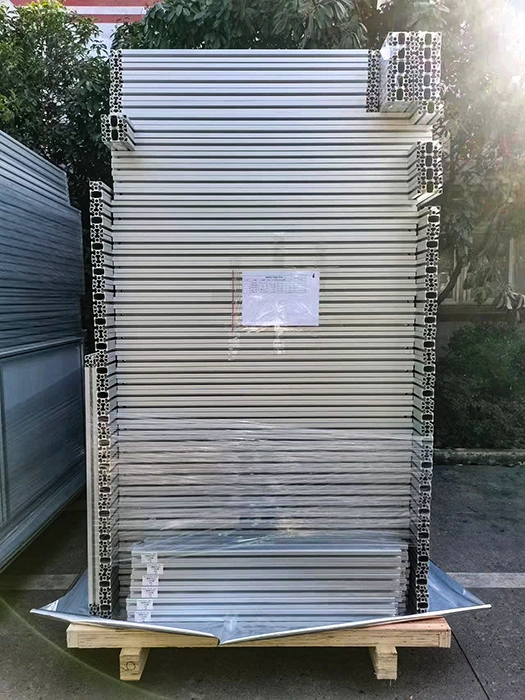
The palletized aluminum fence sections show how repeatable components can be prepared for staged delivery. Alfence uses aluminum extrusion and powder-coated aluminum profiles with standard posts, panels, doors, foot connectors, expansion bolts, and nylon end caps. The system can be specified with 40×40 mm or 45×45 mm posts, panel heights of 1000, 1800, or 2000 mm, and panel widths from 200 to 1200 mm, subject to the project configuration.
Reconfiguration stays visible and serviceable
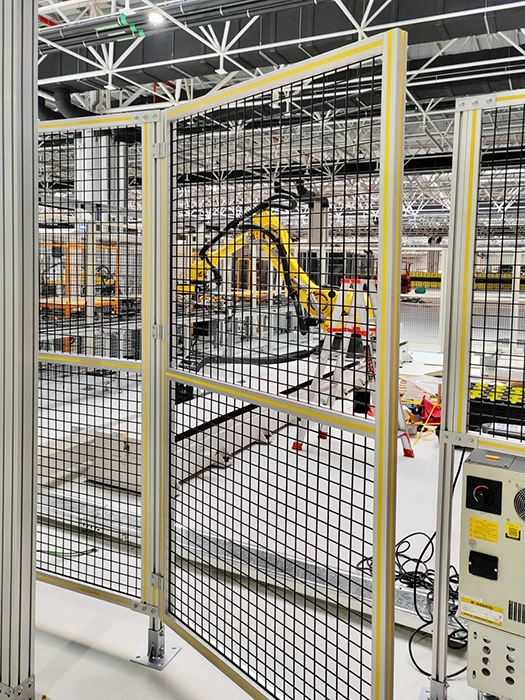
Transparent panel options and integrated access doors help operators see automated equipment while keeping maintenance access defined. For production lines that change around storage and material-handling equipment, the frame-and-panel layout can be extended, shortened, or reworked without replacing a complete machine enclosure. Sliding, hinged, and folding safety doors can be selected for the access pattern.
Machine guarding grows around the automation footprint
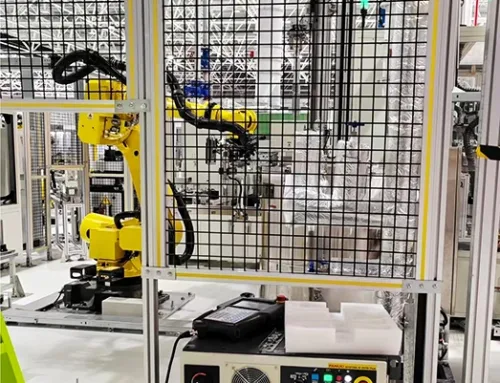
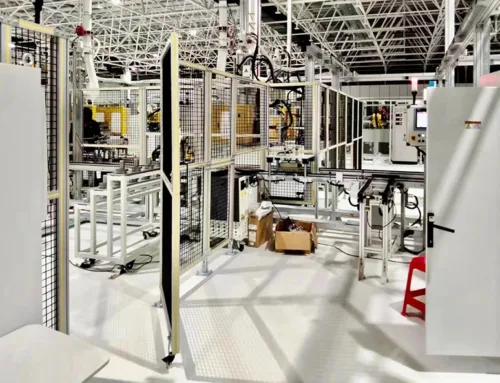
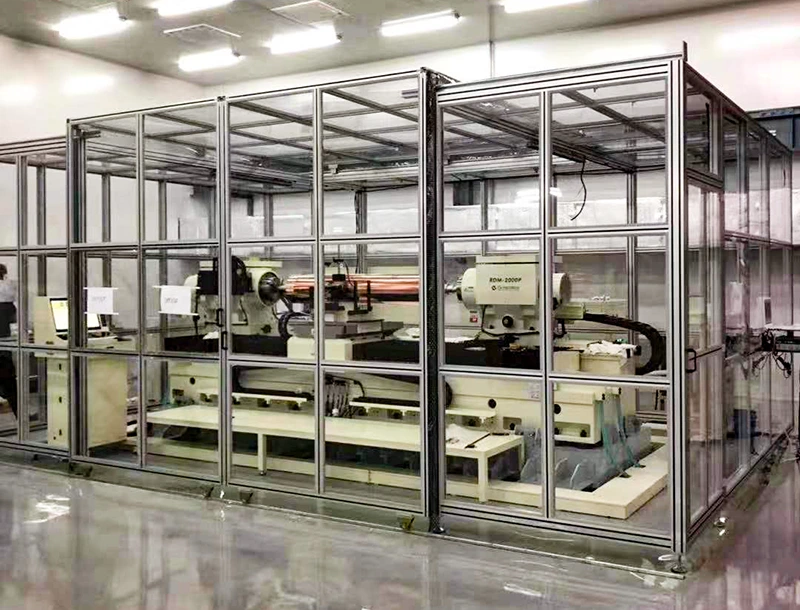
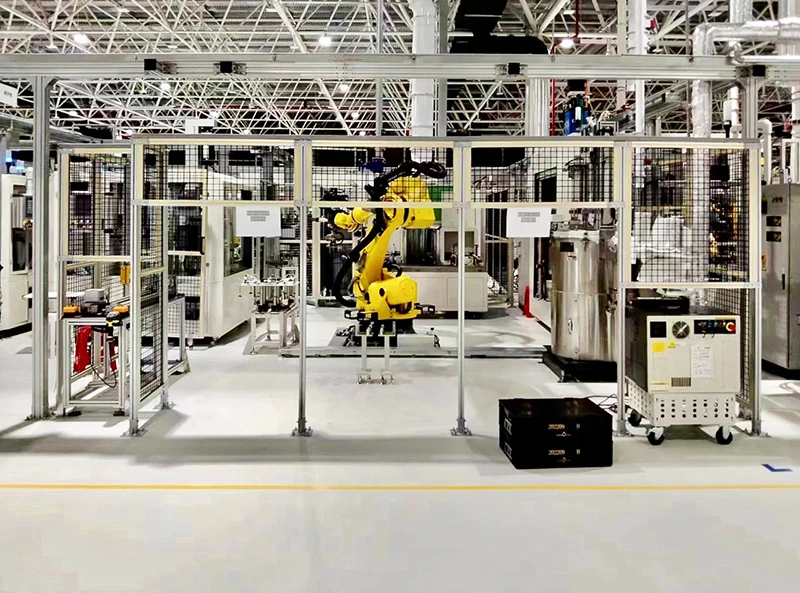
The welded wire mesh application image shows the practical relationship between posts, panels, and an automated robot cell. The same modular safety guarding approach can be applied to ASRS and high-bay storage guarding, palletizing zones, packaging lines, robot cells, and material-handling robot guarding. Floor-mounted expansion bolts and foot connectors provide a defined base for an indoor perimeter guarding layout.
Where a reconfigurable equipment isolation fence fits
- Automated warehouse guarding around staged ASRS or high-bay storage expansion
- Storage zone isolation where new racks, conveyors, or shuttle cars are added over time
- AGV path guarding and conveyor guarding during material-flow changes
- Palletizer guarding, packaging line guarding, and robot-cell machine guarding
- Retrofit guarding that replaces a welded steel fence without discarding reusable modules
For projects exposed to changing throughput, confirm the equipment footprint, access points, safety interlock switch requirements, and final safety distances before ordering. Alfence is indoor rated; outdoor use requires an appropriate corrosion-protection specification.
Specify the next bay before you build the first one
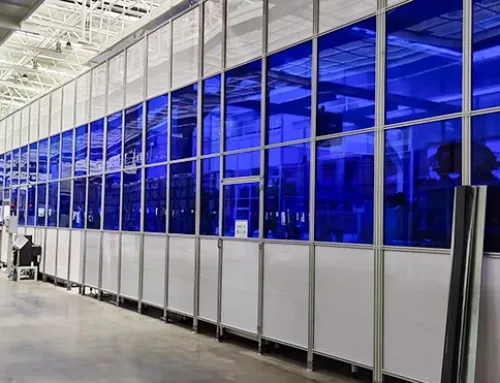
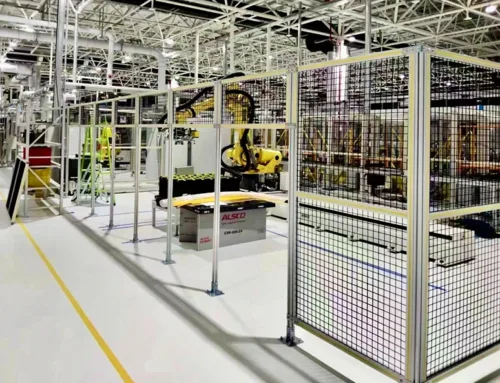
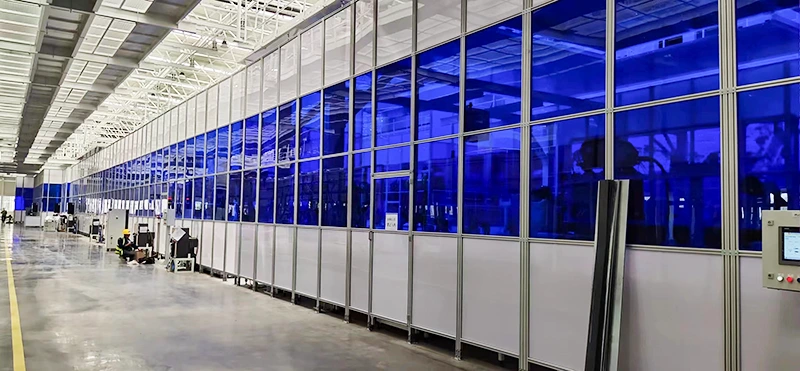
Start with the current perimeter, reserve future connection points, and define which panels, doors, and connectors can be moved during each expansion stage. The image below shows a continuous equipment isolation fence with modular framing and an integrated access door, a useful reference for mapping long automated lines before the layout is finalized.
Build a guarding perimeter that can move with capacity
Share the warehouse phase plan, current and future equipment zones, access requirements, and target safety distances. SGF can help configure an Alfence modular safety fence for a phased equipment isolation fence layout with reusable, bolt-free components.