IT
IT  EN
EN  DE
DE  RU
RU  PT
PT  JA
JA  ES
ES SICUREZZA DELLO STABILIMENTO ALIMENTARE E DELLE BEVANDE
Barriera anti-impatto flessibile per la sicurezza nelle fabbriche alimentari a traffico misto
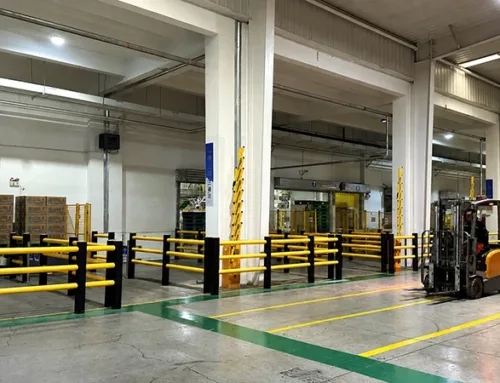
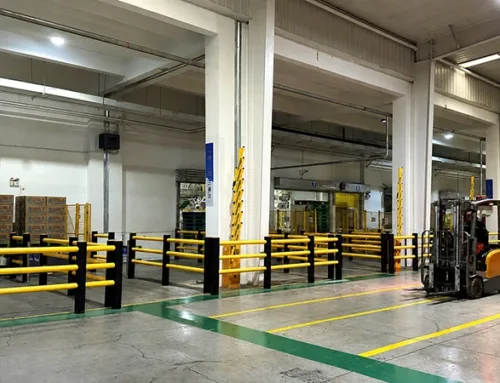
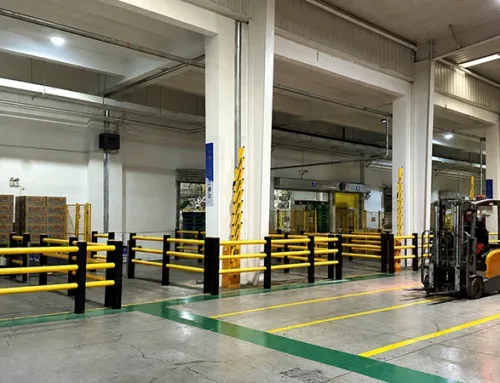
When forklifts, tow tractors, AGVs and people share production and warehouse routes, a Flexible Crash Barrier creates a permanent physical buffer instead of relying only on training and warning signs. FCBarrier uses ARMORFLEX™ polymer to absorb up to 80% of impact energy and rebound, helping protect pedestrians, equipment, racking and building columns in high-frequency collision zones.
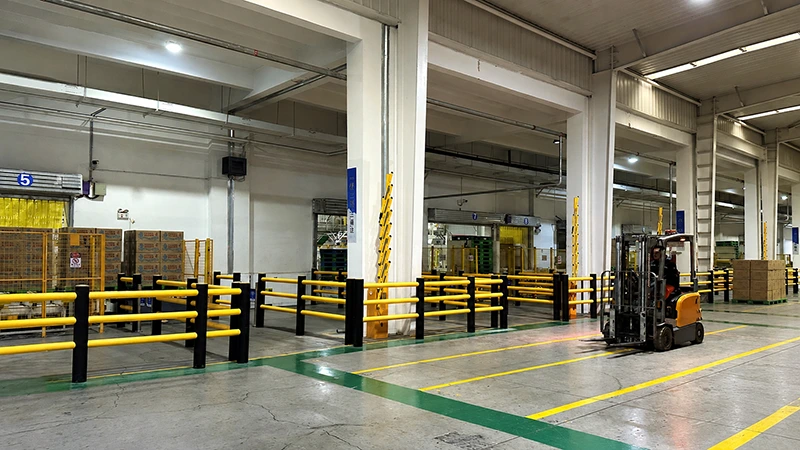
Why mixed traffic needs an impact-rated safety boundary
In a fast-moving food or beverage plant, the risk is not limited to a single aisle. A vehicle can leave its route near a rack end, machine access point, column or pedestrian walkway. Training, floor markings and warning signs support safe behavior, but they do not physically stop a moving vehicle. A rigid steel barrier can stop the vehicle while permanently bending, transferring force into anchors and concrete, and creating another maintenance event.
| Requisito del sito | FCBarrier design response |
|---|---|
| Frequent forklift, tugger and AGV movements | ARMORFLEX™ polymer absorbs up to 80% of impact energy and is designed to self-rebound after impact. |
| Protection for people and assets at the same boundary | SR, DR, TR and CTR configurations support rack protection, pedestrian segregation, machinery protection and column protection. |
| High-energy vehicle impact zones | DR190, TR190+ and CTR190+ are rated at 28,950 J for the stated 8-ton vehicle at 9.6 km/h condition. |
| Compact production and warehouse aisles | The flexible barrier uses a slim polymer profile to establish a buffer without adding the footprint of a heavy concrete block. |
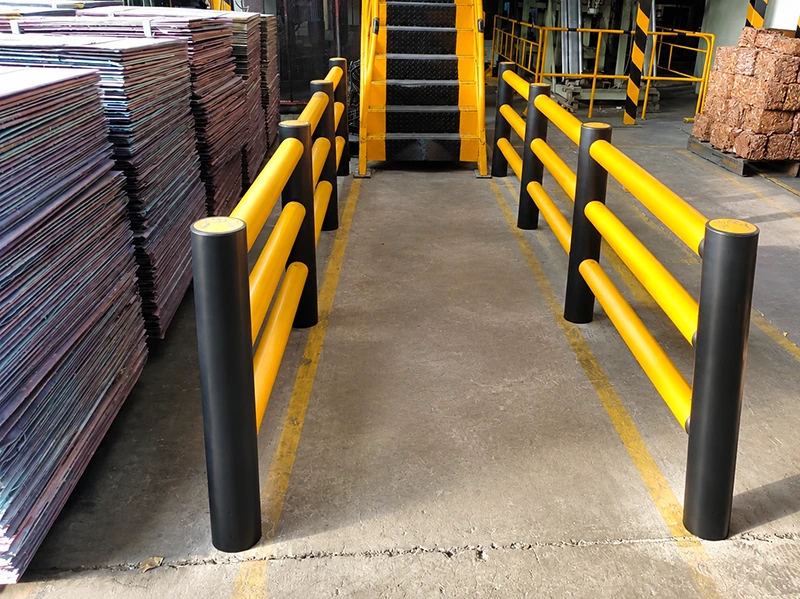
Structure and installation evidence for a retrofit barrier
Self-rebounding protection for repeated collisions
The key difference from a conventional steel guardrail is the maintenance logic after an impact. FCBarrier’s ARMORFLEX™ polymer is specified to absorb up to 80% of collision energy and rebound. That makes it suitable for repeat-risk areas such as forklift safety barriers at rack ends, loading dock protection and pedestrian walkway boundaries. The barrier is not a reason to skip post-impact inspection; instead, its recovery behavior can reduce the need for routine straightening, repainting and immediate section replacement.
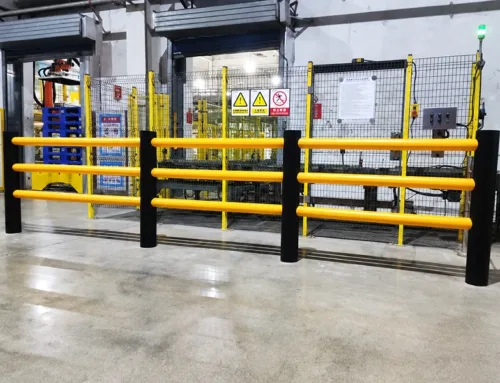
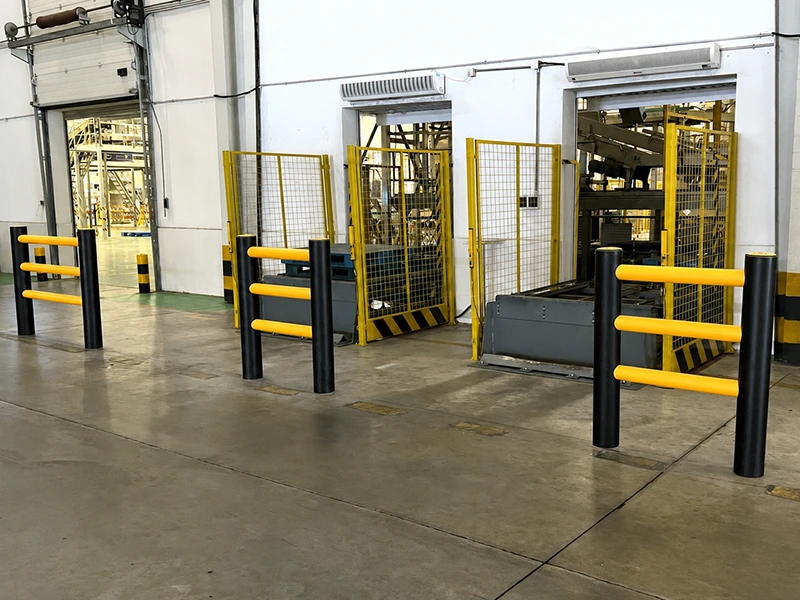
Separate the conveyor edge before a person or vehicle enters it
At conveyor openings and machine access points, the objective is more than asset protection: it is clear pedestrian safety and controlled traffic flow. A floor-anchored barrier can define the edge of a manufacturing plant safety zone, while a gate or access control element manages entry. The现场 arrangement shown here supports the application logic for machinery protection and person-vehicle separation; the final layout still requires a site review of travel paths, sightlines and concrete condition.
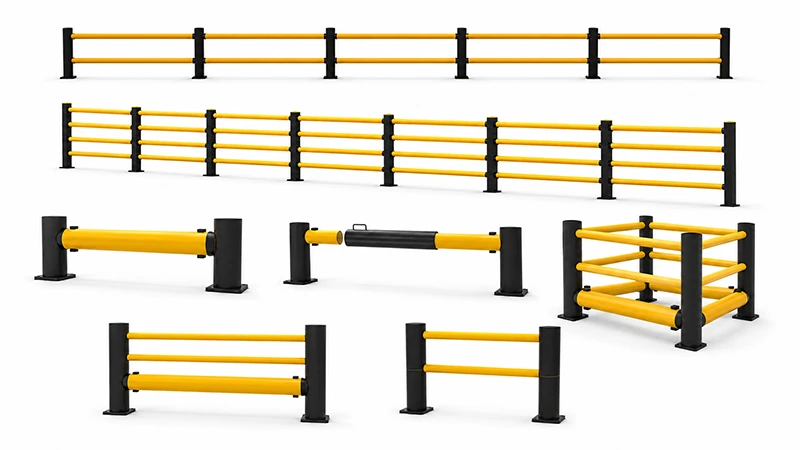
Choose the rail configuration from the impact condition
FCBarrier is modular rather than a single generic rail. SR covers single-rail applications; DR uses a double-rail arrangement for higher vehicle protection; TR is intended for traffic and pedestrian boundaries; CTR targets building columns. A basic unit is assembled from rails and posts with quick-release mortise-and-tenon connections and internal pins. For the highest published energy level, DR190 reaches 28,950 J under the stated test condition. The product selection should be checked against vehicle mass, speed, impact angle and anchor substrate—not only the nominal barrier height.
Where a permanent physical buffer changes the risk picture
- Barriera di sicurezza per magazzino e protezione delle scaffalature: protect rack ends, columns and loading bays from forklift damage.
- Food & beverage safety barrier: define production-line edges and equipment zones where people and vehicles operate close together; material suitability should be confirmed against the plant’s cleaning chemicals and operating conditions.
- Barriera per centro logistico: separate tow-tractor, AGV and pedestrian routes while preserving usable aisle width.
- Machinery protection and pedestrian safety: guard conveyors, machine access points and building structures without treating a warning sign as the physical control.
- Barriera di retrofit: extend or reconfigure a modular installation as traffic routes and production layouts change.
The final result is a more deliberate workplace safety system: people receive a defined walkway, vehicles receive a visible operating boundary, and equipment is given an energy-absorbing buffer. This can reduce repair exposure and accident downtime, subject to correct model selection, concrete anchoring and site inspection.
What to confirm before specifying a Flexible Crash Barrier
Provide the vehicle or AGV mass, normal and maximum speed, likely impact direction, rack or machine clearance, pedestrian route, concrete floor condition and cleaning environment. FCBarrier selection should then be matched to the SR, DR, TR or CTR series and the relevant energy level. The published 28,950 J figure applies to the specified DR190/TR190+/CTR190+ condition; it is not a blanket rating for every configuration. Current public materials do not establish PAS 13, TÜV or food-contact certification, so those approval requirements should be verified separately during procurement.
Build a safer boundary for mixed traffic
Share your factory walkway, rack-end, loading dock or machine-zone layout with the FCBarrier team. We can help map the impact points, select a suitable Flexible Safety Barrier configuration and plan a modular installation that protects pedestrians and assets together.