IT
IT  EN
EN  DE
DE  RU
RU  PT
PT  JA
JA  ES
ES Impact Resistant Barrier | Beverage Plant Washdown & Cold-Chain Areas
Barriera anti-impatto per il lavaggio di impianti di bevande: le barriere di sicurezza in polimero necessitano di validazione per la catena del freddo
An Impact Resistant Barrier based on polymer construction can remove the rust and repainting exposure of steel in beverage-plant washdown zones. FCBarrier is a Flexible Safety Barrier and Polymer Safety Barrier for machinery protection, loading dock protection, forklift safety, and pedestrian safety. Its corrosion-free, easy-clean direction fits wet operations, while low-temperature and food-environment suitability must be validated before a cold-storage specification is approved.
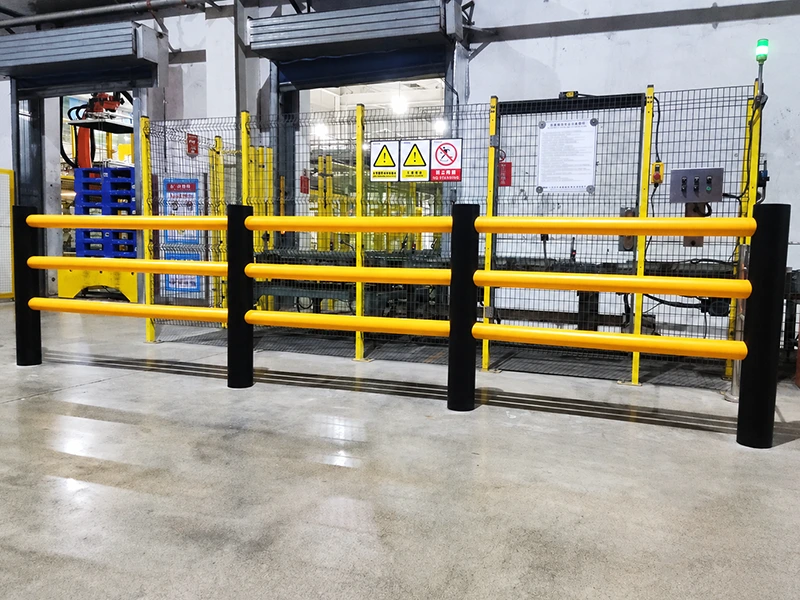
Why Steel Barriers Become a Maintenance Problem in Wet Production
Beverage plants combine frequent washdown, persistent humidity, chemical exposure and, in some operations, chilled or cold-chain zones. A conventional Steel Barrier may begin with a sound protective function, but corrosion can start at scratches, welds, joints and floor-mounted bases. Once the coating is damaged, repainting becomes part of the maintenance cycle. Low temperatures also require a separate material and impact review; a generic statement that a barrier is suitable for a cold room is not enough.
| Specification point | What FCBarrier supports—and what to verify |
|---|---|
| Wet and washdown exposure | ARMORFLEX™ polymer is described as corrosion-free, chemical-resistant and UV-resistant, with no spray-paint maintenance. Confirm the actual cleaning chemicals, concentration and temperature for the site. |
| Repeated forklift impact | SR, DR, TR and CTR series cover different impact conditions. The DR190 / TR190+ / CTR190+ levels are listed at 28,950 J for an 8-ton vehicle at 9.6 km/h. |
| Maintenance response | The self-rebounding design is stated to absorb up to 80% of collision energy and return toward its original shape. Inspect the system after an impact; do not treat rebound as a waiver of inspection. |
| Cold storage and food areas | FCBarrier currently has no publicly verified low-temperature-specific version or USDA/FDA food-contact hygiene grade. Validate low-temperature impact performance, cleaning compatibility and required site compliance before approval. |
How the Flexible Safety Barrier Fits the Plant Layout
Corrosion-Free Polymer for Washdown-Exposed Assets
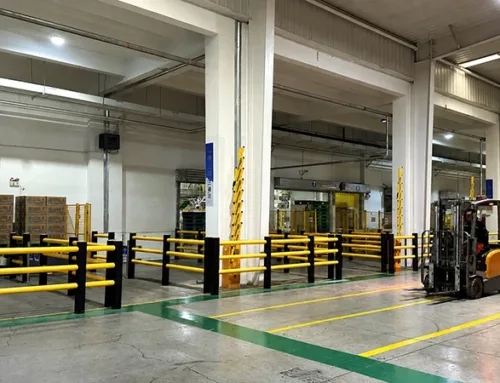
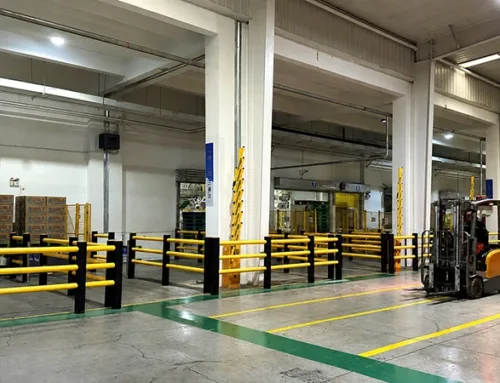
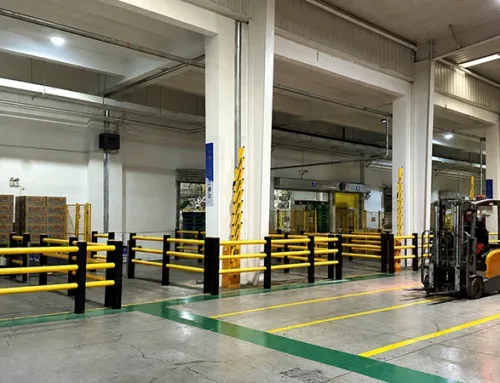
Replacing a steel guardrail with a Polymer Safety Barrier changes the maintenance exposure at the material level: there is no steel surface to rust and no paint film to restore after routine wet cleaning. In a Machinery Protection zone, the barrier can mark the separation between equipment and forklift traffic while its visible rail layout supports workplace safety. The product information does not establish a food-contact rating, so the barrier should be positioned and cleaned according to the plant hygiene assessment rather than described as an approved food-contact component.
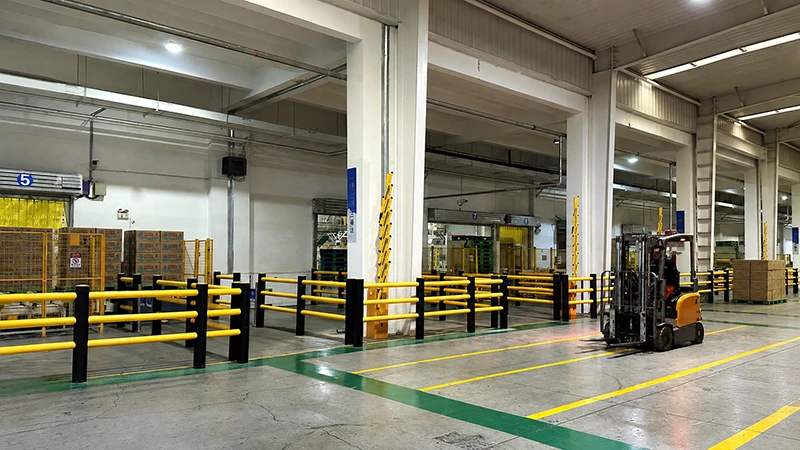
Energy Absorption at Machinery and Conveyor Access
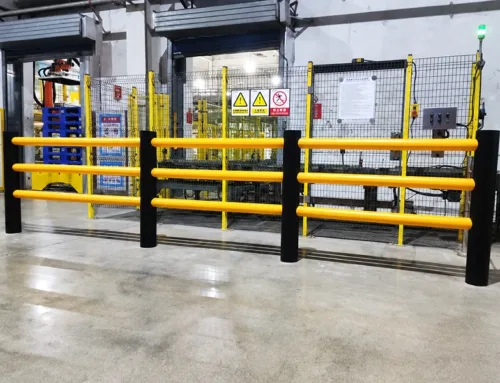
In forklift routes beside conveyors, doors or production equipment, the decision is not simply steel versus plastic. The relevant questions are vehicle mass, travel speed, impact direction and the condition of the concrete floor. FCBarrier’s published range runs from SR100 at 3,850 J to DR190 at 28,950 J under the stated test-equivalent vehicle conditions. The installation image shows a barrier-and-gate arrangement around an access opening; it supports the application logic, but it is not a test certificate for cold temperature, hygiene or impact energy.
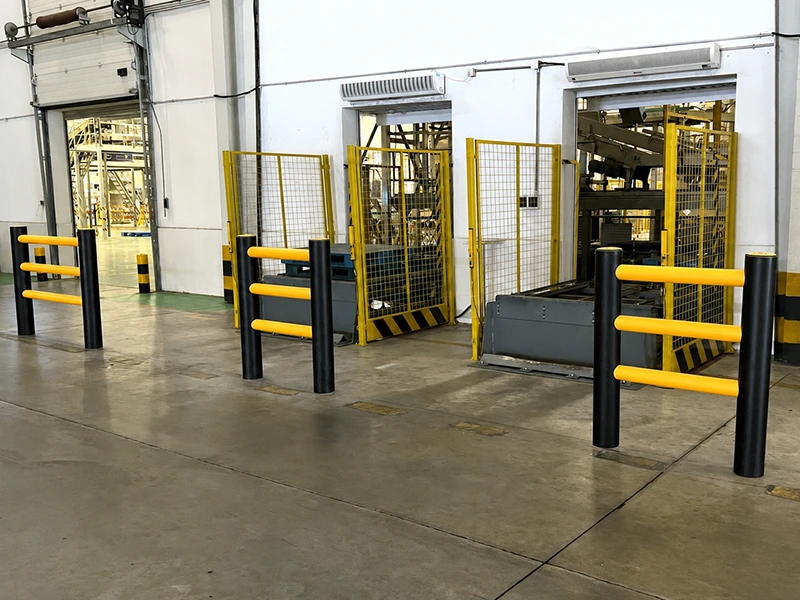
Modular Installation for Human and Vehicle Separation
A Flexible Guardrail is useful when an existing beverage plant needs retrofit protection without redesigning every aisle. The basic installation uses rails and posts connected with a quick-release mortise-and-tenon arrangement, an internal long pin and a rubber mallet; floor anchoring uses drilled expansion fasteners tightened with a torque wrench on sound concrete. That Modular Barrier approach allows a damaged rail or post to be replaced locally, subject to inspection and the manufacturer’s installation requirements. The floor and anchor design remain part of the engineering responsibility.
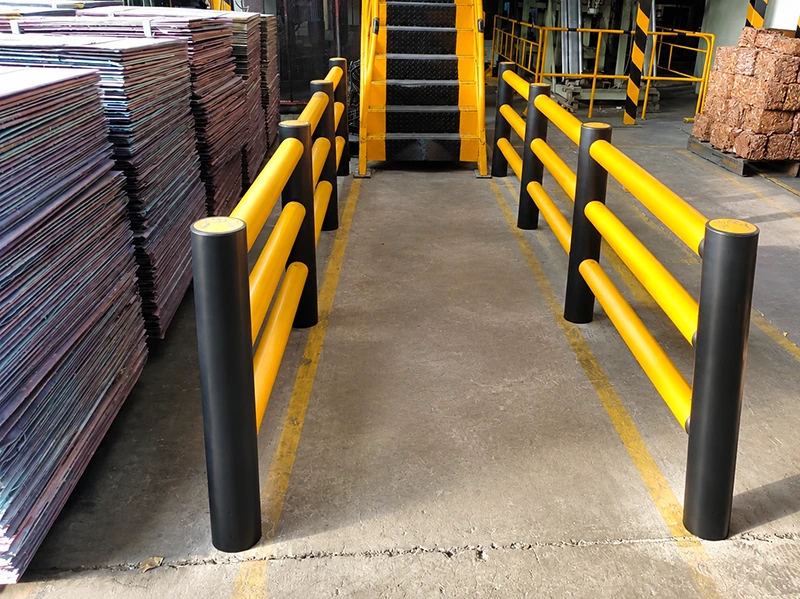
Where to Apply FCBarrier in a Wet or Chilled Facility
- Food & beverage safety barrier: protect machinery, conveyor approaches and service access from forklift impact while avoiding routine steel repainting.
- Protezione della banchina di carico: separate wet loading areas and traffic lanes, then check drainage, washdown chemicals and anchor conditions.
- Racking protection system: protect rack ends, columns and warehouse routes where recurring vehicle contact creates repair exposure.
- Barriera pedonale: use TR-series configurations to define walkways and improve pedestrian and asset protection; confirm the required impact level.
- Cold storage barrier review: treat cold-room use as a validation task, not an automatic claim. Request low-temperature test evidence and confirm the site’s hygiene and regulatory requirements.
For a retrofit, record vehicle weight, maximum speed, impact points, washdown chemicals, operating temperature, concrete condition and cleaning method. Those inputs connect the customer’s actual risk to the SR, DR, TR or CTR selection instead of relying on a generic Heavy Duty Safety Barrier label.
Installation Evidence and Approval Boundaries
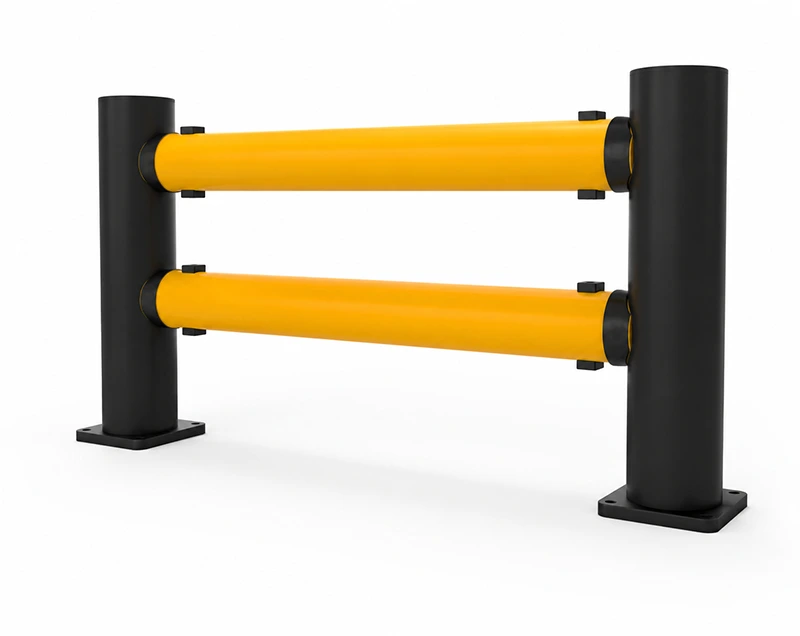
FCBarrier installation guidance calls for a solid concrete floor, drilled anchors, torque-controlled tightening and trained installation personnel. The product images show continuous floor-mounted layouts, dual-rail pedestrian segregation and modular post-and-rail arrangements. The additional configuration image below illustrates the available multi-rail architecture; it should be read as visual product evidence, not as proof of a low-temperature version or food-contact compliance. PAS 13, USDA/FDA, fire and cold-temperature claims require separate documentation where applicable.
Specify the Barrier Around the Real Washdown Risk
FCBarrier offers a practical route from a corroding Steel Barrier to a lower-maintenance polymer impact protection system. The expected result is less exposure to rust and coating repair, clearer forklift and pedestrian boundaries, and a more serviceable modular layout. For chilled or food-production environments, request the missing low-temperature and hygiene evidence before making a formal suitability claim.