IT
IT  EN
EN  DE
DE  RU
RU  PT
PT  JA
JA  ES
ES Sistemi di protezione delle macchine
Machine Guarding Systems for jam-prone maintenance gates on scrap sorting lines
When a sorting line or baler jams, the real risk is not the jam itself. It is the worker who must enter the hazard zone, clear the blockage, and trust that the machine will not restart. Mdfence turns the safety gate into an active protection point, with a pre-fitted interlock carrier and direct STO lockout support for maintenance-critical access.

Why Machine Guarding Systems matters on jam-prone equipment
On scrap sorting lines, shredders, and balers, the old approach is simple: bolt up a fence, cut a hole later, and let maintenance figure out the rest. That creates delays, field drilling, and a weak point where the interlock can be misaligned or installed inconsistently. Mdfence is built to remove that problem. The safety gate is prepared for mainstream interlock hardware from Omron and Pizzato, so the installer does not need to drill through the panel or improvise a mounting plate on site.
| Requisito | Risposta di Mdfence |
|---|---|
| Frequent jam clearing access | Pre-fitted gate architecture supports repeated opening and closing without turning the access point into a weak safety link. |
| No site drilling during installation | Pre-assembled lock carrier accepts the interlock switch directly, which reduces field modification and preserves panel integrity. |
| Compatibilità di interblocco | Designed to accept Omron and Pizzato safety interlock switches through a dedicated carrier position. |
| Machine restart hazard | The gate can be tied into the machine STO circuit so opening the door drops power and locks the machine out at the source. |
| Maintenance-room risk exposure | Physical barrier plus active lockout behavior keeps the guard from acting like a passive fence only. |
Three reasons this guarding system fits heavy maintenance workflows
1) Pre-fitted interlock carrier saves installation time
The first issue in the field is usually not the switch itself; it is the mounting work. Mdfence includes an adaptation carrier so the interlock can be installed cleanly without drilling the panel. That matters when the line must be returned to service fast and the fence must remain structurally consistent across every gate position.

2) STO lockout turns the gate into a real safety control
A fence alone only delays contact. A gate connected to STO changes the safety logic. When the door opens, the machine is driven to a lockout condition instead of relying on a warning sign or operator discipline. For jam-clearing work, that is the difference between a restricted area and a truly de-energized hazard zone.

3) Layout supports frequent entry without losing control of the boundary
Scrap sorting and packing lines do not stop needing access simply because they are dangerous. They need a boundary that can survive repeated maintenance cycles. Mdfence is suited to that environment because the gate, switch carrier, and panel layout are designed around access control first, not as an afterthought added to a standard fence frame.
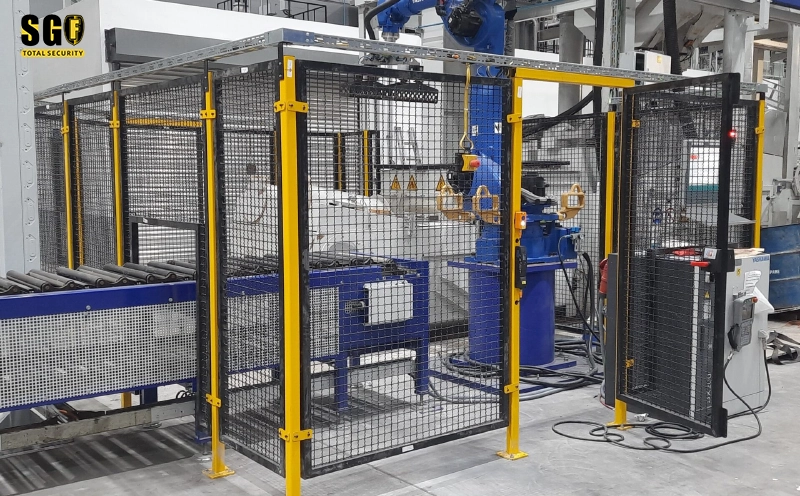
Dove Machine Guarding Systems crea il maggior valore
- Scrap sorting lines with frequent jam clearing
- Balers that require controlled maintenance entry
- Shredders and other heavy machines with STO-based shutdown logic
- Plants that want Omron or Pizzato interlocks mounted without site drilling
- Facilities that need a fence to behave like an active safety component, not just a physical barrier
In these applications, the outcome is not only cleaner access. It is a safer maintenance workflow. Operators can open the gate when the job requires it, while the machine is forced into a locked, non-energized state that removes the restart risk at the source.
Cosa specificare prima di ordinare
For a machine guarding project like this, the key questions are simple: which interlock brand will be used, where the gate sits in the maintenance path, and whether the gate must be wired into STO or another stop chain. Mdfence is designed around those decisions, so the project can move from hazard assessment to installation without field improvisation.
Make the access point safer before the next jam happens
If your line needs frequent human entry for clearing jams, the guard must do more than block access. It should help stop the machine, hold the boundary, and accept the interlock hardware your team already knows how to service.