IT
IT  EN
EN  DE
DE  RU
RU  PT
PT  JA
JA  ES
ES Machine Perimeter Guarding for changing factory layouts
Machine Perimeter Guarding for Plants That Keep Changing Layouts
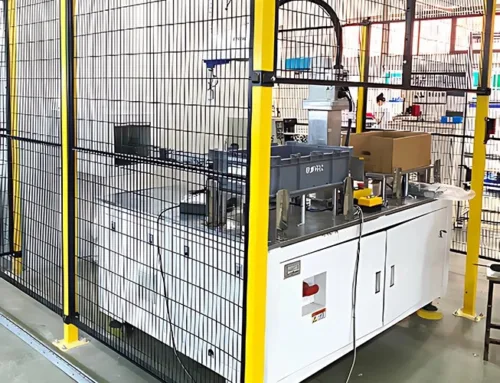
Machine Perimeter Guarding from Mdfence is built for plants where lines move, storage zones shift, and the old welded fence becomes a sunk cost. It installs by cold-work modular assembly, goes up 40%–70% faster than traditional methods, and can be dismantled and reused with more than 95% asset recovery.
Why this fit matters in material plants
For machine shops, cutting centers, and material storage yards, the problem is rarely only safety. The real cost is layout volatility. New equipment arrives, stock zones are rebuilt, and traffic paths get re-routed. A welded fence locks the plant into one plan. If the plan changes, the fence is cut apart, discarded, and rebuilt from scratch. That means labor, downtime, waste, and a safety risk if hot work is needed inside a restricted warehouse.
| Bisogno del cliente | Risposta di Mdfence |
|---|---|
| Frequenti cambi di disposizione | Modular cold-work assembly lets the fence be moved and rebuilt without destroying the asset. |
| Hot-work restrictions | Clamp-based installation avoids welding, sparks, and fire permits during on-site work. |
| High sunk cost from fixed barriers | Reusable fence modules turn a fixed expense into a movable plant asset. |
| Need for faster deployment | Assembly is typically 40%–70% faster than traditional welded installation methods. |
What makes the system practical on site
Cold-work modular assembly solves the welding problem
Mdfence is designed around a clamp-and-ring connection structure, so the fence can be installed entirely as cold work. That matters in heavy material warehouses and processing areas where open flame is tightly controlled. Instead of bringing in welders, fire watches, and hot-work permits, the crew assembles the system with a mechanical connection method that is cleaner, safer, and easier to stage around live production.
Reusable structure protects capex when the layout changes
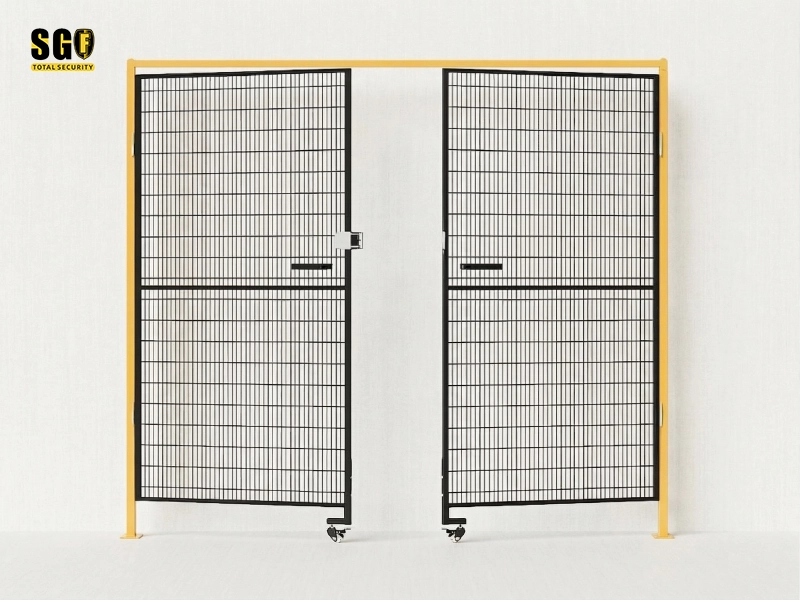
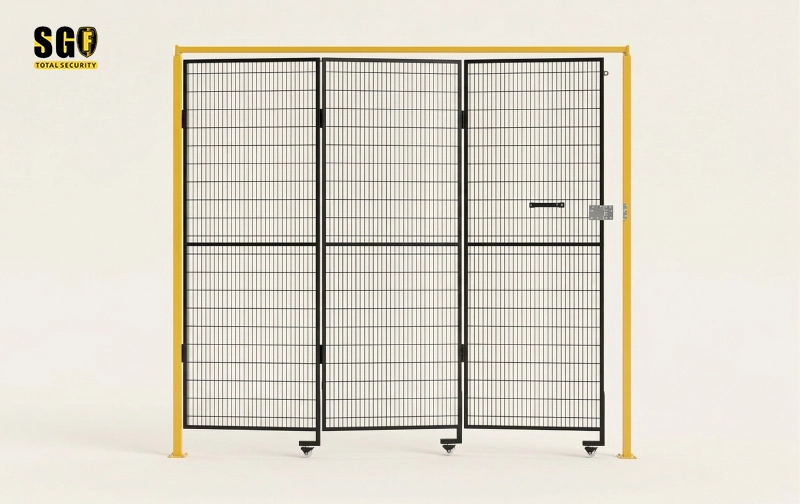
When a new machine line is added or a storage aisle needs to be widened, the fence does not have to become scrap metal. The modular frame can be dismantled without damage, transferred to a new position, and reassembled with the same parts. That reuse rate is the real financial argument: the perimeter system keeps its value when the plant changes, instead of being consumed by the first layout revision.
Structural evidence you can see on the product
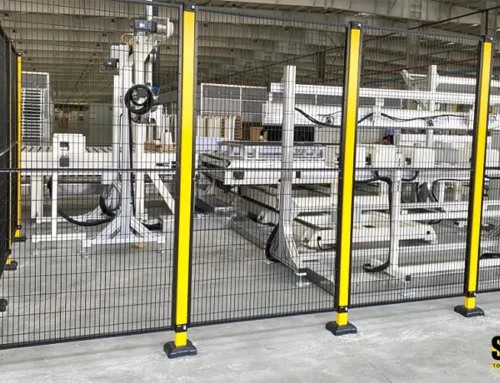
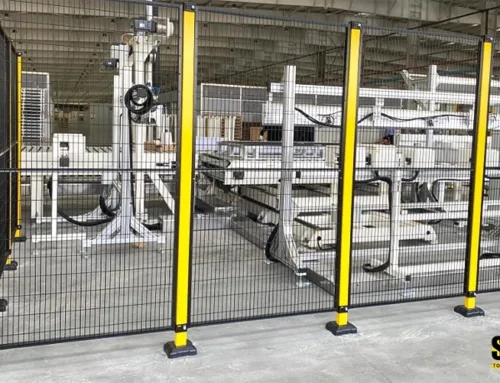
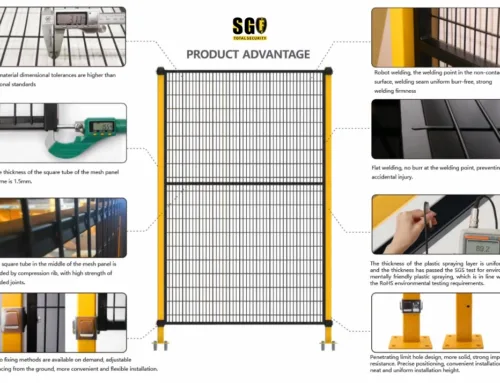
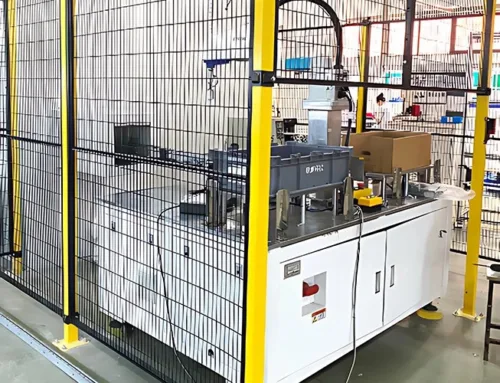
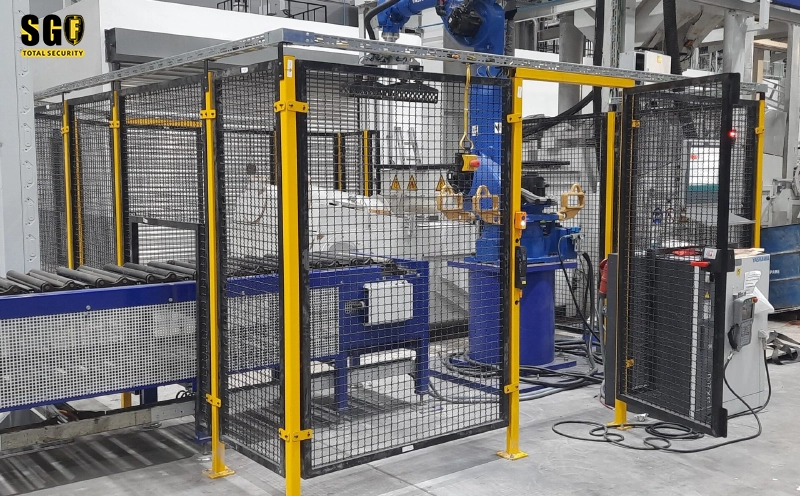
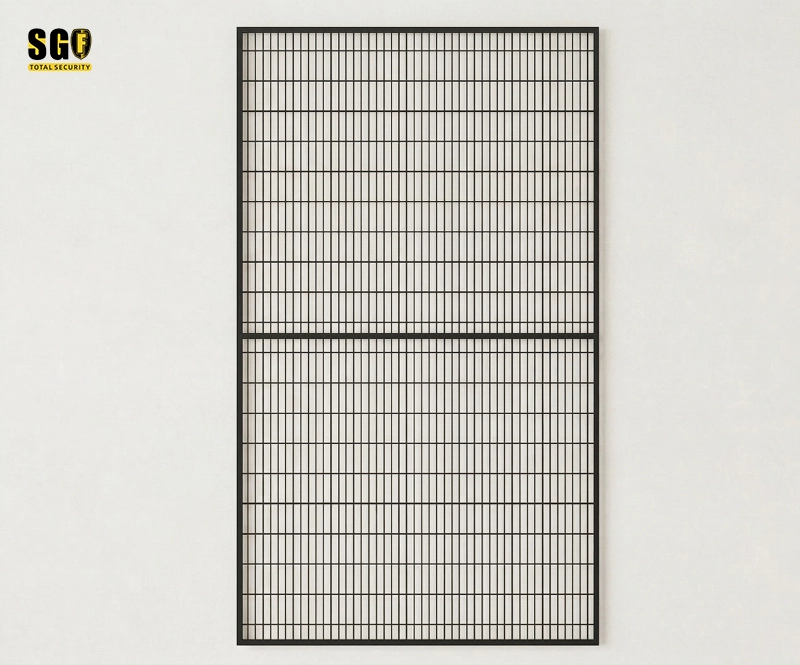
The visual evidence is not decorative. The product images show the weld seam finish, coating quality, base plate installation, and corner closure logic that make the system viable for real industrial use. The panel connections are designed to hold the boundary line cleanly, which is critical when the fence must track around conveyors, racking, or machine cells without leaving weak points or awkward gaps.
Where Machine Perimeter Guarding pays off
- Material processing centers that reconfigure machine cells as production mixes change.
- Warehouses with strict fire control rules that cannot tolerate on-site welding.
- Plants that need to protect live aisles while keeping future relocation options open.
- Operations trying to reduce the hidden cost of tearing out and scrapping fixed fences.
The result is simple: the perimeter system protects people and equipment today, but also preserves the budget for tomorrow. Instead of paying twice for the same boundary, the plant keeps the same modular asset and moves it where the process requires.
Final takeaway
If your plant changes more often than your fence should, Machine Perimeter Guarding is the right fit. Mdfence gives you a cold-work, modular perimeter that installs faster, avoids hot work, and can be reused when the line layout changes again.
Plan the next layout without scrapping the fence
Talk to Mdfence about a modular perimeter guarding layout that can move with your plant, not against it.