IT
IT  EN
EN  DE
DE  RU
RU  PT
PT  JA
JA  ES
ES Recinzioni di sicurezza per macchine
Machine safety fencing for cube-based storage lines
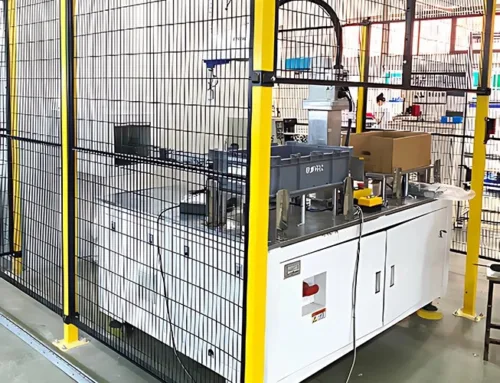
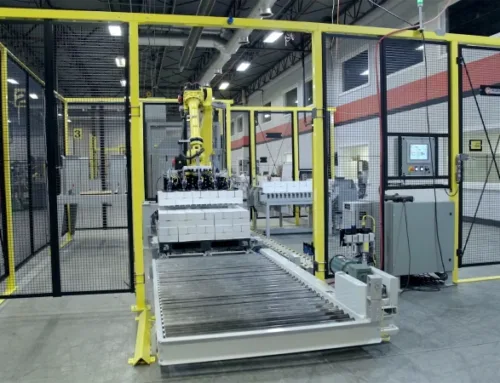
Machine safety fencing is the difference between a compliant perimeter and a dead zone. When every square meter must stay productive, Mdfence lets an automation team bring the fence in close, protect the hazard, and keep the storage footprint tight.

Why dense automation lines need a closer fence line
In cube-based storage projects, space is not a spare variable. Traditional wide-aperture wire mesh is easier to specify, but it often forces a larger safety setback from the hazard. That margin may satisfy the rulebook, yet it quietly consumes aisle width, blocks future equipment placement, and leaves unusable perimeter space around the machine cell. Mdfence is built to solve that conflict by using a 20×100 mm anti-insert micro narrow opening that supports an extreme 120 mm close installation distance.
| Requisito | Dettaglio supporto Mdfence |
|---|---|
| Space utilization | Close-fitting perimeter layout reduces wasted dead space around the automation cell. |
| Distanza di sicurezza | 20×100 mm micro narrow opening supports installation only 120 mm from the danger zone. |
| Layout pressure | Lets the system integrator keep more usable area inside the storage envelope. |
| Bid performance | Smaller footprint and tighter guarding help the solution score better on usable space. |
What the structure shows, and why it matters
Micro-aperture geometry for anti-insert protection
The 20×100 mm opening is not a cosmetic detail. It is the reason the fence can move in close without creating an obvious penetration risk. For a project team, that means the fence line stays protective while the surrounding floor plan stays compact.

Installation details that support the close setback
The installation diagram matters because close guarding only works when the base is fixed cleanly and repeatably. The base plate, drilling position, expansion bolts, and retaining rings show how the perimeter can be anchored close to the machine without turning the build into a compromise.

Fabrication proof behind the perimeter
The product board brings the evidence together: weld seam, coating, and base plate details are all visible in one frame. That is the kind of build quality an integrator needs when the fence is specified as part of a high-density automation cell rather than a loose stand-alone barrier.

Dove questo approccio si adatta meglio
- Cube-based storage projects where every unused meter cuts into system efficiency.
- Automated machine cells that need a tighter perimeter without losing compliance intent.
- Integrator bids where usable floor area is part of the scoring model.
- Retrofit sites that cannot afford a wide safety setback around existing equipment.
In a dense layout, the fence is not just a barrier. It is a footprint decision. That is why the close-installation capability of Mdfence is valuable: it protects the hazard, preserves aisle logic, and keeps the automation zone aligned with the storage plan instead of fighting it.
What to confirm before specifying the fence line
Before release, confirm the hazard boundary, the required safe distance, the service access points, and the floor area that must remain usable. Then check whether the project needs the fence to sit 120 mm from the machine or whether a looser layout would waste too much space. If the answer is close guarding, Mdfence gives you a clean technical path instead of forcing a wider perimeter by default.
Build the fence line around the machine, not around the empty space
If your next automation project is fighting the same tradeoff between safety distance and space utilization, Mdfence is the option built for that constraint. Share the layout, and we will help you judge whether a 20×100 mm micro narrow aperture and 120 mm close installation can unlock more usable area inside the cell.