IT
IT  EN
EN  DE
DE  RU
RU  PT
PT  JA
JA  ES
ES 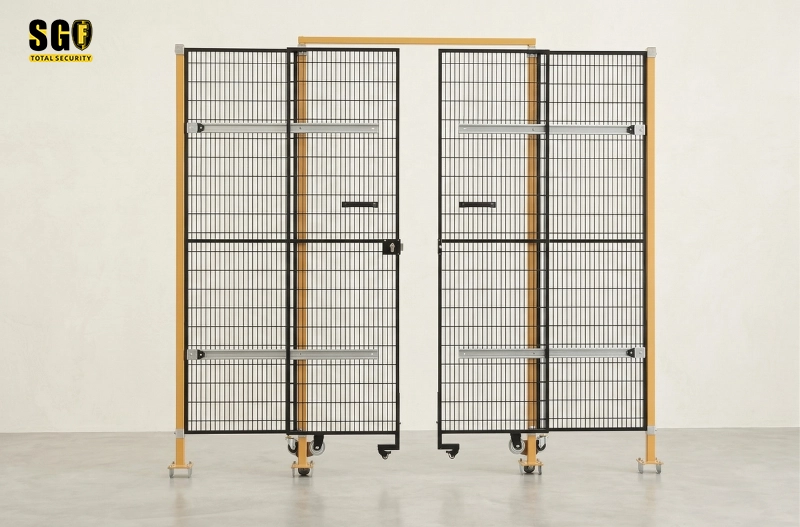
Summary: For exporters shipping machine guarding into overseas plants, freight volume can quietly erase project margin long before installation starts. This Mdfence perimeter guarding system addresses the problem with flat-pack fumigated wooden pallet packaging, modular panels, posts, and gate assemblies that ship at high packing density without sacrificing site speed or long-term rigidity. For integrators serving international automation projects, that means lower landed cost, easier customs-ready handling, and more predictable delivery economics.
Why oversized guarding consumes profit in international automation delivery
In domestic projects, a bulky safety fence is mostly an installation problem. In export business, it becomes a logistics problem first. Large pre-assembled guarding frames occupy expensive cubic meters in sea freight, air freight, inland trucking, and temporary warehouse storage. For an exporter moving equipment into Israel, Europe, Southeast Asia, or North America, that wasted volume compounds across every transport leg. A quote that looks acceptable at the factory gate can become far less attractive when the shipment reaches destination with inflated freight, handling, and clearance cost.
This is especially painful for turnkey lines. The guarding is necessary, but it does not generate revenue by itself; it protects the process, secures access points, and supports compliance. When that non-revenue item takes up a disproportionate share of container volume, it directly compresses margin or weakens price competitiveness. Many integrators have seen the same pattern: robot cells, conveyor lines, palletizers, and warehouse interfaces are designed well, yet the guarding shipment arrives as a spatial inefficiency.
The deeper issue is not simply shipping price. Oversized guarding creates a chain reaction of hidden cost: more difficult loading plans, lower pallet density, higher risk of freight damage from unstable stacking, more forklift touches, longer receiving time, and extra on-site sorting before installation. The result is a guarding package that costs more to move, more to manage, and more to deploy.
How the Mdfence perimeter guarding system is engineered for flat-pack freight efficiency
Modular geometry
Panels, posts, brackets, and door assemblies are separated into repeatable components that stack efficiently instead of occupying air.
High-density pallet loading
Flat components are consolidated on fumigated wooden pallets to reduce dead space and improve container utilization.
Controlled part protection
Compact packing reduces uncontrolled shifting while preserving coated surfaces during long-distance transport.
Predictable destination handling
Receivers can unload, count, and stage components faster because the shipment arrives in organized modular bundles.
Mdfence is built around a packaging logic that treats freight as part of the product, not as an afterthought. Instead of shipping large welded volumes, the system is prepared for flat-pack export on fumigated wooden pallets. Mesh panels, posts, hardware, and gate-related components are packed at high density so the shipment uses container volume more intelligently. That matters because in export projects, space efficiency is cost efficiency.
For GBIM-type delivery models, this approach improves landed economics in a practical way. More guarding can be loaded into the same cubic space. Pallets are easier to position, count, and secure. Destination teams spend less time dealing with awkward oversized assemblies. The shipment footprint becomes easier to align with mixed cargo, which is common when guarding travels together with robots, conveyors, electrical cabinets, and fabricated machine frames.
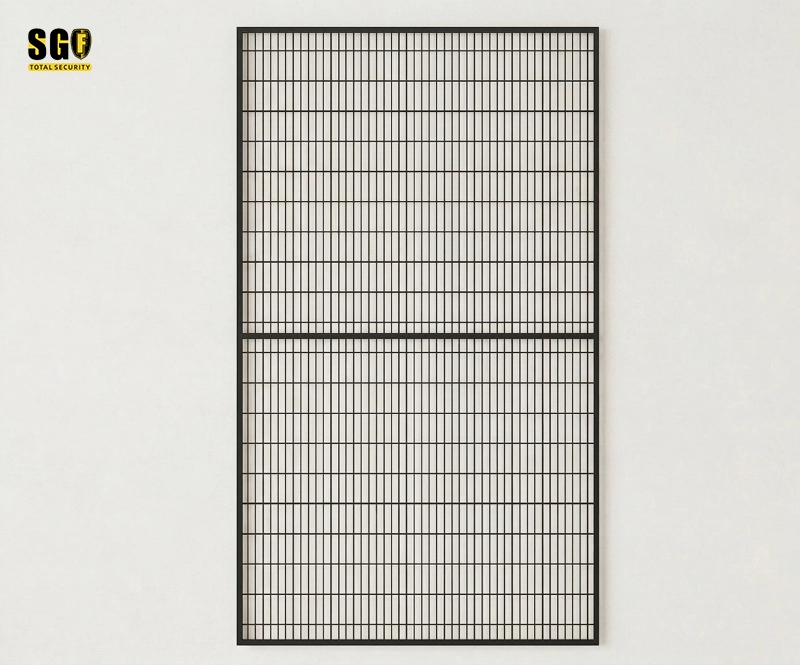
Just as important, flat-pack export packaging helps preserve the business case of modular guarding. If a project is won on careful cost control, there is little value in saving installation time only to lose margin in shipping. Mdfence closes that gap by letting the guarding system behave like a disciplined industrial kit: dense in transit, organized on arrival, and straightforward to assemble once it reaches the plant.
What importers and integrators gain beyond lower shipping volume
Freight savings are only the first layer. Once guarding is flat-packed correctly, several downstream advantages appear:
- Better quotation control: container planning becomes easier during the sales stage, reducing surprise cost escalation after PO release.
- Lower handling risk: flatter, denser loads are easier to brace and less vulnerable to damage than irregular welded shapes.
- Faster receiving workflow: destination warehouses can inspect, stage, and allocate guarding components with less manual sorting.
- Smoother multi-country delivery: fumigated pallet packaging is more aligned with export compliance routines and standard freight channels.
- Cleaner installation sequence: modular components arrive in a form that supports step-by-step assembly instead of improvisation around bulky parts.
For international automation contractors, these gains matter because schedule risk often hides in interfaces. Guarding touches civil layout, electrical safety, operator access, and commissioning. If the shipment arrives in a disorderly or oversized state, those interfaces become slower and more fragile. If the shipment arrives as a clean modular package, the guarding scope becomes easier to absorb into the overall project plan.
Flat-pack does not mean fragile: why structure still matters after arrival
Export efficiency only works if the installed guarding still performs as industrial protection, not as a lightweight compromise. Mdfence avoids that tradeoff. The system is based on framed mesh construction and modular steel components designed to assemble into a rigid machine guarding boundary after shipment. In other words, it travels compactly without asking the user to accept a weaker perimeter.
This is critical for lines where guarding must survive repeated access cycles, forklift activity nearby, and long operating hours. A guarding solution that saves freight but loses alignment, stiffness, or gate consistency will only move cost from shipping into maintenance and downtime. Mdfence is intended to avoid that shift by combining export-friendly modularity with a structure that remains appropriate for real industrial environments.
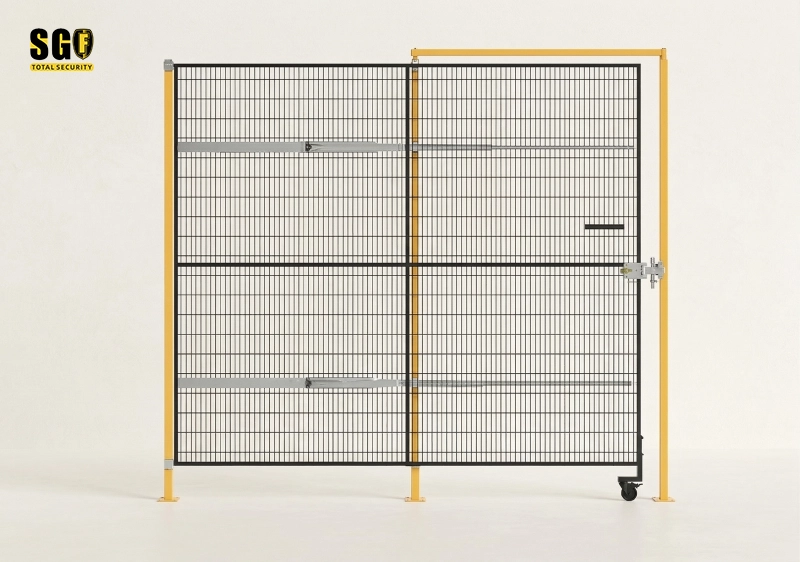
For overseas buyers, that balance is valuable. They are not only buying a fence; they are buying a transportable guarding system that still needs to integrate cleanly into production. If the guarding can ship flat, install logically, and remain dimensionally dependable in operation, then the exporter protects both logistics margin and field performance.
Where this logistics advantage is most valuable
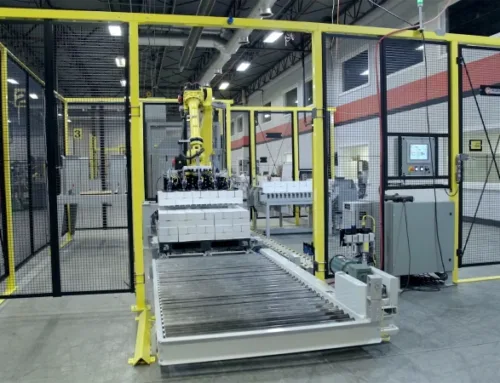
The freight benefit of Mdfence is strongest in projects where guarding scale is large enough to influence cargo economics. Typical examples include robot palletizing cells, conveyorized packaging lines, warehouse transfer areas, machine islands shipped as repeated project packages, and OEM exports that send multiple guarding zones with each equipment batch.
It is also useful for companies serving remote or high-cost destinations, where every cubic meter matters more. In such cases, flat-pack export packaging is not a minor packaging preference; it becomes a strategic pricing tool. Integrators can quote more aggressively, protect margin with more confidence, and reduce the risk that logistics destroys profitability late in the process.
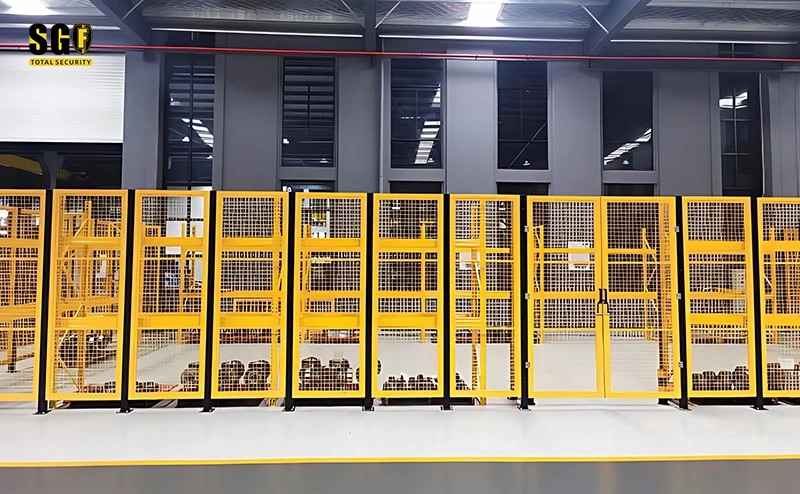
When the receiving site is already operational, the organized modular format also helps site teams work with less disruption. Components can be staged near the final zone, unpacked in sequence, and assembled without wrestling oversized welded volumes through live factory pathways. That can shorten site interference and make installation planning less disruptive for operating plants.
Choosing guarding by landed cost, not only ex-works price
A common procurement mistake is comparing guarding systems only on unit price or installed appearance. For cross-border projects, the more accurate comparison is landed cost plus deployment efficiency. A system that looks cheaper on paper may become expensive once volumetric freight, repeated handling, and site inefficiency are added. A better modular design often wins when evaluated across the full delivery chain.
That is where Mdfence stands out. Its flat-pack palletized export format directly targets the problem that international integrators know too well: logistics swallowing profit. By compressing shipment volume while preserving a practical industrial guarding structure, the system supports both commercial competitiveness and on-site execution discipline.
If your project team is quoting machine guarding for overseas delivery, evaluate not just the fence itself but the total transport footprint, unloading sequence, and destination installation logic. Those details often determine whether the guarding package protects margin or erodes it.
Need an export-friendly machine guarding package?
Mdfence helps international automation projects reduce freight volume, organize delivery, and keep installed perimeter protection practical at the destination plant.