IT
IT  EN
EN  DE
DE  RU
RU  PT
PT  JA
JA  ES
ES 
For today’s corporate leaders, procurement decisions are no longer a simple matter of balancing cost and performance. Every choice, from the energy supplier to the office paper, is a reflection of the company’s commitment to its Environmental, Social, and Governance (ESG) goals. Stakeholders, investors, and customers now scrutinize not just what a company produces, but how it operates.
In this new landscape, we often focus on the most visible metrics: the energy consumption of our buildings (Scope 1 & 2 emissions) or the fuel efficiency of our vehicle fleets. But a significant, and often overlooked, portion of a company’s environmental footprint lies within its Scope 3 emissions—specifically, in the lifecycle impact of the materials used to construct and maintain its physical assets.
Un anti climb security fencing system is a perfect case study. Seen as a simple, one-time capital expenditure, its long-term environmental impact is rarely considered. However, by applying a comprehensive Lifecycle Assessment (LCA) framework, we can see how this seemingly basic choice can either undermine or powerfully support a company’s sustainability mission.
Beyond “Recycled Content”: A Modern Framework for Sustainable Procurement
The traditional view of a “green” material often stopped at its recycled content. While important, this is a woefully incomplete picture. A modern, robust ESG evaluation framework for any building material must analyze its entire lifecycle through three distinct phases:
- Production & Process: How is the product manufactured? What is the environmental impact of its core components and processes?
- Operational Life & Durability: How long will the product perform its intended function without requiring significant maintenance, repair, or replacement?
- End-of-Life & Circularity: What happens to the product when it is eventually decommissioned? Can it be easily reused or recycled?
Applying the Lifecycle Framework to Security Fencing
When we evaluate fencing through this lens, the choice between a low-cost, traditional system and a high-performance modern system becomes a clear strategic decision.
Phase 1: Production & Process — The Hidden Impact of Coatings
The most significant environmental impact during fence production often comes from its protective coating.
Traditional Approach (High Impact): Liquid painting, especially older methods, frequently uses solvent-based paints that release Volatile Organic Compounds (VOCs) during application and curing. VOCs are a known contributor to air pollution and can be hazardous to workers.
Sustainable Approach (Low Impact): Modern powder coating is a fundamentally cleaner process. A dry, solvent-free powder is applied electrostatically to the steel. This process produces zero VOC emissions. Furthermore, any oversprayed powder can be collected and reused, creating a near-zero-waste application cycle. ESG Takeaway: Specifying a powder-coated finish is a direct, measurable way to reduce your project’s contribution to air pollution.
Phase 2: Operational Life — Durability is the Ultimate Sustainability
This is the most critical and most frequently overlooked factor. The single greatest contributor to a product’s long-term environmental footprint is its lifespan.
Traditional Approach (High Impact): A lower-cost fence, often with a less durable coating or weaker welds, may begin to fail from corrosion in as little as 7-10 years in harsh environments like those found in coastal U.S. cities. This necessitates a full replacement, which involves the entire environmental cost of a new product: raw material extraction, manufacturing energy, transportation emissions, and finally, landfill waste from the old fence. This cycle may repeat multiple times over the life of a building.
Sustainable Approach (Low Impact): A high-durability anti climb security fencing system, engineered with superior materials and coatings designed to last 20-30 years, represents a massive reduction in long-term environmental impact. From a lifecycle perspective, a fence that lasts three times as long has one-third the long-term impact. It avoids the emissions and waste of two entire replacement cycles. It is a textbook example of designing for longevity to minimize consumption.
Phase 3: End-of-Life — Designing for the Circular Economy
A commitment to sustainability means planning for a product’s final chapter.
Traditional Approach (Linear): Welded-together components or materials that are difficult to separate can make recycling inefficient or impossible, leading to landfill disposal.
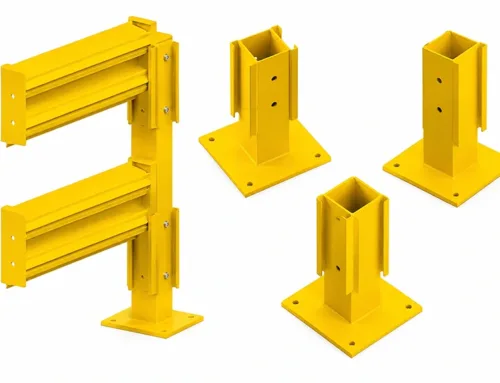
Sustainable Approach (Circular): Steel is one of the most recycled materials on the planet. A modular fence system, designed with mechanical fasteners instead of welds, is built for disassembly. At the end of its long life, the system can be easily broken down into clean streams of steel and aluminum, ready to be efficiently recycled into new products and re-enter the circular economy, dramatically reducing the need for virgin ore mining.
Procurement as a Visible Statement of ESG Commitment
Your company’s physical assets are a constant, visible broadcast of its values. A rusting, dilapidated fence signals short-term thinking and a disregard for long-term stewardship. A well-maintained, durable, and cleanly designed perimeter communicates stability, responsibility, and a commitment to quality that stakeholders can see every single day.
When making your next procurement decision for building materials, expand your criteria beyond the initial price tag. Incorporate lifecycle and durability metrics into your Request for Proposal (RFP). Challenge suppliers to provide not just a product, but a transparent account of its long-term environmental and economic performance.
Every purchase is a statement. Choosing a durable, responsibly manufactured perimeter fence makes a clear, visible declaration of your company’s commitment to a truly sustainable future.