IT
IT  EN
EN  DE
DE  RU
RU  PT
PT  JA
JA  ES
ES OSHA + ISO compliance for multi-site machine guarding
Robot fencing systems for North American audit-ready machine guarding
For a multinational manufacturer with strict OSHA reviews across North America and a global ISO baseline to maintain, Mdfence turns robot fencing systems into a repeatable standard: same fence logic, same safety boundary, and the same evidence package at every site.
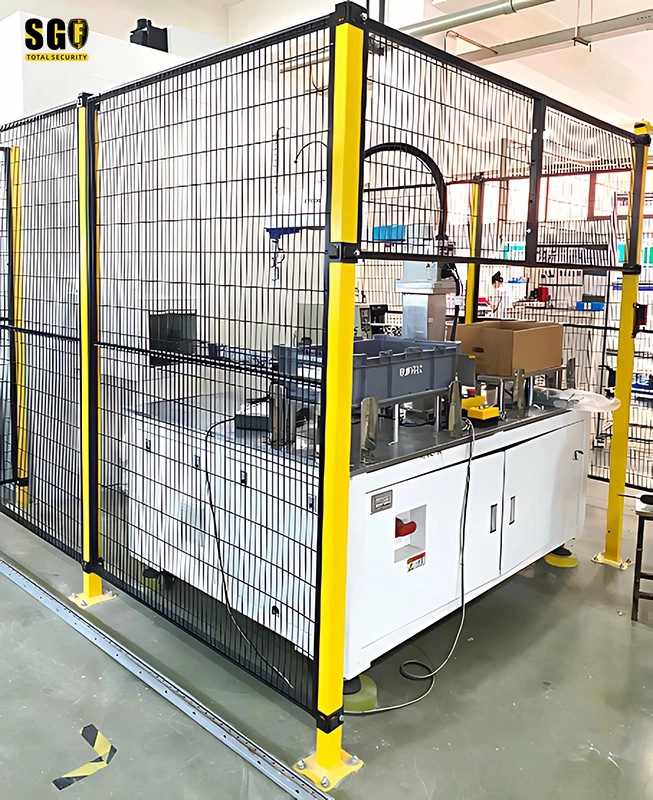
Why robot fencing systems solve the audit problem better than ad hoc barriers
When a headquarters team is asked to prove the same safety standard in every plant, the weak point is usually the old setup: site-built mesh, improvised gate hardware, loose frame geometry, or a fence line that changes from one contractor to the next. That kind of variation makes OSHA evidence harder to defend and makes ISO documentation harder to reuse. Mdfence is built to remove that variability.
| Audit concern | Risposta di Mdfence |
|---|---|
| Repeatability across sites | Modular steel fence structure with consistent panel logic for global rollout |
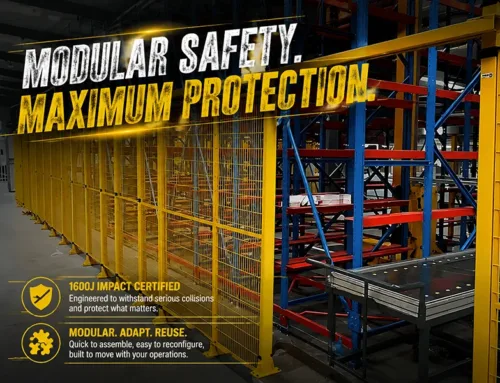
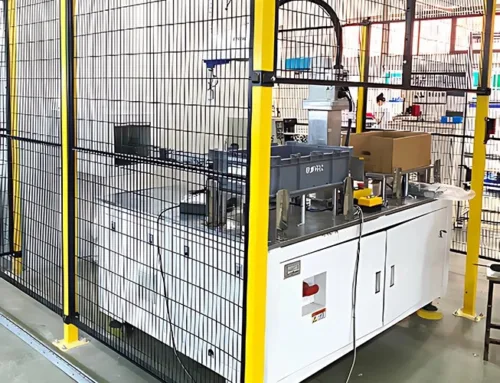
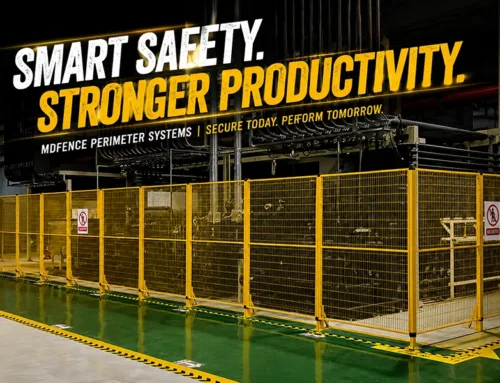
| Boundary clarity | Yellow posts and black mesh create a visible machine safety perimeter |
| Structural confidence | Framed mesh panels, fixed base plates, and standard assembly details |
| Project delivery speed | Predefined modules, gate options, and flat-pack-friendly shipment planning |
Structure evidence: what the images prove
1) The fence geometry is engineered, not improvised
Mdfence uses a steel frame concept that fits machine guarding workcells, not light-duty crowd control. The product brief supports Q235/Q195 carbon steel, common 60×60 mm posts, 20x30x1.5 mm reinforced panel frames, 20×100 mm mesh, and 3.0 mm or 4.0 mm wire. That is the right language for compliance-heavy plants because the fence is designed as a machine boundary, not just a visual separator. The technical layout image shows the post, mesh panel, and fixing clamp relationship clearly, which makes the structure easy to explain in an audit pack.
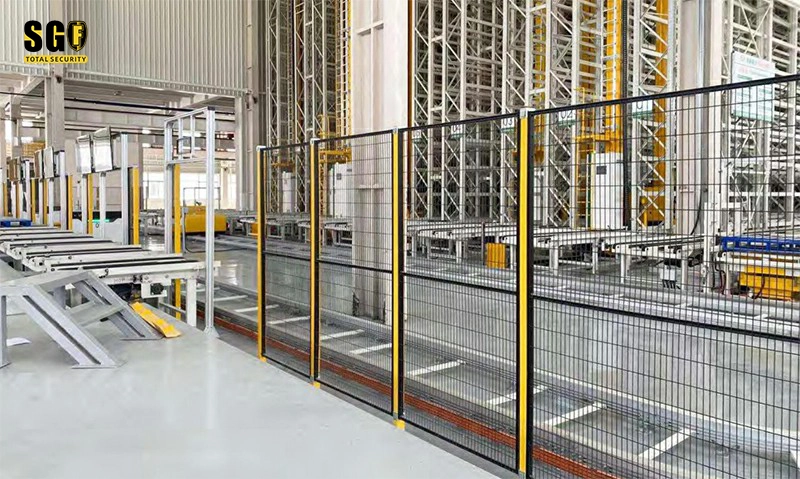
2) Installation details support repeatable site rollout
Global projects fail when every field team “figures it out onsite.” Mdfence avoids that by standardizing the installation sequence: base plate positioning, drilling, expansion bolts, retaining rings, and fixed clamping. The installation diagram makes the sequence visible, which helps engineering teams write a site standard instead of a one-off method statement. For a multinational buyer, that matters because a repeatable install process is how you keep the same guard line from drifting between plants, suppliers, and countries.
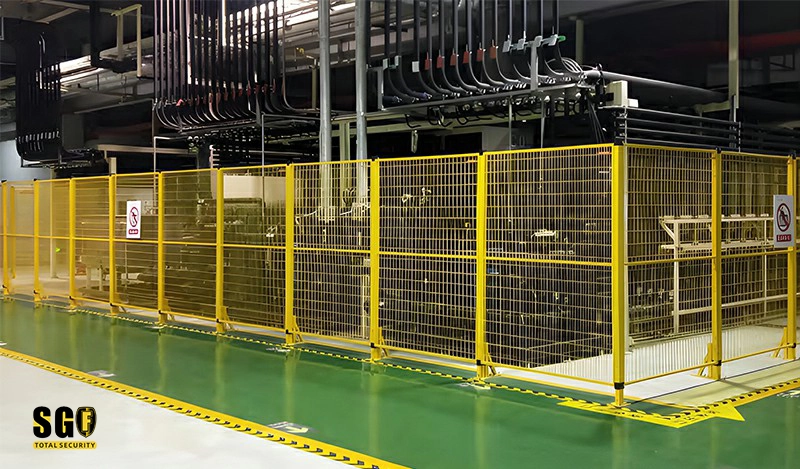
3) Finish and base details show the product is built for industrial service
Auditors do not only ask whether a fence exists. They also ask whether it is stable, durable, and appropriate for factory use. The product advantage board highlights weld seams, coating, caliper checks, and base plate details. That supports the practical case for powder-coated steel, visible hardware, and a heavy-duty mounting method. In the field, those are the details that keep a safety barrier from becoming a maintenance liability after the first line change or equipment relocation.
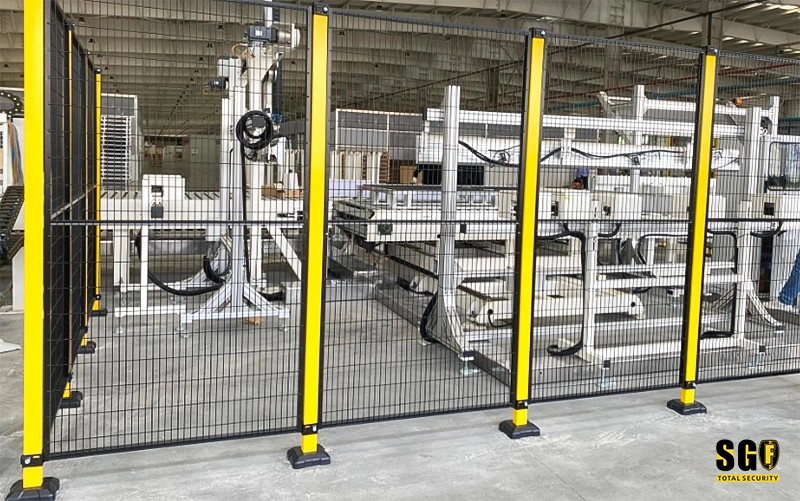
Where robot fencing systems fit in a compliance-driven plant
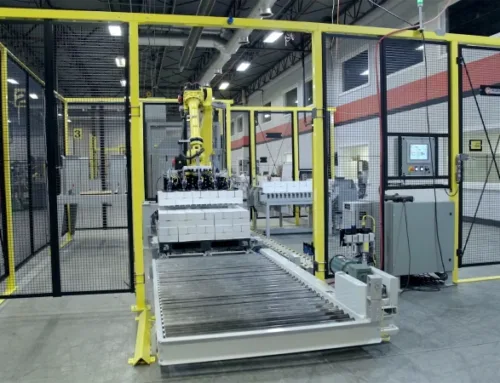
- Robot cells that need a clear separation between operators and moving axes
- Conveyor lines that must be isolated without slowing maintenance access
- Automation zones where the same guarding logic must be deployed across multiple sites
- Factory aisles that require visible boundaries for internal EHS inspections
- Projects that need consistent gate, panel, and base-plate documentation for audit files
Mdfence is especially useful when old welded barriers have become a problem. Welded solutions are hard to move, hard to standardize, and expensive to rework after a layout change. A modular steel guarding system gives the plant team room to adapt while keeping the compliance logic intact. That is why robot fencing systems are a better fit for companies that run many plants under one governance model.
Why this matters for the final result
The end result is simple: one machine guarding standard that can survive internal review, external inspection, and future line changes. Instead of explaining a different fence story at every facility, the buyer can point to the same material logic, the same installation method, and the same visible safety boundary. That is what makes Mdfence valuable for a North American headquarters team managing risk across a global footprint.
Build a defensible guarding baseline
If your sites need robot fencing systems that are easier to audit, easier to standardize, and easier to roll out globally, Mdfence gives you the structural basis to do it.