IT
IT  EN
EN  DE
DE  RU
RU  PT
PT  JA
JA  ES
ES Jam-prone scrap lines need a safety fence for machinery that does more than block access.
Safety Fence for Machinery in Scrap Sorting and Baling Cells
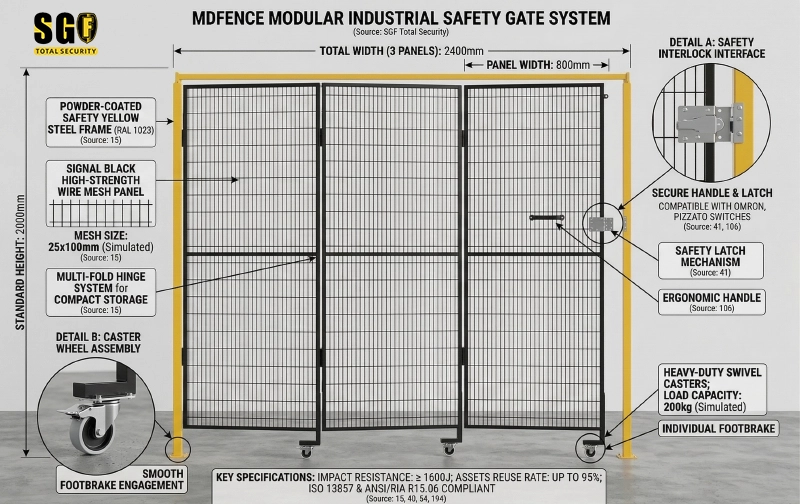
When maintenance crews have to clear jams inside a metal recycling line, the safety fence for machinery must become part of the shutdown logic—not just a barrier at the perimeter.
Why jam-prone recycling lines need a different safety fence for machinery
Scrap sorting centers and baling lines create a specific failure pattern: material bridges, jam clearance, repeated entry into the danger zone, and the risk of an unexpected restart while a worker is still inside the cell. In that environment, a fence that only separates people from machines is not enough. The guard must support electrical interlock logic, access control, and fast lockout behavior so the machine cannot move when the gate is open.
| Customer problem | Risposta di Mdfence |
|---|---|
| Frequent jam clearing in scrap sorting and baling lines | Pre-assembled machine guarding layout that keeps the maintenance route controlled while preserving fast access through a monitored gate |
| Risk of fatal injury from accidental restart | Gate-ready interlock integration so the machine can be tied into the STO circuit and de-energized the moment access is opened |
| Compatibility pressure from site standards and switch brands | Adapter carrier design for Omron and Pizzato safety interlock switches, without drilling the fence frame on site |
What makes Mdfence fit this safety fence for machinery use case
1) A fence that is built for interlock logic, not just separation
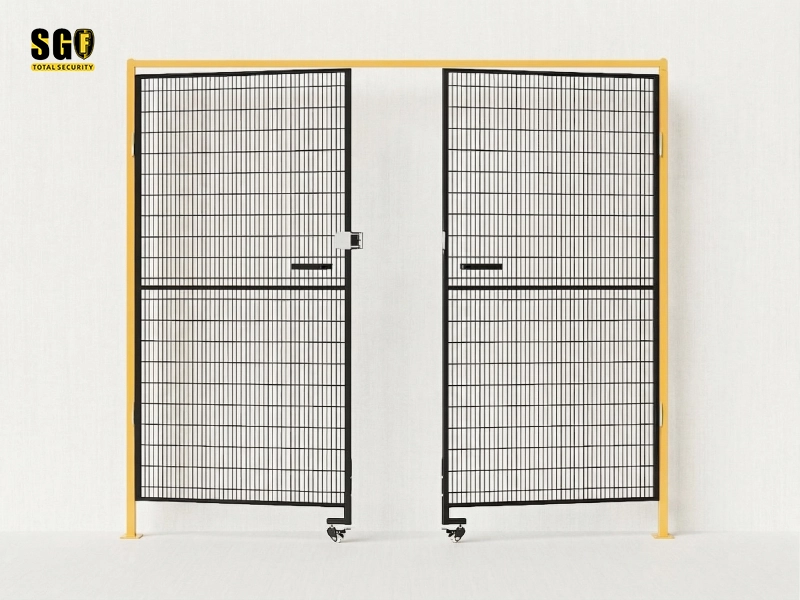
Mdfence is designed as an active safety component. The fence door can be wired into the machine stop chain so an open gate triggers a safe stop instead of relying on operator discipline. That matters in scrap environments, where jam removal is repetitive and a moment of distraction can become a lethal event.
2) No-drill switch mounting keeps the frame intact
For sites using Omron or Pizzato interlocks, the pre-engineered adapter carrier removes the need for field drilling. That simplifies installation, protects the fence structure, and shortens commissioning time. It also helps the project team keep the same safety logic across multiple cells instead of improvising every gate by hand.
3) The structure stays clean, readable, and serviceable
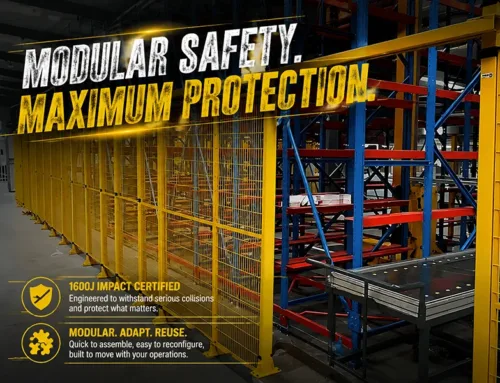
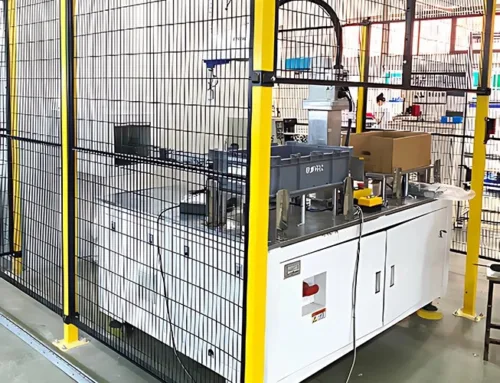
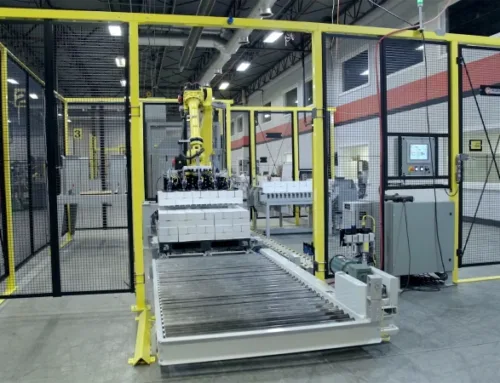
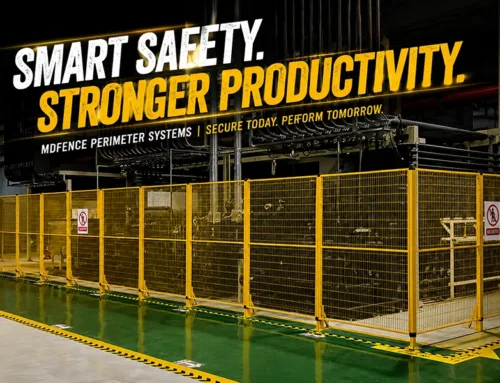
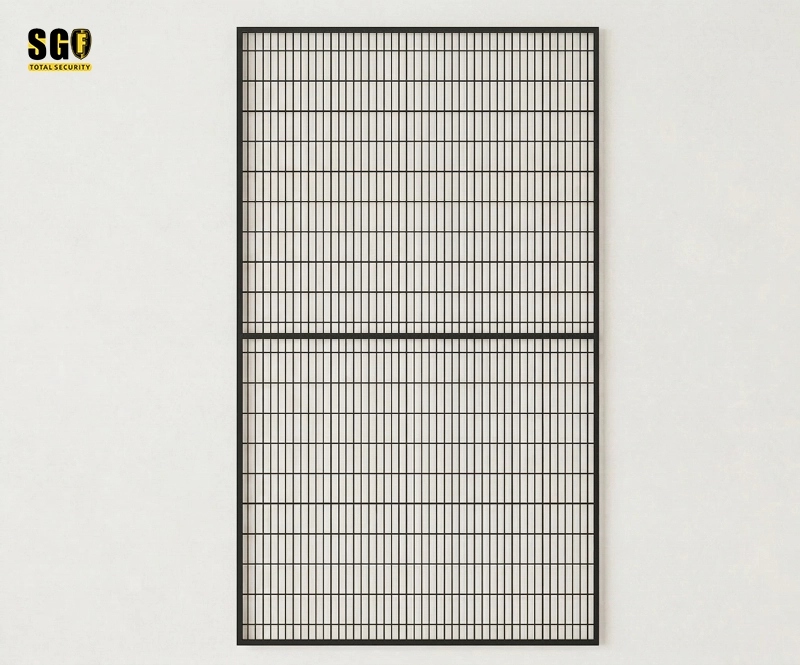
The product imagery shows the technical details that matter on a real plant floor: welded frame members, mesh panels, base plates, fixing clamps, and a clear corner condition. Those details are important because a jam-clearance gate must close positively, align consistently, and stay understandable for maintenance crews across shifts.
Where this safety fence for machinery solves the real risk
- Scrap sorting lines with repeated blockage removal and frequent gate entry
- Baling machines that need access control during maintenance and clearing
- Heavy machinery cells where the stop chain must be connected to the guard door
- Projects that need Omron or Pizzato interlock compatibility without reworking the frame on site
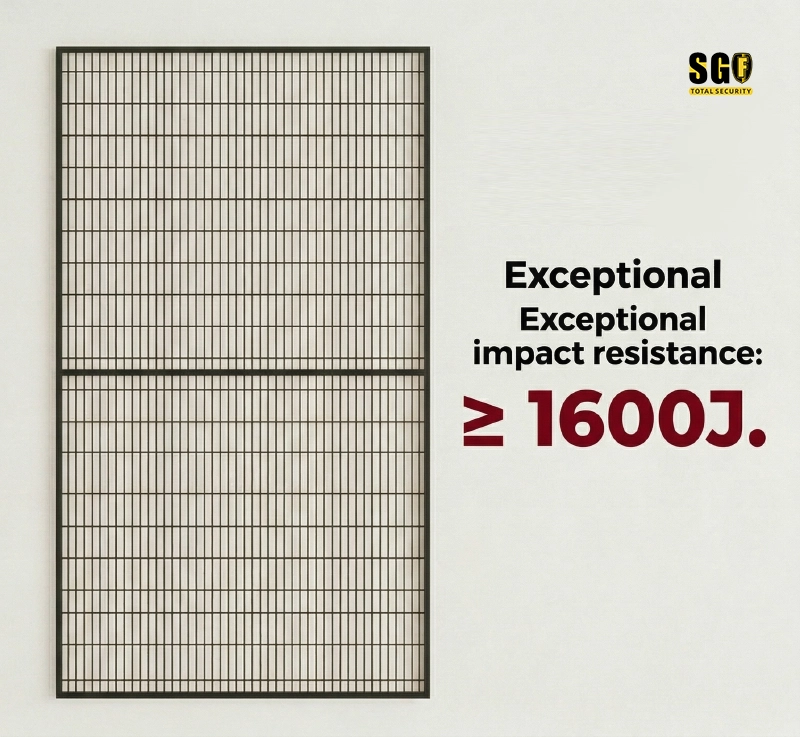
The result is simple: the crew still gets fast access for cleaning and service, but the machine cannot be restarted while the gate is open. That changes the fence from a passive enclosure into a safety control point.
What to specify before you buy
For a jam-prone line, specify the gate position, interlock brand, and stop-chain requirement up front. Mdfence already supports the safety fence for machinery workflow by pairing the physical barrier with interlocked access hardware, so the design can be aligned to your STO logic from the start.
Need a safety fence for machinery that can be tied into machine shutdown?
If your scrap or baling line has repeated jam events, Mdfence gives you the fence, the gate hardware, and the interlock-ready structure needed to reduce restart risk at the source.