IT
IT  EN
EN  DE
DE  RU
RU  PT
PT  JA
JA  ES
ES Hsafety | Modular warehouse protection
Barriera di sicurezza per magazzino per zone carrelli elevatori riconfigurabili
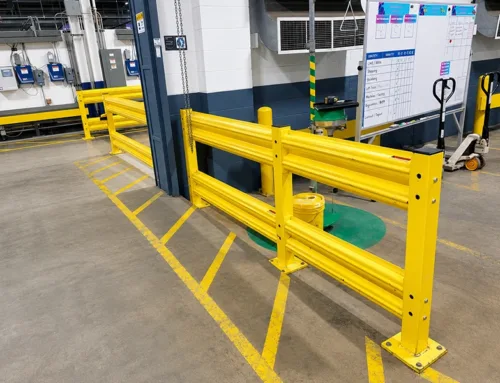
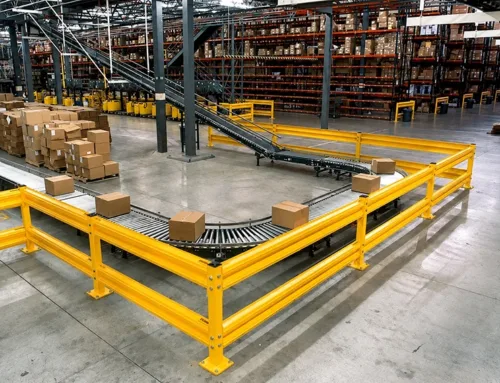
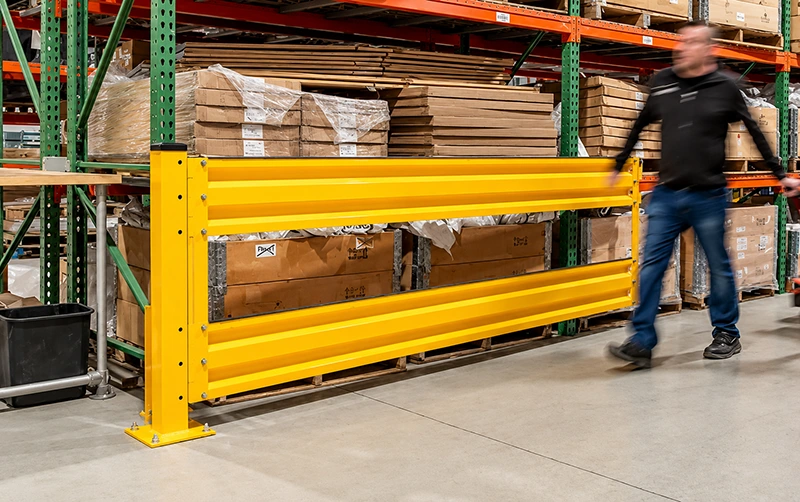
When warehouse layouts change with a contract, a fixed warehouse safety barrier can become an obstacle instead of protection. Hsafety modular warehouse guard rails use bolted sections and lift-out panels so forklift areas, rack ends, conveyors, and pedestrian routes can be reconfigured without site welding or cutting.
Why Fixed Protection Falls Behind a Changing Warehouse
A contract warehouse or distribution center may move production lines, change aisle directions, add a conveyor spur, or assign a new forklift area. A welded steel pipe railing must then be cut and rebuilt. Concrete bollards are difficult to relocate, while rope or strap barriers do not provide a physical collision protection line. Each change can leave racks, walls, equipment, and pedestrian routes exposed, increase repeat purchasing, and contribute to accident downtime.
| Requisito di layout | Hsafety warehouse safety barrier response |
|---|---|
| Frequent zone changes | Modular guardrail sections connect with bolts and can be dismantled, moved, and rebuilt around the next warehouse or production-line layout. |
| Temporary vehicle or equipment access | Lift-out guardrail panels can be lifted out for access when required, then returned to the barrier line to restore separation. |
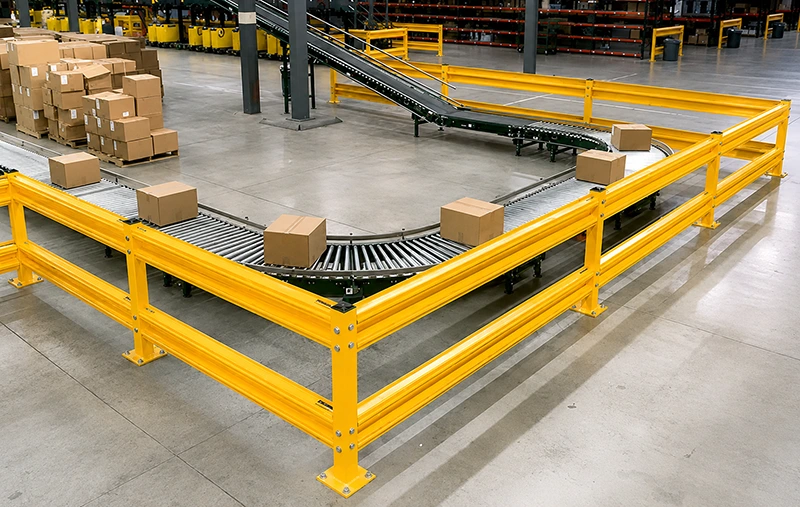
| Straight runs and corners | Custom length guardrail sections can be planned for straight aisles, turning areas, conveyor intersections, and irregular boundaries. |
| Concrete floor anchoring | Floor-mounted posts use base plates and anchor bolts for bolt-on installation rather than on-site welding or cutting. |
| Visible industrial separation | Yellow safety coating and double corrugated rails create a clear workplace safety barrier for forklift and pedestrian routes. |
Modular Details That Make Protection Adaptable
Bolted Sections Move with the Operation
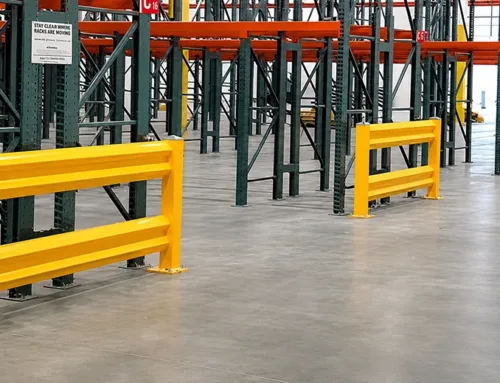
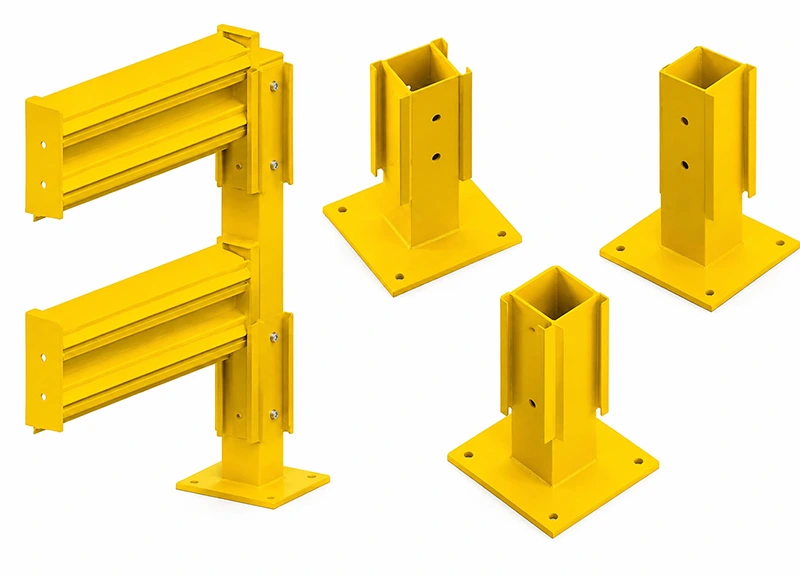
A modular, bolted guard rail system separates the protection function from one permanent floor plan. Each section is assembled from corrugated steel beams, square posts, connection brackets, and base plates. This lets a site team plan a removable guard rail around a changed rack end, loading dock, machine guarding boundary, or pedestrian-vehicle separation route. The practical gain is not just faster installation: reusable modules can move with the contract or production line, reducing the need to purchase a completely new barrier each time the protected area changes.
Lift-Out Access Without Losing the Barrier Line
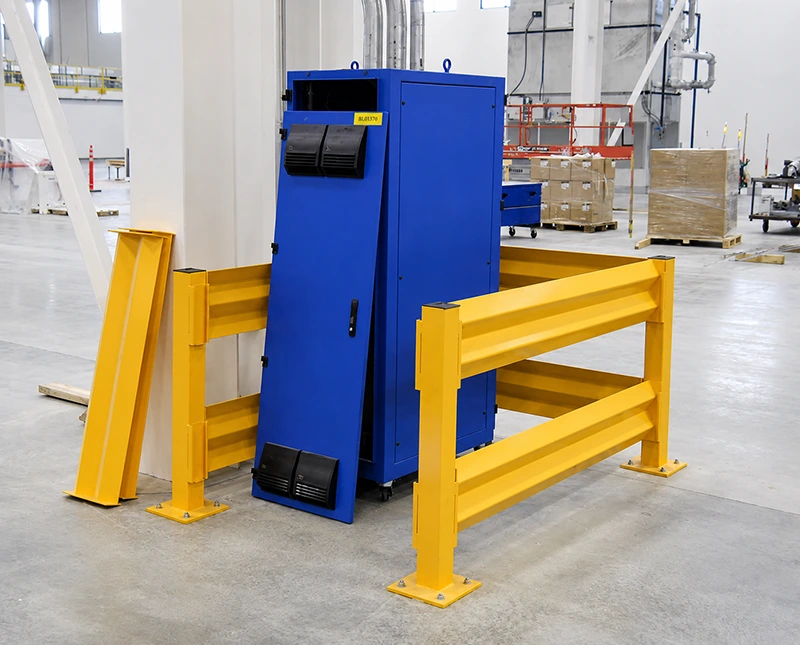
Some warehouse routes need controlled access rather than a permanently closed boundary. The lift-out design allows a panel to be removed when a vehicle, maintenance cart, or piece of equipment must pass, without dismantling the whole run. Once the movement is complete, the panel can be reinstalled in the same modular position. The application image shows a panel removed beside a protected industrial cabinet, providing direct visual evidence of this operating concept. It supports flexible通行 while retaining asset protection guardrail coverage during normal forklift activity.
Specify the Boundary, Not a One-Size-Fits-All Run
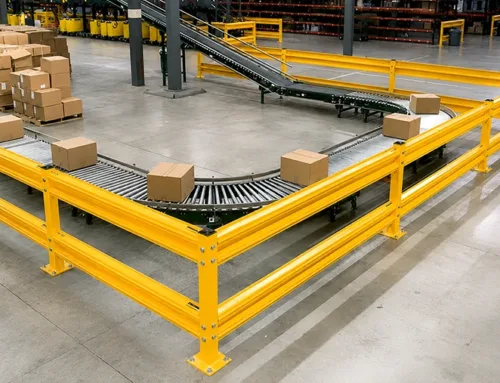
Warehouse safety planning often includes straight aisles, rack-end returns, conveyor corners, and access points that do not share one standard length. Hsafety supports custom length guardrail planning for these boundaries. The indexed component view shows the separate beams, posts, brackets, and bolted base plates that make the system configurable. Product options can also be aligned with the required 3mm or 4mm rail thickness, approximately 1000mm barrier height, 310mm rail width, 85mm wave height, and 1500mm post spacing where applicable. Final selection should follow the site drawing, concrete condition, traffic pattern, and required impact-protection assessment.
Where a Reconfigurable Warehouse Safety Barrier Fits
- Contract warehousing: relocate modular guard rails as customer inventory zones and pedestrian routes change.
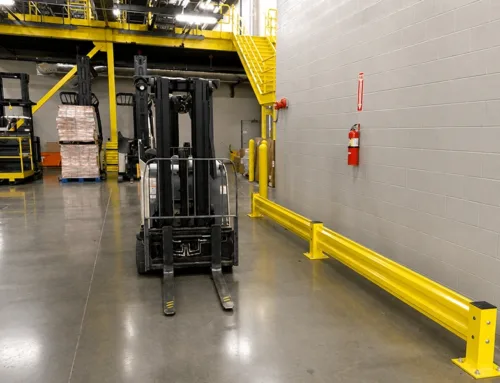
- Distribution centers: protect loading dock approaches, rack end protection, and forklift areas while preserving planned access points.
- Conveyor and production areas: use double-rail collision protection around equipment, turning sections, and production line separation zones.
- Machine guarding and equipment isolation: create a visible floor-mounted boundary around cabinets, conveyors, and other fixed assets without welding a permanent frame.
- Cold storage and warehouse aisles: combine high-visibility yellow safety coating with concrete floor anchoring and defined pedestrian safety separation.
The result is a steel guard rail that is fixed enough for routine forklift impact protection, but configurable enough for operational change. It helps protect racks and walls from impact, prevent forklift damage to equipment, and reduce accident downtime caused by avoidable repairs. For projects requiring OSHA guardrail compliance or a defined injury prevention barrier, the final layout and installation details should be checked against the applicable site and jurisdictional requirements.
Plan the Next Layout Before You Buy the Barrier
Share the warehouse drawing, protected assets, forklift routes, pedestrian paths, straight and curved boundary lengths, access points, and concrete-floor conditions. Hsafety can use these inputs to configure a bolted guard rail system with suitable modules, posts, base plates, and lift-out locations. This approach replaces repeated field cutting with a planned, reusable protection layout.
Keep Forklift Protection Aligned with the Contract
Choose a modular warehouse safety barrier when the operating map will change. With custom-length sections, bolt-on installation, and lift-out access, Hsafety helps maintain collision protection and pedestrian-vehicle separation without discarding the whole guardrail system after every layout revision.