JA
JA  EN
EN  DE
DE  RU
RU  PT
PT  ES
ES  IT
IT 
The Power of Danger Decals: Safeguarding Lives in High-Risk Environments

In high-risk environments, such as construction sites, chemical plants, and industrial facilities, the importance of danger decals cannot be overstated. These powerful visual warnings serve as a constant reminder of potential hazards, guiding individuals toward necessary safety precautions. By enhancing hazard awareness, preventing catastrophic accidents, encouraging safety compliance, and empowering a safety culture, danger decals play a crucial role in safeguarding lives and promoting a culture of safety.
I. Enhancing Hazard Awareness
One of the primary roles of danger decals is to heighten hazard awareness in high-risk environments. Through clear symbols and warnings, these labels effectively communicate the nature of potential dangers, ensuring that workers and visitors are acutely aware of the risks they may encounter. The strategic placement of danger decals in areas with hazardous machinery, toxic substances, or high-voltage equipment serves as a constant visual reminder to stay vigilant and cautious. By keeping potential risks at the forefront of individuals’ minds, danger decals foster a proactive approach to safety, minimizing the chances of accidents and injuries.
II. Preventing Catastrophic Accidents
Danger decals play a pivotal role in preventing catastrophic accidents in high-risk environments. By visually signaling potential risks, these labels act as effective deterrents, prompting individuals to exercise caution and adhere to safety protocols. A prominently displayed danger decal on a hazardous substance container, for instance, can prevent accidental exposure and potential harm. In complex and hazardous settings like oil refineries or electrical installations, danger decals reinforce the need for strict adherence to safety measures, significantly reducing the likelihood of severe accidents that could result in injury, property damage, or even loss of life.
III. Encouraging Safety Compliance
Safety compliance is essential in high-risk environments, and danger decals are instrumental in promoting it. The use of universally recognized symbols, colors, and formats on these labels ensures that safety information is effectively communicated across language and cultural barriers. The standardized approach eliminates confusion and fosters a consistent understanding of potential hazards and required precautions. Moreover, the presence of danger decals serves as a constant reminder of safety obligations, encouraging employees and visitors to comply with regulations and guidelines. This leads to a safer working environment, reducing the overall risk within the facility.
IV. Empowering a Safety Culture
The presence of danger decals contributes to the development of a strong safety culture within organizations. Consistent exposure to these visual warnings reinforces the importance of safety in the minds of individuals. Danger decals act as tangible reminders that every individual’s actions have a direct impact on their own well-being and that of their colleagues. As a result, a safety-conscious mindset becomes ingrained, leading to a more proactive approach to hazard identification and risk mitigation. By fostering a safety culture, organizations can significantly reduce the occurrence of accidents, enhance overall safety performance, and create an environment where everyone feels responsible for their safety and that of others.
結論として danger decals are a powerful tool in safeguarding lives and promoting safety in high-risk environments. By enhancing hazard awareness, preventing catastrophic accidents, encouraging safety compliance, and empowering a safety culture, these labels play a vital role in mitigating risks and creating safer working environments. Organizations must prioritize the strategic implementation and maintenance of danger decals to protect lives, reduce injuries, and foster a culture where safety is paramount.
Interlock Switch Mounting Without Drilling: Why Alfence T-Slot Posts End Phantom Stops
Bolting an interlock switch bracket through a powder-coated steel post drills the coating, drops swarf into the cell and leaves a rust line — and when the hinged leaf sags, the tongue misaligns and the PLC reports a phantom guard fault. Alfence mounts sensors, e-stops and conduit in the T-slot groove of a 40×40 mm or 45×45 mm aluminum post, with door hardware sized to keep the safety switch aligned.
Phantom Safe Torque Off Stops: T-Slot Guarding Fence Posts Mount Interlocks Without Drilling
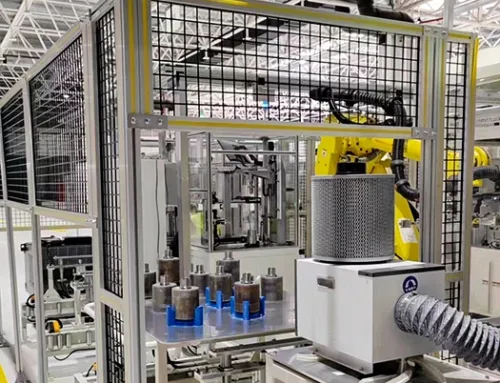
Painted steel guarding posts force maintenance to drill for interlock switches, dropping swarf in the cell and breaking the coating where rust starts. Sagging hinge doors then misalign the interlock tongue and the PLC trips Safe Torque Off while the gate is closed. Alfence industrial safety fence mounts sensors, e-stops and cable routing into the T-slot aluminum profile post without drilling, and uses hinged, folding or sliding door frames that keep interlock geometry stable - protecting OEE through phantom stops and line changes.
Automotive Plant Industrial Safety Fence: Keep the Robot Cell Close to the Hazard
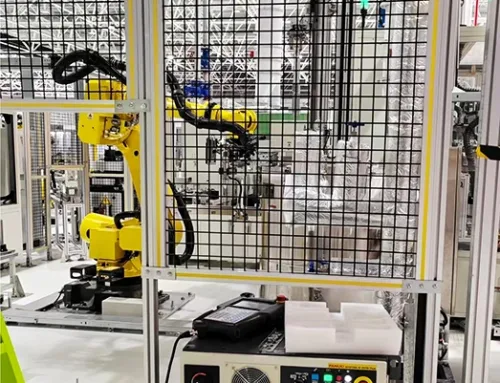
Automotive plants cannot afford to lose production floor to an oversized machine guarding perimeter. Alfence combines 20×100 mm mesh with slim 40×40 mm or 45×45 mm aluminum posts for a compact, reconfigurable industrial safety fence layout, with final clearance confirmed by the project risk assessment.