JA
JA  EN
EN  DE
DE  RU
RU  PT
PT  ES
ES  IT
IT 機械防護
safety fence for machinery built for wood processing cells that throw chips, broken nails, and cutting debris. Mdfence uses a 20x100mm narrow-slot mesh and a framed modular steel structure to contain the hazard, support compact layouts, and help teams defend floor space without pushing the fence far away from the machine.
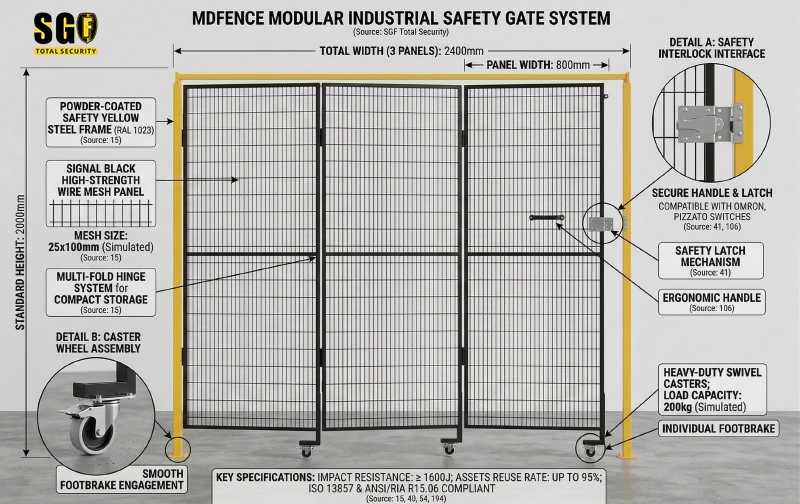
Why the old setup wastes space
In pallet and wood processing lines, the problem is not only flying chips. Breakage from nailers and cutters also creates a mixed debris zone with metal fragments, impact risk, and reach-in exposure. Traditional large-aperture mesh often fails the practical test: it blocks less, so the fence must be moved farther from the machine to satisfy the required safety distance. That turns paid factory floor into dead space.
Mdfence is designed for the opposite requirement: keep the boundary tight, keep the hazard contained, and keep the layout efficient.
| 仕様 | プロジェクト事実 |
|---|---|
| 主構造 | Q235 carbon steel framed mesh panel system |
| メッシュ開口部 | 20x100mmナロースロットデザイン |
| 線径 | 4.0mm |
| 安全距離 | Compact 120mm project setup for close-in guarding |
| Layout logic | Modular fence, access gates, retrofit-friendly assembly |
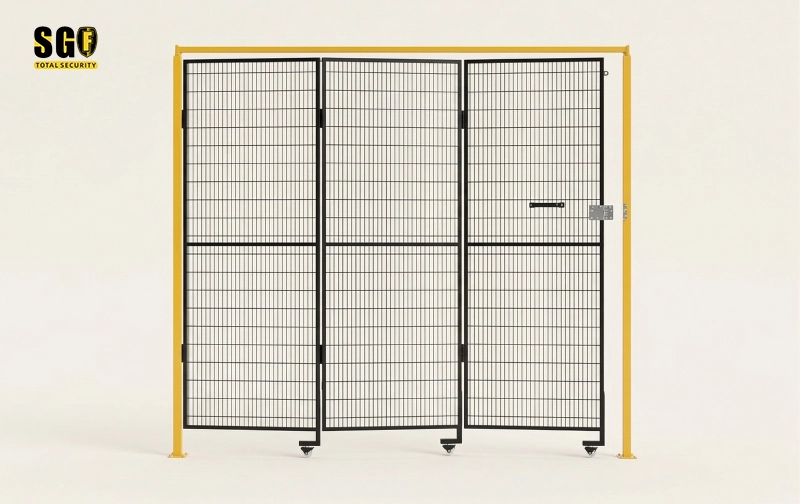
01 Stop chips and broken nails at the boundary
Mdfence uses a narrow 20x100mm opening instead of a loose, oversized mesh. That matters in woodworking and pallet nailing areas because the main failure mode is not just reach-in. It is airborne debris. The tighter aperture helps intercept chips, splinters, and broken fasteners before they travel into aisles or neighboring work zones.
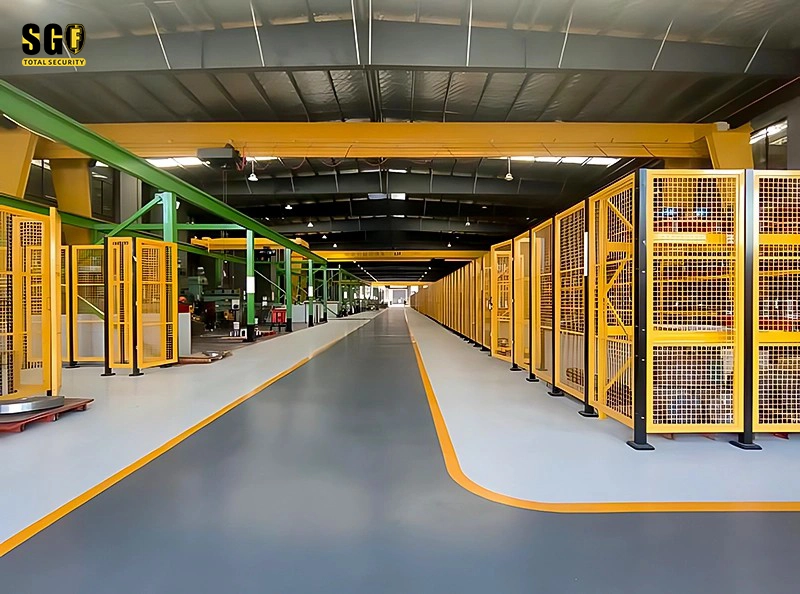
02 Keep the safety distance compact
When a fence can control the hazard at a closer boundary, the line does not need a huge buffer zone around it. That is the practical benefit of this machine guarding format: the safety distance can be reduced to a compact 120mm project arrangement, helping plant teams protect operators without sacrificing aisles, storage lanes, or service access.
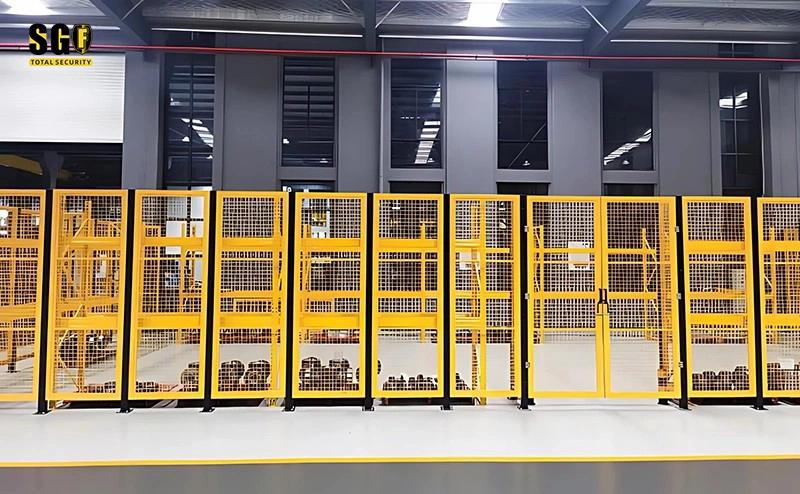
03 Retrofit cleanly without on-site welding
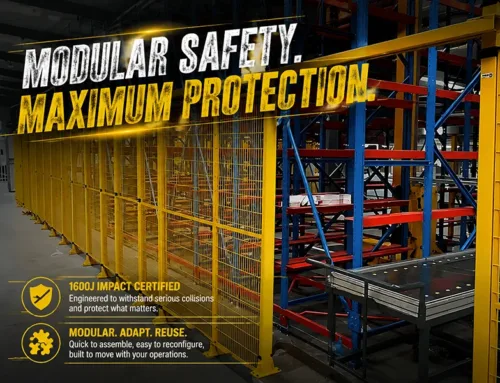
The framed modular steel design supports fast installation and future re-layouts. For integrators and plant engineers, that means less hot work, cleaner finish quality, and fewer custom brackets. The fence can be planned around gates, maintenance access, and reconfiguration needs instead of being cut apart later when the line changes.
このガーディングシステムが最も適している場所はどこですか?
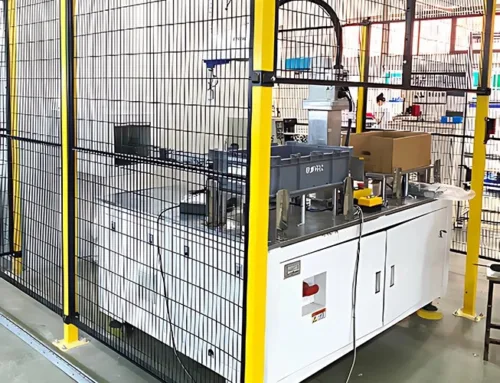
Pallet nailing and cutting lines: contain wood chips, broken nails, and flying fragments while keeping access controlled.
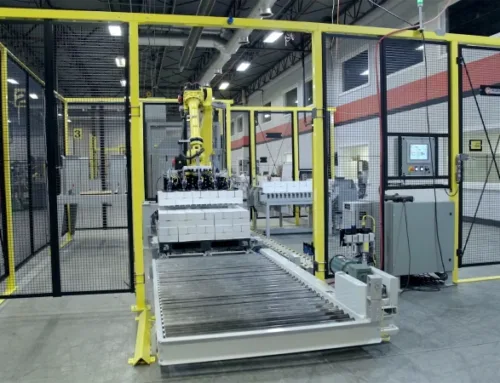
Wood processing and machine-tool zones: build a clear physical boundary around the dangerous side of the process without turning the room into a wasted safety corridor.
Retrofit projects: upgrade existing cells where the old large-mesh fence forced the machine to sit too far from the operator path.
レイアウトをロックする前に指定すべきこと
If you are reviewing a new guarding project, the key questions are simple: what debris is being generated, how close does the fence need to sit, and where do maintenance and access gates need to open. Mdfence answers those requirements with framed Q235 steel panels, 20x100mm mesh, and a layout that supports compact machine perimeters instead of oversized exclusion zones.
| Project decision | Mdfenceがフィットする理由 |
|---|---|
| Contain flying debris | Narrow-slot mesh helps block chips and broken metal fragments |
| Save floor area | Compact guarding supports a shorter safety offset |
| Prepare for future changes | Modular steel panels are retrofit-friendly |
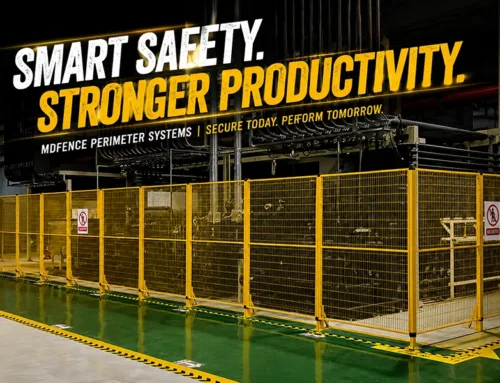
Turn the safety boundary into usable production space
Mdfence gives wood processing and pallet line teams a practical way to protect people, contain debris, and avoid giving away unnecessary floor space. If the current fence layout is too loose, too far out, or too expensive to maintain, this is the compact machine guarding format to review next.